


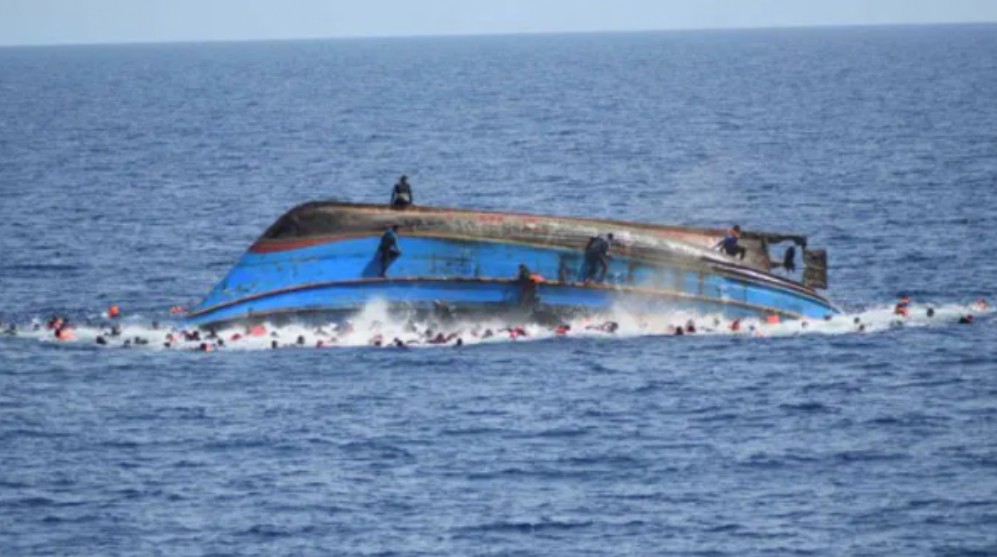
At least 139 people, including 15 children, have died after a boat carrying hundreds of migrants capsized off Djibouti, the International Organization for Migration said on Sunday.
The Djibouti boat capsize also left 84 people missing, so the death toll may rise.
The agency said the boat carried 305 people from Djibouti to Yemen across the Bab el-Mandab Strait. It overturned between Thursday night and Friday morning near Guhere, north of the port town of Obock.
More than 80 people survived, all of them Ethiopians.

The bodies of nine girls and six boys are among those recovered. The cause of the disaster was not immediately clear.
The shipwreck is one of the deadliest ever recorded on the route, which is among the most dangerous crossings in the world.
According to the agency, more than 900 people died or went missing on the journey last year.
Tens of thousands of people from Ethiopia and other East African countries make the crossing every year. They hope to find jobs and security in Saudi Arabia and other Gulf states.
However, the sea is only the first danger. In Yemen, which has been torn by civil war since 2014, migrants face violence, thirst and hunger. Many cross the country on foot towards the Saudi border.
Fighting has also intensified. Last week, the Yemeni government, backed by Saudi warplanes, launched an offensive to retake territory along the Bab al-Mandab Strait from the Iran-backed Houthis. Much of the fighting has centred on Ras al-Ara, a key entry point for African migrants.
As a result, the humanitarian situation has worsened sharply. The agency said on Wednesday that more than 200,000 people had been displaced by the war. In mid-September, the figure was 76,000.
The latest disaster is one of the deadliest in the Red Sea in recent years. In August last year, more than 60 migrants died when a boat capsized in the Gulf of Aden.
Earlier, over 180 went missing after two boats capsized off the coast of Yemen.
“We cannot keep treating these deaths as normal,” said the agency’s Director General, Amy Pope.
“No one gets into a boat like that unless they believe there is no other safe way.” She urged governments and donors to act before the next boat goes down.
The agency’s chief of mission in Djibouti, Alexandre Coissac, called the toll devastating. He said it was a stark reminder of the dangers migrants face along the corridor.
Djiboutian authorities continued search and rescue on Sunday, although hopes of finding more survivors were fading. In Obock, the agency is working with local officials to provide health care and shelter for survivors.
The Djiboutian health ministry did not immediately respond to a request for comment.




