


The European Union has pledged €20 million in defence assistance to Nigeria as the Federal Government seeks to strengthen military operations against terrorism, kidnapping and other persistent security threats across the country.
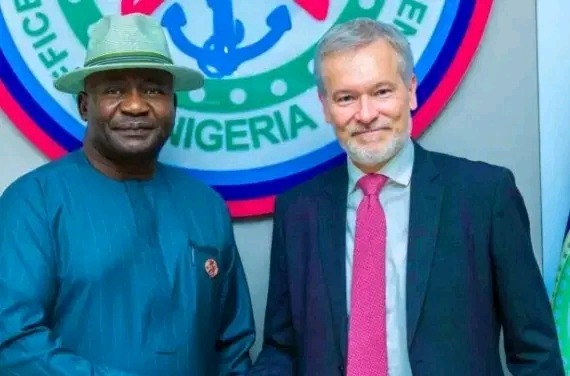
The proposed assistance, which will be provided under the European Peace Facility (EPF), was discussed during a meeting between Nigeria’s Minister of Defence, General Christopher Musa (retd.), and the EU Ambassador to Nigeria and the Economic Community of West African States, Gautier Mignot, in Abuja.
The meeting, held at the Ministry of Defence’s headquarters, Ship House, focused on existing bilateral defence agreements and opportunities to strengthen security cooperation between Nigeria and the European bloc.

Leah Katung-Babatunde, the minister’s special assistant on media, disclosed the development in a statement issued on Saturday, October 17, 2026.
According to the statement, the EU’s proposed €20 million assistance package formed a major part of discussions on cooperation between both sides, with further arrangements expected to be finalised following a technical visit to Nigeria next month.
Mignot disclosed that an EU technical delegation would visit Abuja in November to agree on the details of delivering the assistance. However, the specific equipment, training programmes or other forms of support to be financed through the package have not yet been publicly detailed.
The proposed assistance comes as Nigeria continues to confront security challenges across several regions, including insurgency in the North-East, armed attacks on isolated communities and kidnappings along major highways.
Following the meeting, Musa expressed appreciation to the European Union for its continued support for Nigeria’s security efforts and reiterated the Federal Government’s commitment to protecting lives and property.
The defence minister said the efforts of the armed forces and other security agencies were gradually restoring relative peace in some troubled areas. He acknowledged, however, that kidnapping and attacks on vulnerable communities remained serious concerns requiring sustained action.
Musa’s remarks highlighted the gap between progress recorded in some areas and the continuing security risks facing residents, particularly those travelling along highways or living in remote communities vulnerable to armed attacks.
The proposed European assistance could provide additional support for Nigeria’s efforts to strengthen its defence capabilities, although its precise operational impact will depend on the package’s final terms and how the assistance is implemented.
During the discussions, Musa also disclosed that Nigeria was expecting the delivery of 10 attack helicopters, unmanned aerial vehicles and other military equipment intended to improve the country’s ability to respond to emerging security threats.
The expected equipment deliveries form part of broader efforts to strengthen military operations. However, the minister’s announcement did not establish that the equipment would be funded through the EU’s €20 million package.
The distinction is important because the European assistance and the anticipated equipment deliveries were discussed in the context of wider defence cooperation, but no public breakdown has established a direct financial connection between them.
Regional security also featured prominently during the meeting, particularly concerns surrounding the Lake Chad Basin, an important economic and environmental region supporting more than 50 million people.
Musa identified the shrinking basin as a potential contributor to instability, reflecting concerns about the pressures facing communities that depend on its natural resources for their livelihoods.
The region has also remained strategically important in the fight against insurgency, with armed groups exploiting difficult terrain and remote locations to sustain their operations.
The minister stressed that preventing terrorists from using islands in Lake Chad as operational bases remained a priority for the Multinational Joint Task Force, which coordinates regional efforts against insurgency.
The task force brings together participating countries to support security operations across the Lake Chad region, where cross-border threats require cooperation beyond the capacity of any single country.
Stronger international partnerships could therefore help improve coordination and military capabilities, provided assistance is directed towards clearly identified operational needs and accompanied by effective implementation and oversight.
Musa also addressed Nigeria’s Disarmament, Demobilisation and Reintegration programme, emphasising that victims of conflict, including military personnel affected by the fighting, should receive appropriate attention.
The programme is intended to support processes associated with disarmament, demobilisation and reintegration, particularly in communities affected by prolonged conflict. The minister’s remarks underscored the importance of considering the welfare of those who have suffered during security operations.
For Nigeria, the proposed EU assistance represents another development in its efforts to strengthen international defence cooperation while addressing persistent domestic security challenges.
The European Union’s involvement also reflects the importance of partnerships in tackling threats that affect regional stability, particularly across the Lake Chad Basin and the wider West African region.
Nevertheless, the announcement remains a pledge of assistance rather than confirmation that the full €20 million has already been delivered to the Nigerian military. Details concerning the allocation, delivery schedule and intended uses of the funding are expected to become clearer after the EU technical delegation’s planned visit in November.
The effectiveness of the proposed support will ultimately depend on how quickly the arrangements are completed, which capabilities receive priority and whether the assistance produces measurable improvements in military operations and civilian security.
As Nigeria continues to confront terrorism, kidnapping and attacks on isolated communities, the forthcoming discussions between Nigerian officials and the EU delegation will be important in determining how the promised assistance translates into practical support for the country’s armed forces.




