


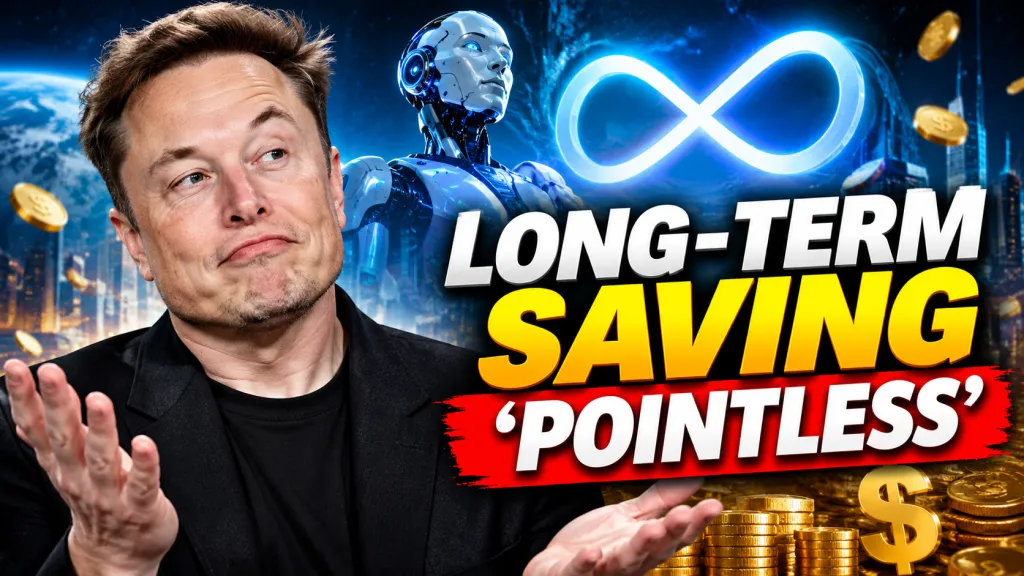
Elon Musk says future AI-driven abundance could make long-term saving pointless, but his prediction remains conditional and unproven.
Elon Musk said saving money for the distant future is “pointless” if artificial intelligence creates widespread abundance. He made the remark in an October 29 reply on X to a user discussing spending decisions. The post echoed earlier comments that retirement savings could become irrelevant. Here is what he predicted—and what his remarks do not establish about personal finance.
Musk’s post was a reply about spending
Musk wrote, “Saving money for the distant future is pointless with the advent of super intelligent abundance.” — Elon Musk, Tesla and SpaceX CEO. He replied to a user who said abundance might make today’s spending matter less. The post gave no timetable for that future.
The user, @battleangelviv, called them “questionable financial decisions” and said future abundance could make them irrelevant. Musk echoed that view but offered no detailed financial plan. His reply did not address how households would manage the transition.
The statement is a prediction about a possible future, not evidence that people no longer need savings. Musk’s remarks also do not show when such abundance might arrive or who would benefit. His post referred to an expected change in technology and the economy. That forecast needs to be considered separately from ordinary financial decisions today.
What Musk said about retirement before
Musk made a similar argument on the “Moonshots with Peter Diamandis” podcast in January. He said not to worry about retirement savings in 10 or 20 years. “It won’t matter,” he added. He qualified the prediction: “If any of the things that we’ve said are true, saving for retirement will be irrelevant.”
He pictured future services providing housing, healthcare and entertainment. The podcast episode was released in January 2026. Musk’s forecast did not specify how people would pay for these services or how they would be shared.
In that discussion, Musk pointed to advances in artificial intelligence, energy and robotics. He argued those technologies could raise productivity enough to make goods and services widely available. He also imagined a “universal high income” and better medical care for everyone. These are his expectations, not outcomes the podcast established as certain.
Abundance depends on a difficult transition
Musk’s vision assumes technology will produce far more goods and services while making them accessible to people. He has described a future where people could obtain what they want without relying on traditional wages. Yet the same podcast included warnings about disruption. Musk agreed the transition could be “bumpy” and discussed the risk of social unrest and lost purpose if work becomes less important.
Musk also predicted artificial intelligence could exceed the combined intelligence of all humans by 2030. That timeline is his forecast, not an established outcome. The conversation did not explain what policies or institutions would guarantee access to the abundance he described.
That caveat matters because changes in technology do not automatically guarantee equal access or stable incomes. The interview did not provide a timetable for distributing future wealth or explain how households would manage the transition. Musk’s October post did not address those questions either. The claim therefore remains a broad forecast, not a practical guide for today’s savers.
Why financial guidance still stresses savings
Current U.S. investor guidance treats accessible savings as a way to handle emergencies, including sudden unemployment. Investor.gov says some people keep up to six months of income in savings. The Consumer Financial Protection Bureau says a reserve can help households recover from unexpected bills or lost income. Those are general education points, not personalized recommendations.
The CFPB also warns that a financial shock without savings can push people toward borrowing or using retirement funds. That makes near-term reserves a separate question from Musk’s claim about distant-future retirement. His remarks do not address how people should cover bills during an uncertain transition.
Business Insider reported in January that seven finance and AI experts it consulted agreed people should continue saving for retirement because Musk could be wrong. Their concern is the gap between a hoped-for future and people’s needs now. A medical bill, job loss or other shock can arrive before any promised abundance. Savings can offer a buffer while that uncertainty remains.
Musk’s prediction is not a reason to stop saving
Ultimately, Musk’s “pointless” remark rests on a future where AI and robotics create abundance for everyone. His earlier comments made the retirement claim conditional, and he acknowledged the transition could be turbulent. Neither the post nor the podcast proves that savings will become unnecessary. Whether technology delivers that future remains an open question.




