


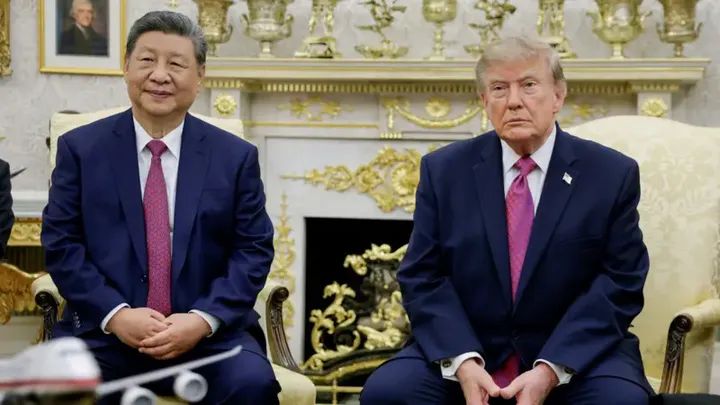
SHENZHEN, CHINA — United States President Donald Trump, Russian President Vladimir Putin and Chinese President Xi Jinping are expected to hold an unprecedented three-way meeting in Shenzhen next week, bringing together the leaders of the world’s three major nuclear powers for discussions on nuclear weapons reduction and the ongoing conflict involving Iran.
The White House confirmed the planned meeting on Friday, November 13, saying it would take place on the sidelines of the Asia-Pacific Economic Cooperation (APEC) summit scheduled for November 18 and 19 in the southern Chinese city. The trilateral talks are expected on Thursday, November 19, and would mark the first formal gathering of the three leaders in this format.
According to White House spokeswoman Olivia Wales, Trump intends to make nuclear disarmament a central issue during the discussions. The American president has repeatedly called for a reduction in global nuclear stockpiles, arguing that the spread of nuclear weapons poses a serious danger to international security.
A senior US official also confirmed that Trump intends to raise the war involving Iran, although Washington does not expect the meeting to produce an immediate agreement. The official described the proposed gathering as an opportunity to begin discussions on difficult international security questions rather than a session expected to deliver a comprehensive deal.

The planned summit comes at a particularly sensitive moment for global nuclear security. The New Strategic Arms Reduction Treaty, commonly known as New START, which placed limits on the strategic nuclear arsenals of the United States and Russia, expired in February 2026. Its expiration removed a major framework for controlling the two countries’ nuclear weapons for the first time in more than five decades.
Trump has called for a new and modernised arms-control arrangement that would also include China. However, Beijing has shown little enthusiasm for joining negotiations under the proposed three-country framework, maintaining that its nuclear arsenal is considerably smaller than those of Washington and Moscow.
Estimates cited by US officials place China’s nuclear stockpile at more than 600 warheads, compared with more than 5,000 each for the United States and Russia. Beijing has previously argued that it would be unfair to demand that China accept the same restrictions as countries possessing substantially larger nuclear arsenals.
Beyond nuclear security, the Iran conflict is expected to feature prominently in Trump’s discussions with the two leaders. Russia and China have maintained important diplomatic and strategic relationships with Tehran, making their positions relevant to any broader international effort to address the conflict.
However, the White House has indicated that the war in Ukraine will not form part of the trilateral agenda. US officials say Washington is pursuing separate diplomatic channels involving Kyiv and Moscow, suggesting that the administration does not consider China an essential participant in that particular negotiation track.
The proposed meeting has also attracted attention because of concerns that major powers could discuss international security arrangements without the direct involvement of countries affected by their decisions. Ukrainian President Volodymyr Zelenskyy has expressed concern that the gathering could resemble the 1945 Yalta Conference, where major Allied leaders negotiated arrangements that shaped post-war Europe.
The Kremlin, meanwhile, has described the planned discussions as significant, although Moscow’s expectations and the precise issues it intends to raise remain subject to diplomatic developments.
For Xi, hosting the meeting provides an opportunity to demonstrate China’s influence in international diplomacy and reinforce its position as a central player in discussions involving global security. Putin’s participation also places Russia at the centre of a high-profile diplomatic engagement with Washington and Beijing, despite continuing tensions over Ukraine.
Nevertheless, expectations of an immediate breakthrough remain limited. Differences over the size of national nuclear arsenals, the structure of any future arms-control agreement and the broader geopolitical interests of the three countries could make meaningful progress difficult.
The outcome may therefore depend less on whether the leaders announce a formal agreement and more on whether they establish a framework for sustained negotiations. With existing nuclear restrictions between Washington and Moscow no longer in force, the planned Shenzhen meeting could provide an important opening for renewed discussions on strategic stability.




