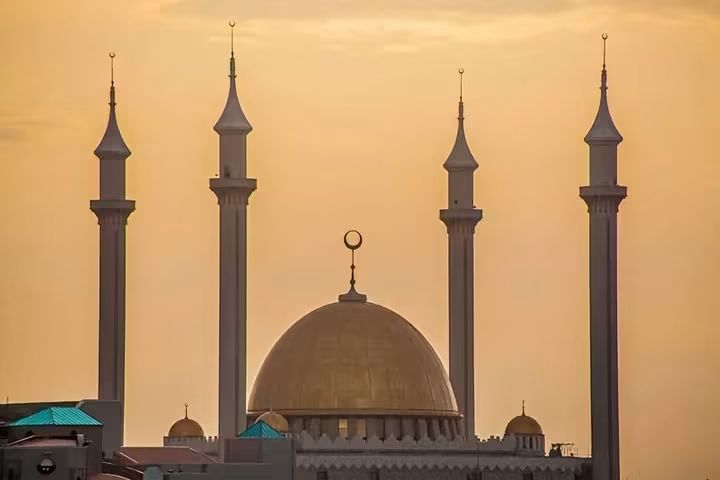
ABUJA, NIGERIA — Nigeria is projected to become the country with the world’s third-largest Muslim population by 2035, behind Pakistan and India, according to new demographic research released by the Pew Research Center.
The projection highlights Nigeria’s growing significance in the global religious landscape and forms part of a broader forecast that suggests Muslims could overtake Christians as the world’s largest religious group within the next decade.
The findings are contained in a report titled The Future of World Religions: Population Growth Projections, 2020–2070, published on November 18, 2026. The research examines changes in the size and geographical distribution of major religious groups across 201 countries and territories, representing 99.98 per cent of the world’s population.
According to the report, Pakistan is expected to have the largest Muslim population by 2035, followed by India, Nigeria and Indonesia, which currently has the world’s largest Muslim population.
The projection represents a significant shift in the global distribution of Muslims, with Nigeria expected to move from fifth position in 2020 to third place by 2035.
Pew estimated that Nigeria had approximately 120 million Muslims in 2020, compared with Indonesia’s 239 million, Pakistan’s 227 million and India’s 213 million.
The research further projects that Nigeria’s Muslim population could reach approximately 282 million by 2070, placing it behind Pakistan, with 461 million, and India, with 334 million.
Indonesia is expected to move to fourth position, with an estimated 274 million Muslims.
The report attributes much of the anticipated growth in the global Muslim population to differences in fertility rates and the age structure of religious communities.
Between 2020 and 2025, Muslim women had an estimated average of 3.1 children, compared with 2.0 among non-Muslim women globally. The research also found that Muslims had a relatively younger population, with a median age of 24 in 2020, compared with 33 among non-Muslims.
These demographic differences mean that Muslim populations are projected to grow faster than other major religious groups if existing trends continue.
Pew estimates that the global Muslim population will increase by approximately 80 per cent between 2020 and 2070, rising from about 2.02 billion to more than 3.6 billion.
The Christian population, meanwhile, is projected to grow by approximately 30 per cent to just under three billion over the same period.
Consequently, Muslims are expected to overtake Christians as the world’s largest religious group by 2035. By 2070, Muslims could account for approximately 36 per cent of the global population, while Christians would represent about 29 per cent.
The research also identifies sub-Saharan Africa as an increasingly important centre of global religious growth. Nigeria, Egypt, Ethiopia and Sudan are projected to feature among the world’s 10 countries with the largest Muslim populations by 2070.
The continent is also expected to experience substantial growth in Christianity. More than half of the world’s Christian population could live in sub-Saharan Africa by 2070, according to the projections.
Another major forecast concerns the Democratic Republic of the Congo, which is expected to overtake the United States as the country with the largest Christian population. The United States, although projected to lose its Christian-majority status, is expected to retain Christians as its largest religious group.
Pew stressed that the findings are demographic projections rather than guaranteed outcomes. Its methodology incorporates population age structures, fertility, mortality, migration and changes in religious affiliation.
The researchers also cautioned that unexpected developments, including armed conflicts, natural disasters, epidemics and significant economic or social changes, could alter the projected outcomes.
For Nigeria, the forecast places the country at the centre of major demographic changes expected across Africa and the wider world. Its growing population will have implications for public policy, education, healthcare, housing, employment and the provision of essential infrastructure.
However, the projected increase in the Muslim population should not be interpreted as a forecast of political dominance or a change in Nigeria’s constitutional character. The research measures religious population trends and does not assess political power or the relationship between religious communities.
The findings also underline the importance of understanding Nigeria’s religious diversity and ensuring that public institutions, development programmes and national policies serve citizens fairly, regardless of religious affiliation.
As the country continues to experience demographic expansion, the ability to translate population growth into improved living standards, economic opportunities and social stability will remain an important national challenge.
Ultimately, Pew’s projections suggest that Nigeria will become one of the world’s most significant centres of Muslim population growth over the coming decades, provided current demographic patterns remain broadly consistent.