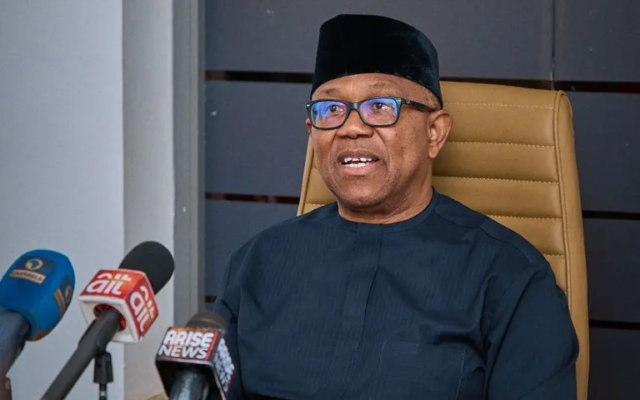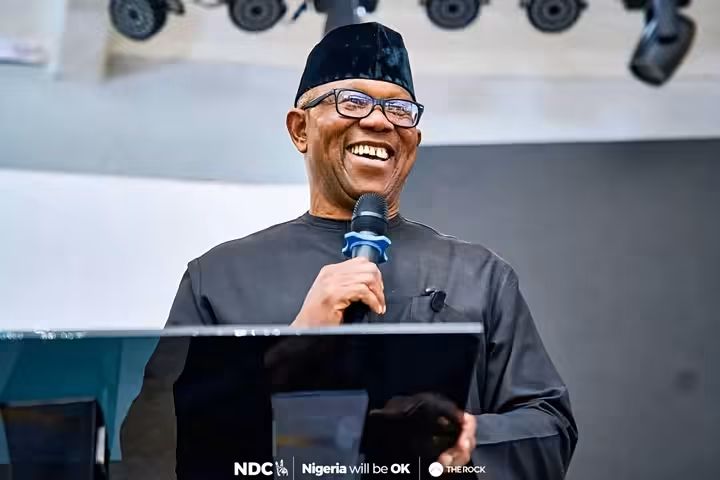
ONITSHA, NIGERIA — Presidential candidate of the Nigeria Democratic Congress (NDC), Peter Obi, has promised to establish 10,000 primary healthcare centres and construct 40,000 primary school blocks across Nigeria if elected president in the 2027 general election.
Obi announced the commitments on Friday, November 20, 2026, during an NDC town hall meeting and homecoming event at the Main Bowl of the Archbishop C.J. Patterson Building, All Saints Cathedral, Onitsha, Anambra State.
The former Anambra State governor said the proposed projects would address persistent gaps in healthcare delivery and basic education, particularly in rural communities where access to essential public services remains limited.
On healthcare, Obi promised to ensure that every ward in the country had a functional primary healthcare facility. He noted that Nigeria had 8,809 wards but said his proposed administration would establish 10,000 centres, exceeding the number required to provide at least one facility in every ward.
He presented primary healthcare as the foundation of an effective national health system, arguing that Nigerians should not have to travel long distances or face unnecessary difficulties to obtain basic medical attention.
The proposed expansion, if implemented, would require more than the construction of buildings. Facilities would also need qualified health workers, essential medicines, diagnostic equipment, reliable electricity and water supply, as well as effective referral systems to hospitals capable of handling complicated cases.
Nigeria continues to face significant challenges in making primary healthcare services accessible and functional. The Federal Government recently reported that 3,526 primary healthcare centres had been revitalised in partnership with state governments and development partners, while work was continuing on another 900 facilities.
The existing intervention illustrates the scale of the work required to improve basic healthcare nationwide and the importance of ensuring that newly constructed centres can provide consistent services rather than remain under-equipped buildings.
On education, Obi pledged to construct 40,000 primary school blocks, describing the proposed intervention as part of a broader effort to address the country’s out-of-school children crisis.
He said Nigeria had approximately 18 million children outside the school system and argued that the impact of his proposed education programme should become visible from the beginning of his administration.
The NDC candidate said the planned construction would expand access to classrooms and help bring more children into formal education. He also reiterated his commitment to investing public resources in education and healthcare as essential foundations for national development.
Nigeria’s education challenge remains substantial. UNICEF’s 2025 annual report put the number of out-of-school children at approximately 10.2 million, while other widely cited estimates have placed the figure above 18 million. The difference reflects variations in data sources, age groups and measurement periods, as well as continuing efforts by government agencies to update the figures.
The crisis is not limited to a shortage of school buildings. Poverty, insecurity, inadequate teaching personnel, poor learning conditions and regional inequalities also prevent many children from enrolling in or completing school.
Consequently, delivering 40,000 school blocks would need to be accompanied by teacher recruitment, training, learning materials, improved sanitation, school security and measures to help disadvantaged families keep their children in education.
Obi said the proposed healthcare and education investments formed part of his broader vision of building a country where government resources are directed towards improving citizens’ lives.
He also emphasised the need to strengthen public safety and create a society in which Nigerians could live and conduct their businesses without fear.
The Onitsha engagement was part of his political activities ahead of the 2027 presidential election. The event followed a roadshow through parts of the commercial city and a visit to Christ the King College, where Obi received a welcome from members of the school community and supporters.
The former governor, who served Anambra State between 2006 and 2014 and contested the 2023 presidential election under the Labour Party, is now seeking the presidency on the NDC platform.
His latest promises place healthcare access and basic education among the major issues he intends to address if given the mandate to govern.
However, the proposals remain campaign commitments. Obi did not provide a detailed cost estimate, funding arrangement, construction schedule or implementation framework for the 10,000 healthcare centres and 40,000 school blocks during the reported announcement.
The feasibility of the targets would depend on budgetary allocations, coordination with state and local governments, availability of qualified personnel, procurement arrangements and sustained maintenance.
As the 2027 election approaches, the proposals are likely to form part of the debate over how presidential candidates intend to address Nigeria’s development challenges and translate campaign promises into measurable improvements in the lives of citizens.