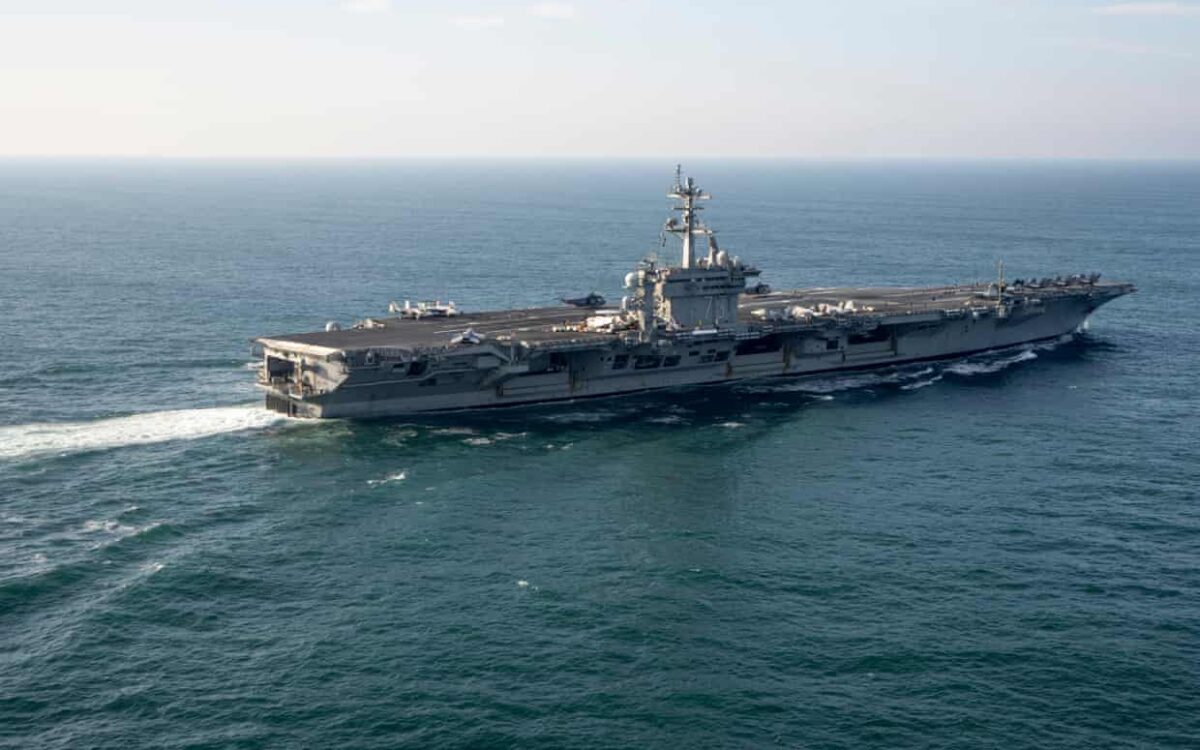
Ukraine has claimed responsibility for a drone attack that sank a Russian warship at a naval base in Benghazi, eastern Libya, on Sunday.
Ukrainian President Volodymyr Zelensky said the operation also targeted a second Russian vessel, a cargo ship allegedly used to transport weapons.
In a statement on Monday, Zelensky described the strikes as an “exemplary Ukrainian operation” in response to Russia’s invasion of Ukraine.
He said seven naval drones were deployed to attack and sink the Merkury, one of Russia’s newest corvettes. He also claimed that a Ka-27 combat helicopter was destroyed in the operation.
Zelensky identified the second vessel as the MV Angara, a Russian container carrier.
The government controlling eastern Libya said an explosion occurred aboard a Russian warship at the Benghazi naval base in the early hours of Sunday while it was docking to receive fuel and supplies before returning to Russia.
Libya’s health ministry also said it received injured people from a commercial vessel targeted off the port’s coast, although it remains unclear whether the vessel was the same one Ukraine claimed to have attacked.
Videos shared on social media and geolocated by BBC Verify showed a ship engulfed in flames and smoke at the port. Satellite images from Planet Labs also captured a vessel on fire at 05:47 GMT on Sunday.
High-resolution images collected by US-based intelligence firm Vantor showed the Russian Navy’s Project 20380 Steregushchiy-class corvette, Merkury, docked at the port on Saturday.
Images taken on Sunday showed most of the vessel capsized and submerged, with only its forward bow visible.
The eastern-based Government of National Stability (GNS) said the unnamed Russian vessel was using the port under an existing maritime agreement.
It said the incident was under investigation, with authorities working with their Russian counterparts to establish the source of the suspected attack and identify those responsible.
The GNS condemned the attack, describing it as a violation of maritime safety and Libya’s sovereignty. It stressed that the country was not a party to the Russia-Ukraine war or any other conflict outside its borders.
Meanwhile, Libya’s internationally recognised Government of National Unity (GNU), based in Tripoli, warned against allowing foreign forces to use the country’s ports and facilities for activities linked to external conflicts.
The government said such arrangements raised serious concerns about threats to citizens and the safety of national infrastructure and assets.
The United Nations Support Mission in Libya (UNSMIL) also expressed serious concern over the incident, calling for an immediate, independent and transparent investigation.
“Libya cannot afford, and must not become a battleground for foreign conflicts,” the mission said in a post on X.
The Kremlin warned of rising tensions following the attacks but declined to comment directly on the strikes in Libya.
Kremlin spokesman Dmitry Peskov said Russia’s Defence Ministry would provide information on the incident, adding that Moscow had taken note of Zelensky’s remarks.
He also described the expansion of what he called terrorist activity in the Baltic region as a dangerous trend that could lead to further escalation.
The attack in Libya came a day after a Russian cargo vessel, the Sparta II, was hit by a drone in the eastern Gulf of Finland while travelling towards Russia’s Baltic exclave of Kaliningrad.
Finnish defence forces said Ukraine was likely behind that attack, although Kyiv has not commented.
In March, Russia accused Ukraine of using unmanned sea drones launched from the Libyan coast to attack the Russian tanker Arctic Metagaz in the Mediterranean Sea between Libya and Malta.
The latest incident could also strain relations between Russia and eastern Libya, where the Russian vessel was operating under an agreement with the GNS, which is allied with military commander Khalifa Haftar.
Libya has remained divided between rival administrations since the overthrow of former leader Muammar Gaddafi in 2011, which plunged the country into years of violence and instability.
Analyst Jalel Harchaoui said the attack could be viewed as a personal affront by Haftar and his family, potentially prompting questions about who was facilitating Ukraine’s operations in the region.