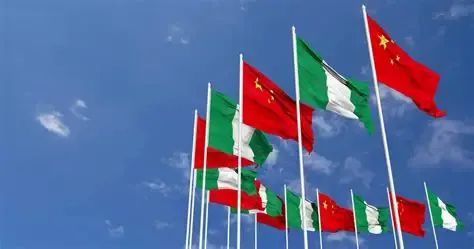
ABUJA, NIGERIA — Nigeria and China are strengthening their cultural and diplomatic relations through music, artistic collaboration and people-to-people exchanges, with the China Cultural Centre revealing that it has organised more than 50 cultural activities across Nigeria since the beginning of 2026.
The disclosure was made by the Cultural Counsellor of the Chinese Embassy in Nigeria and Director of the China Cultural Centre, Yang Jianxing, during the grand finale of the 2026 Nigeria Chinese and English Singing Competition held on Saturday, November 21, in Abuja.
Yang said the growing number of cultural programmes reflected the commitment of both countries to building stronger relationships beyond trade, investment and government-to-government engagements.
He described music as a universal language capable of connecting people from different backgrounds, overcoming linguistic barriers and promoting mutual understanding.
According to him, the singing competition provided an opportunity for Nigerian and Chinese participants, particularly young people, to display their musical abilities, appreciate different cultural traditions and develop lasting friendships.
He encouraged the contestants to see the event as more than a competition, urging them to sustain the relationships established through their participation and contribute to strengthening cooperation between the two countries.
Yang also said the Chinese Embassy and the China Cultural Centre would continue working with Nigerian institutions, businesses and cultural organisations to organise programmes that promote artistic exchanges and deepen bilateral friendship.
Among the activities organised during the year, he listed the Happy Chinese New Year Temple Fair, the Tea for Harmony: Yaji Cultural Salon and the China-Nigeria Food Festival.
He explained that the programmes had created opportunities for Nigerians and Chinese residents to interact, experience each other’s traditions and develop a better understanding of their respective societies.
The 2026 singing competition was organised as part of activities marking the 55th anniversary of diplomatic relations between Nigeria and China. It also formed part of the China-Africa Year of People-to-People Exchanges.
The competition featured two categories, Chinese-language and English-language singing, bringing together contestants from both countries. Participants performed before an audience comprising cultural officials, representatives of Chinese companies, Nigerian artists and other guests.
Twelve contestants received awards, with six recognised in each category.
In the English-language category, Deng Xiuwan emerged first, followed by Chen Zixuan and Wang Jiayi. Zhou Mai, Liu Lanxue and Zhang Jun also received prizes.
In the Chinese-language category, Bernard Paulina Olohiye won first prize, while Glory Livingston and James Bawa Augustine secured the next positions. Ekpety Edi-ima Friday, Chioma Ruth Onyenwe and Agwu Progress Chinaecherem were also recognised.
The Director-General of the China General Chamber of Commerce in Nigeria, Zhang Xinyu, commended the organisers and judges for providing a platform through which participants could express themselves and interact through music.
He encouraged the contestants to enjoy the experience and use the relationships developed during the competition to promote greater understanding between their communities.
Similarly, the Managing Director of China Harbour Engineering Company Nigeria Limited, Wang Wenfei, said bringing Nigerian and Chinese participants together on one stage demonstrated how artistic activities could strengthen friendship across national and cultural boundaries.
He expressed satisfaction with the company’s participation in the initiative, which was organised in collaboration with the China Cultural Centre and the China General Chamber of Commerce in Nigeria.
The National President of the Society of Nigerian Artists, Muhammad Sulaiman, also described the competition as an important opportunity for cultural understanding.
He said music could bring people together regardless of differences in language, nationality and geographical background, adding that the relationships established through such programmes should extend beyond the stage and into communities.
Sulaiman called for sustained collaboration between Nigerian and Chinese artists, saying joint performances, workshops and other creative activities could provide additional opportunities for cultural exchange.
The Director of Arts and Culture at the Federal Capital Territory Social Development Secretariat, Ngozi Ogugua, also advocated the establishment of a China-Nigeria Music Festival to expand artistic collaboration and provide a more permanent platform for cultural interaction.
The event comes as Nigeria and China commemorate 55 years of diplomatic relations, established in February 1971. Over the decades, the relationship has expanded into areas including trade, infrastructure, education, technology, security and cultural cooperation.
Both countries have increasingly highlighted people-to-people engagement as an important part of their diplomatic relationship, recognising that stronger connections between citizens can complement formal government agreements.
Cultural exchanges have also provided opportunities for Nigerians to experience Chinese traditions, language, food, music and artistic heritage, while introducing Chinese audiences to Nigeria’s diverse cultural expressions.
However, sustaining such programmes requires more than occasional festivals and competitions. Continued collaboration through educational exchanges, artist development, professional training, joint productions and opportunities for Nigerian creatives to showcase their work internationally could broaden the benefits.
The China Cultural Centre’s disclosure of more than 50 activities in 2026 therefore highlights the expanding role of cultural diplomacy in Nigeria-China relations.
As both countries look towards the next phase of their partnership, organisers and participants at the singing competition expressed hope that music and other creative collaborations would continue to strengthen friendship, mutual respect and cooperation between their peoples.