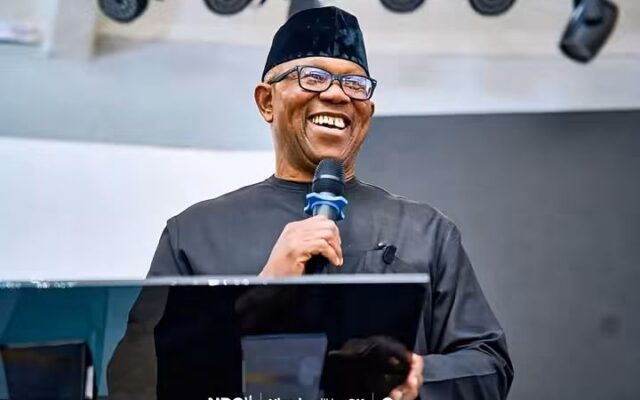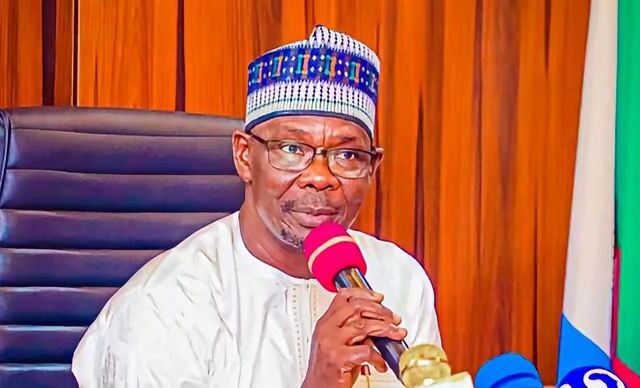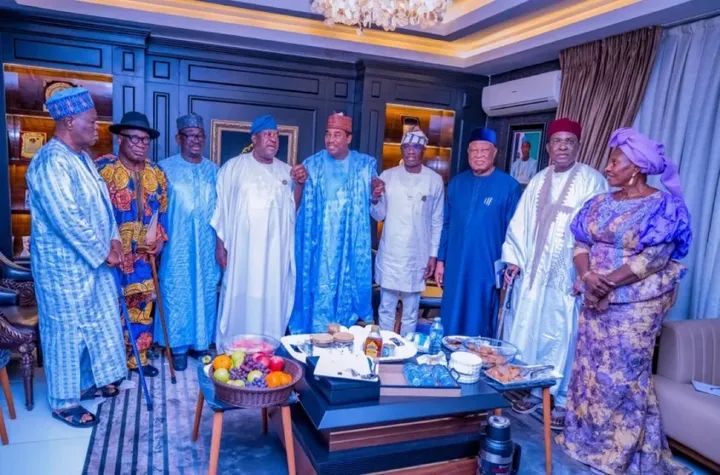
ABUJA, NIGERIA — Benue State Governor Hyacinth Alia and Secretary to the Government of the Federation, Senator George Akume, have attended a reconciliation meeting in Abuja as efforts intensify to resolve the lingering leadership crisis within the All Progressives Congress (APC) in the state.
The meeting, convened by the North Central Presidential Reconciliation Committee and chaired by former Katsina State Governor, Senator Ibrahim Shehu Shema, brought together influential political figures from Benue, including former Governor Gabriel Suswam and other party stakeholders.
Governor Alia confirmed his participation in a statement shared on Sunday, November 22, 2026, describing the engagement as an opportunity for party leaders to listen to one another, address their differences and work towards restoring unity.
According to the governor, the meeting lasted approximately two hours. Other prominent participants included Senator Barnabas Gemade, Senator Jack Tilley-Gyado and Hon. Elder Shango, alongside Akume and Suswam.
Alia expressed appreciation to Shema and members of the reconciliation committee for bringing the stakeholders together. He said his administration remained committed to engaging political leaders in the interest of a united APC, while maintaining that peace, security and development should remain central to governance in Benue State.
The governor also emphasised that political disagreements should not undermine the collective responsibility of leaders to serve the people. He maintained that the interests of Benue residents must remain more important than individual or factional differences. <Cite refs={[“turn662973search0″,”turn662973search1”]}/>
The Abuja meeting comes against the background of a prolonged power struggle between political camps associated with Alia and Akume, who remain two of the most influential figures in the Benue APC.
The disagreement has centred on control of the party’s state structure, recognition of rival leadership claims and the distribution of political influence ahead of the 2027 general elections.
In March 2026, the rival camps conducted parallel state congresses, producing competing executive committees. The governor’s camp returned Benjamin Omale as state chairman, while the Akume-aligned faction maintained its support for the Austin Agada-led executive.
The existence of the rival structures has complicated efforts to establish a unified party leadership and raised questions about which officials would oversee future party activities, including the selection of candidates for the next elections. <Cite refs={[“turn662973search2″,”turn662973search4”]}/>
Although an earlier reconciliation meeting in Makurdi in May appeared to offer hope of resolving the dispute, differences persisted over important political questions, including whether serving elected officials should receive automatic tickets for another term.
At the time, Akume indicated support for returning elected APC officeholders, while Alia maintained that no automatic tickets had been agreed upon. The governor described the suggestion as an appeal rather than a formal resolution.
The disagreement highlighted the challenges facing the reconciliation process, particularly where competing political interests and ambitions for the 2027 elections are involved. <Cite refs={[“turn662973search3”]}/>
The latest intervention by the North Central Presidential Reconciliation Committee therefore represents another attempt to bring the rival camps together and prevent the crisis from further weakening the party’s political organisation in Benue.
The APC’s internal divisions have attracted increasing attention as political mobilisation gathers momentum ahead of the 2027 elections. A divided party structure could complicate campaign coordination, weaken grassroots mobilisation and create uncertainty among aspirants and supporters.
However, Governor Alia’s account of Sunday’s meeting did not disclose specific agreements reached, whether the participants resolved the dispute over the rival state executives or what steps the committee would take next.
It also remains unclear whether the stakeholders agreed on a framework for sharing party responsibilities and accommodating competing political interests.
For now, the participation of Alia, Akume and other prominent leaders offers a fresh opportunity for dialogue. Whether the Abuja engagement will produce a lasting settlement will depend on the willingness of the rival camps to translate their participation in the talks into concrete compromises.
With the 2027 elections approaching, the pressure is mounting on Benue APC leaders to settle their differences and present a more united political front.