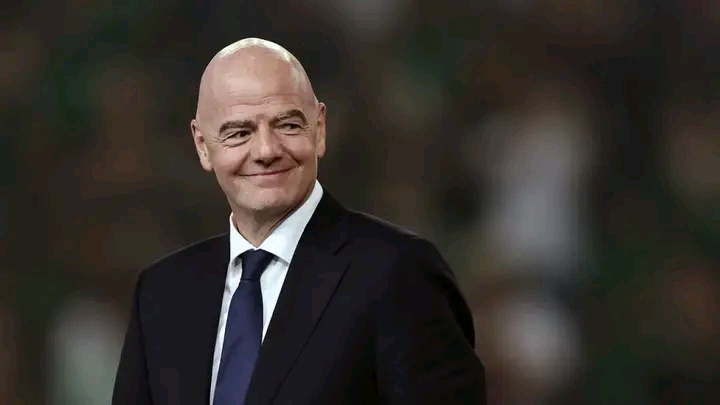
Nigeria’s ambition to host the FIFA World Cup has suffered a reality check after FIFA President Gianni Infantino declared that the country is not currently equipped to stage football’s biggest international competition.
Infantino, however, believes Nigeria could become a World Cup host in the future if the country makes the necessary investments in sports facilities and critical infrastructure.
The FIFA president made the remarks during an exclusive interview with ARISE News in Abuja on Monday, November 23, 2026, when asked whether Nigeria had what it takes to organise a tournament of the World Cup’s magnitude.
Responding to the question, Infantino gave a straightforward assessment of the country’s current situation.
“Today, no. But tomorrow, why not?” he said.
His response highlighted the significant gap between Nigeria’s enormous football potential and the infrastructure required to host a global competition that brings together national teams, officials, supporters and international visitors from across the world.
According to Infantino, having a strong football culture and talented players is not enough to secure the hosting rights of the tournament. Countries must demonstrate that they can provide modern stadiums, adequate hotel accommodation, efficient airports and reliable transportation networks.
“The key for hosting a World Cup is obviously the infrastructure, the stadiums, the airports, transportation, and this is where best practice is needed,” he explained.
Despite his reservations, Infantino acknowledged Nigeria’s potential, pointing to its resources, passion for football and willingness to pursue development projects that could eventually strengthen its position as a destination for major international competitions.
He also referenced his recent visits to football infrastructure projects in Abuja and Warri, describing some of the facilities he inspected as impressive.
Among the projects attracting attention is the FIFA Forward Technical Centre at the Moshood Abiola National Stadium in Abuja, which is being developed in partnership with the Nigeria Football Federation.
The project received $4.88m in funding from FIFA through its Forward 3.0 programme. It is expected to include a 68-room players’ hostel, two training pitches and other supporting facilities designed to improve preparations for Nigeria’s national teams.
Infantino also visited the remodelled Warri City Stadium in Delta State, which has a capacity of 15,000 spectators and is undergoing extensive improvements.
Although he praised the facilities, the FIFA president made it clear that individual stadium projects would not be sufficient to satisfy the broader requirements of hosting the World Cup.
His assessment places renewed attention on Nigeria’s wider sporting infrastructure, particularly the need to develop multiple international-standard stadiums alongside accommodation, transportation and airport facilities capable of supporting a tournament of such scale.
Nigeria has previously hosted major FIFA competitions, including the 1999 FIFA World Youth Championship, now known as the FIFA U-20 World Cup, and the 2009 FIFA U-17 World Cup.
However, the country has never hosted the senior men’s FIFA World Cup, despite its long-standing reputation as one of Africa’s most passionate football nations.
South Africa remains the first and only African country to have hosted the senior men’s competition, making history when it staged the 2010 edition.
Morocco is expected to become the second African host when it co-hosts the 2030 World Cup alongside Spain and Portugal, further demonstrating the continent’s growing involvement in organising major international football competitions.
For Nigeria, Infantino’s comments represent both a warning and an opportunity. The country possesses a large football-following population, considerable human resources and a rich history of producing competitive teams, but converting those advantages into the infrastructure required for World Cup hosting remains a major challenge.
Rather than dismissing Nigeria’s ambition entirely, the FIFA president left the door open for the country’s future involvement, suggesting that the necessary development projects could eventually make the dream achievable.
The bigger question now is whether Nigerian authorities and football administrators can move beyond announcements and individual stadium renovations to establish a coordinated, long-term infrastructure programme capable of meeting international standards.
For a country with Nigeria’s football history and ambitions, hosting the World Cup remains an attractive prospect. However, Infantino’s message is clear: passion alone cannot bring the tournament to Nigeria; sustained investment and world-class infrastructure must come first.