ZARIA, NIGERIA — The Nigerian Army has inducted 6,419 newly trained soldiers into its ranks, marking another phase in its expansion programme aimed at strengthening military deployments and improving the country’s response to terrorism, insurgency, banditry, kidnapping and other security threats.
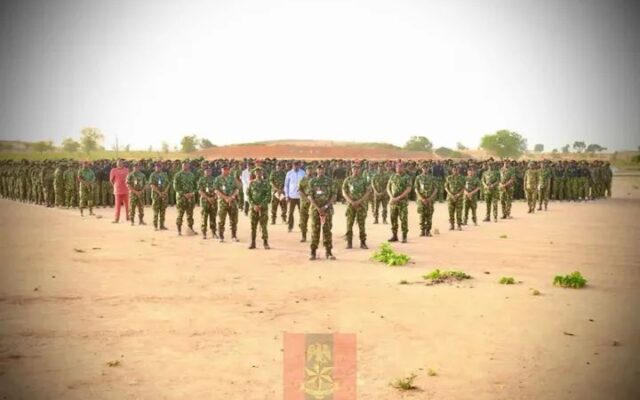
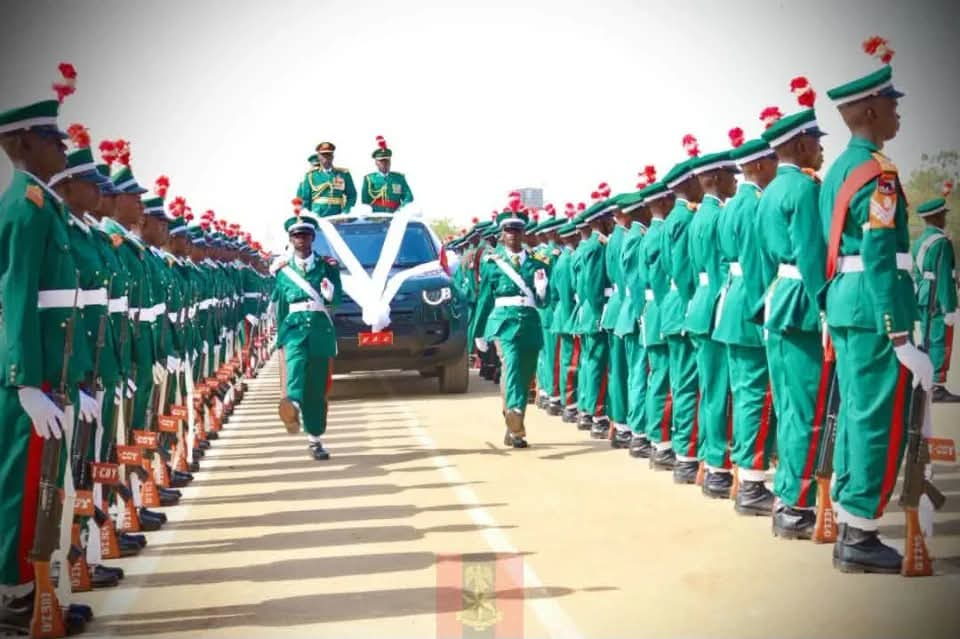
The soldiers, drawn from the 91 Regular Recruits Intake, were formally inducted on Saturday, November 28, 2026, during a Passing Out Parade at the Depot Nigerian Army in Zaria, Kaduna State.
Chief of Army Staff, Lieutenant General Waidi Shaibu, said the new personnel would reinforce ongoing military operations, increase troop presence in security-critical locations and improve the protection of vulnerable communities across the country.
According to the Army chief, the induction represents an important step towards providing the manpower required to implement the expanded force structure approved by President Bola Tinubu. The initiative is intended to strengthen the military’s capacity to respond to evolving security challenges and sustain operations across multiple theatres.
Tinubu had approved the expansion of the Nigerian Army from eight to 12 divisions, alongside the recruitment of 28,000 additional personnel. The restructuring also includes the establishment of four new divisional headquarters in Makurdi, Benin City, Ilorin and Jalingo.
Shaibu explained that the additional manpower would help populate the newly established formations, reinforce existing units and improve the Army’s ability to maintain sustained operations. He said increased personnel strength would also enhance troop rotation and operational flexibility, allowing deployed soldiers to receive better rotation while maintaining military pressure on armed groups.
The Army chief stressed that the expansion was not simply about increasing the number of soldiers but building a professional, adaptable and combat-ready force capable of confronting contemporary security threats.
He disclosed that the newly inducted personnel had undergone an enhanced training programme incorporating counterterrorism and counterinsurgency instruction. The training was designed to equip them with tactical competence, mental resilience and the operational understanding required to function in complex security environments.
The specialised preparation is particularly significant as Nigerian troops continue to confront different forms of violence, including terrorist attacks, insurgent activities, armed banditry and kidnapping. These threats often require sustained deployments, intelligence-led operations and coordinated responses involving different security institutions.
Addressing the new soldiers, Shaibu charged them to uphold discipline, courage, loyalty and professionalism throughout their military careers. He reminded them that their responsibilities extend beyond combat operations to protecting citizens, defending the Constitution and safeguarding Nigeria’s territorial integrity.
He also emphasised the importance of respecting human rights and preserving the dignity of civilians during military engagements. The Army leadership, he said, remained committed to ensuring that operational effectiveness went hand in hand with professional conduct and lawful use of force.
The Chief of Army Staff further reaffirmed his commitment to improving the welfare of personnel, identifying accommodation, healthcare and career development as important areas requiring continued attention. He maintained that better welfare conditions would support morale, professional growth and the effectiveness of soldiers serving across the country.
Shaibu thanked President Tinubu for supporting the Army’s expansion, equipment modernisation and personnel welfare initiatives. He also commended the Depot Nigerian Army commandant, instructors and other personnel responsible for training the recruits.
The induction comes amid broader government efforts to increase the manpower of Nigeria’s security agencies. In November 2025, Tinubu declared a nationwide security emergency and announced additional recruitment measures, including plans to expand police manpower and strengthen security presence in vulnerable areas.
The Army’s expansion, however, will require more than recruitment to deliver its intended impact. Adequate equipment, logistics, intelligence support, accommodation, medical services and sustained training will remain essential to ensuring that the additional personnel can perform effectively.
The deployment of the new soldiers will therefore be an important test of the Army’s ability to translate increased manpower into stronger operational capacity and improved protection for communities facing persistent security threats.
With the induction of the 6,419 recruits, the military has taken another step towards implementing its expanded force structure. The challenge ahead will be ensuring that the new personnel are effectively deployed, properly equipped and supported to contribute to lasting improvements in national security.