Uber and Nuro have started robotaxi tests in four Bay Area cities, ahead of a planned Q1 2027 public launch.
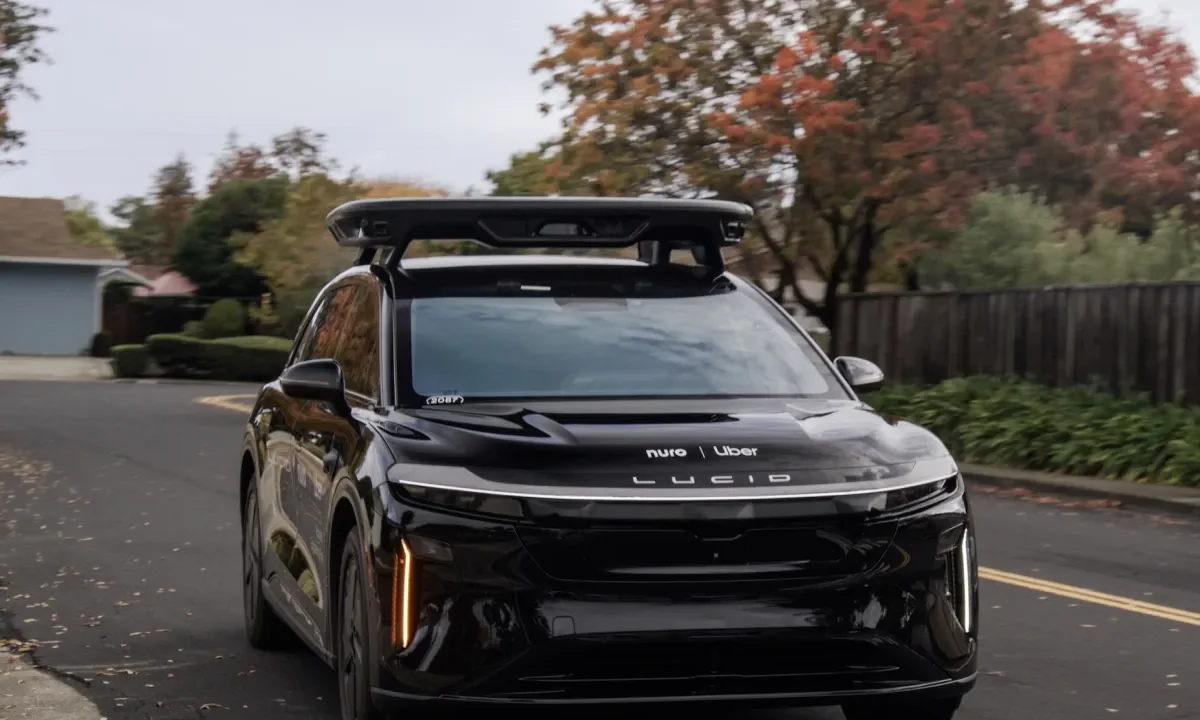
The latest robotaxi tests by Uber and Nuro involve driverless Lucid Gravity SUVs on Bay Area public roads. They announced the tests on Nov. 24 and listed Palo Alto, Mountain View, Los Altos and Sunnyvale as initial locations. Public rides are expected in the first quarter of 2027, after employee rides begin. The project brings Uber’s autonomous-vehicle network into a market where Waymo already offers driverless rides.
## Uber Nuro robotaxi tests enter a new phase
Nuro said the driverless phase began after months of supervised testing. Since December 2025, it has tested Lucid Gravity vehicles on Bay Area and Houston roads with safety drivers aboard. The current driver-out tests are limited to four named Bay Area cities. Nuro says it expects to add more cities next year.
Removing the safety operator is a technical and regulatory milestone, not a public launch. Nuro says California regulators issued it a driverless testing permit and a separate passenger-pilot permit requiring a safety operator. Those permits cover different activities and should not be confused with approval for public robotaxi service. The company still must prepare the service for riders.
## Lucid Gravity fleet and robotaxi technology
Lucid has delivered more than 100 Gravity SUVs fitted for the program, according to Nuro. That figure describes vehicles supplied for development and testing, not a confirmed count of robotaxis ready for public bookings. The fleet will grow as production and validation continue.
The vehicles combine Lucid’s electric SUV platform with Nuro’s autonomous driving system. Nuro says the sensor suite includes cameras, lidar and radar, alongside a roof-mounted module called a halo. Uber is designing the in-cabin rider experience and will make the service available through its app. Uber and its fleet partners are expected to own and operate the vehicles.
## Uber Nuro robotaxi launch moves to 2027
The public service target is now Q1 2027. The January announcement had projected a launch later in 2026. Nuro says employees will soon ride in the driverless vehicles. Those rides will come before public bookings open.
The ride-hailing app will be the exclusive channel for the service, according to Nuro. Uber has committed to buy at least 35,000 Lucid vehicles equipped with Nuro’s autonomous technology over time. That commitment gives Lucid a planned customer and gives Uber a potential supply base. The order does not mean all 35,000 vehicles will be delivered at launch. Houston has also been named as a later market, Axios reported.
## Waymo and the Bay Area robotaxi market
Waymo already runs a driverless ride service in San Francisco. Uber offers Waymo rides through its app in Austin and Atlanta. The planned Nuro service will also use Uber’s app, but targets the Bay Area. That puts the two autonomous-vehicle companies in local competition, even as Uber partners with Waymo elsewhere.
The partners divide responsibilities across the service. Nuro supplies the self-driving technology, Lucid builds the vehicle platform, and Uber handles the rider network and fleet operations. Axios reported that Uber works with more than 30 autonomous-vehicle companies worldwide. Its partners may also compete for rides as Uber expands its driverless offerings.
## Robotaxi safety checks and the next milestone
Nuro says it uses a safety-case process that combines road testing, simulation, system checks and closed-course trials. Before removing the safety operator, it tested scenarios such as pedestrian encounters and unusual traffic conditions. The company says it received permits for driverless tests and passenger rides with an operator. These steps are part of validation, not a guarantee that every technical or commercial hurdle is solved.
Uber described the change as a major partnership milestone. “Removing the safety operator from behind the wheel is an important milestone…” — Samarth Kejriwal, Global Head of Autonomous Mobility at Uber. The quote reflects the companies’ view of the test phase. The planned employee rides and Q1 target will show whether the program is ready to advance.
Ultimately, the Uber Nuro robotaxi program has moved from supervised testing to driverless public-road trials. The companies still face a gap between testing and paid public service, which is now planned for early 2027. Nuro’s employee rides are the next near-term step. The Bay Area will provide the first public test of the partners’ plans.