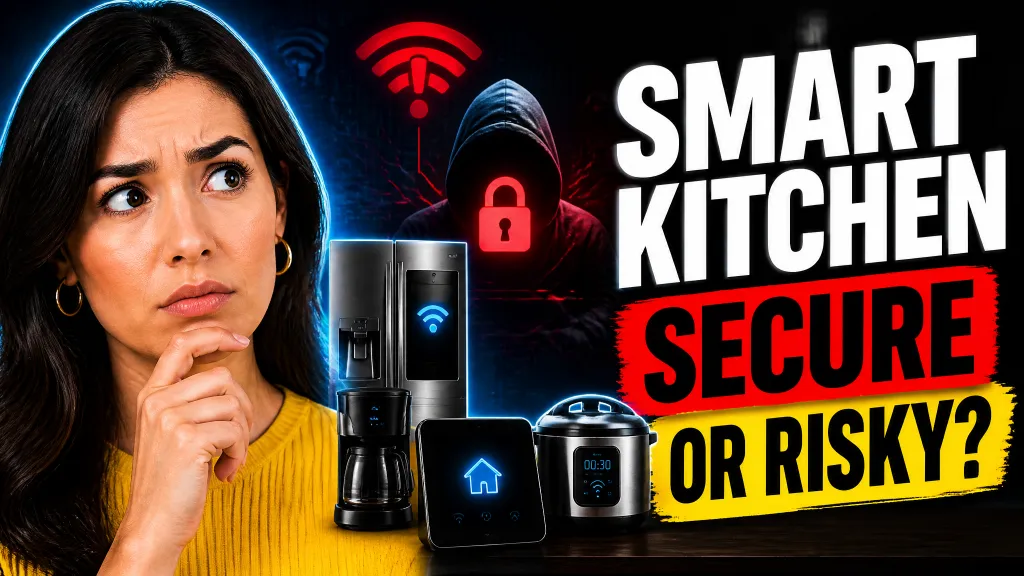
A viral X post says kitchen devices do not need internet access. CISA and FTC guidance points to a more nuanced approach to connected appliances.
A post by YourAnonCentral urged people to keep internet access out of the kitchen on X on November 28. The post raises a real question about connected devices, but it is not a proven rule for every appliance. The Cybersecurity and Infrastructure Security Agency’s archived 2021 guidance describes convenience, security and privacy tradeoffs. Its guidance supports checking whether each device needs constant access and securing products that remain online.
## What the smart-kitchen cybersecurity tip gets right
YourAnonCentral’s post states: “Cybersecurity tip: Nothing in your kitchen needs to be connected to the internet.” — Anonymous, @YourAnonCentral. It names no specific appliance, vulnerability or cyberattack. The post offers a broad recommendation rather than reporting a documented incident.
CISA defines Internet of Things devices as objects that send and receive information online. Its examples include appliances, wearables and home-security systems. The agency says connected devices can share more information than users expect, and their security is not guaranteed. That warning applies to IoT devices broadly, not to a confirmed flaw in any named oven or refrigerator.
CISA also warns that internet connections can expose devices to existing security risks. Large groups of insecure devices may be compromised or misused in coordinated attacks. The agency does not say that kitchen appliances are uniquely dangerous or that every connected appliance has been hacked.
## When connected kitchen appliances may be useful
The post’s absolute phrasing leaves out why people connect household devices. CISA acknowledges that internet-enabled products can make life easier. Depending on the model, a connected appliance may offer remote settings, alerts or other app-based functions.
Those options can matter to someone who values access while away from home. But a feature’s convenience does not mean every owner needs it. If an appliance works offline, keeping it off the network can reduce needless connections and data sharing. A connection may be essential for some options, while others work without it.
CISA’s practical test is less sweeping than the post’s headline advice. “Consider whether continuous connectivity to the Internet is needed.” — Cybersecurity and Infrastructure Security Agency guidance. That question puts the decision on the device’s purpose and the user’s preferences.
## Software support is part of smart-appliance security
Connected devices depend on software as well as hardware. Manufacturers may release updates to fix flaws, but consumers need to know whether those updates will continue. A device that loses support could become less secure or lose online features.
An FTC staff survey illustrates the transparency problem, though it did not focus on kitchen products. In 2024, staff examined 184 smart products across categories such as hearing aids, cameras and door locks. Nearly 89% did not clearly disclose online how long they would receive software updates.
The FTC said its staff found update-support information missing from 161 product webpages. Basic searches also failed to find support details for 124 of the surveyed products. Those figures describe the products reviewed in that survey, not every smart appliance sold today. That makes update policies worth checking alongside price, warranty terms and expected product life.
## Steps to protect internet-connected appliances
The FTC advises households to secure the router that connects home devices. It recommends changing default router credentials, enabling wireless encryption and checking for updates. A strong, unique password helps prevent a reused or factory-set login from becoming an easy entry point.
Owners can also review each appliance’s settings and app. The FTC recommends changing default device passwords, enabling two-factor authentication when available, and installing firmware and app updates. It also advises disabling features that are not used and disconnecting older devices with outdated security.
Before buying a connected appliance, shoppers can ask how long its software will receive updates. They can also compare the online features with the device’s offline functions. If remote access is useful, keeping the software current and protecting the home network can lower avoidable risks.
Ultimately, the X post raises a useful question, but does not prove every kitchen device should stay offline. CISA and FTC guidance points to practical checks: weigh the function, review settings and maintain updates. Households can make that choice appliance by appliance. As more products add online features, support policies and security controls will remain important questions for buyers.