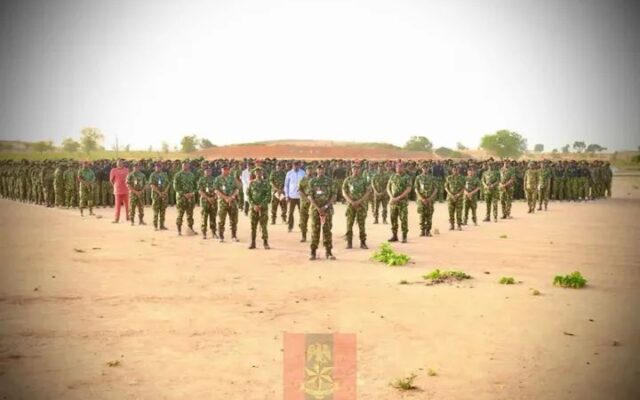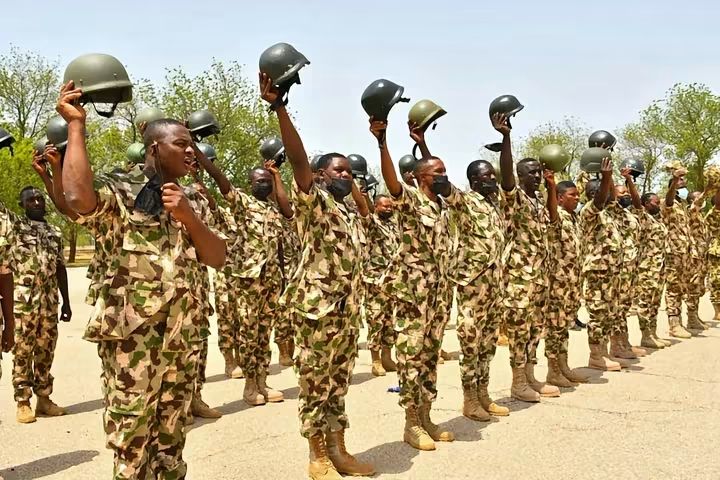
VAIRENGTE, INDIA — Six hundred Nigerian Army personnel have completed a four-week specialised military training programme in India, acquiring skills in counter-insurgency, counter-terrorism and jungle warfare as Nigeria strengthens its efforts to confront evolving security threats.
The soldiers graduated on Saturday, November 28, 2026, at the Counter-Insurgency and Jungle Warfare School (CIJWS) in Vairengte, Mizoram State, following an intensive programme designed specifically to address the operational requirements of the Nigerian Army.
The training, codenamed Guerrilla Prahaar, ran from November 2 to November 28 and exposed the Nigerian contingent to specialised combat techniques, unconventional warfare strategies and the use of contemporary military technology.
The graduation ceremony was attended by Nigeria’s High Commissioner to India, Ambassador Saidu Dahiru Muhammad, and Lieutenant General Neeraj Shukla, General Officer Commanding of the Indian Army’s Gajraj Corps. Their participation underscored the importance both countries attached to the military engagement.
The programme focused on preparing troops to operate in difficult environments, particularly forested, mountainous and challenging terrains where insurgent groups and other armed organisations can exploit geographical conditions to evade conventional military operations.
The soldiers received instruction in counter-insurgency tactics, counter-terrorism operations and jungle warfare, with emphasis on specialised skills required to identify, pursue and neutralise threats in complex operational environments.
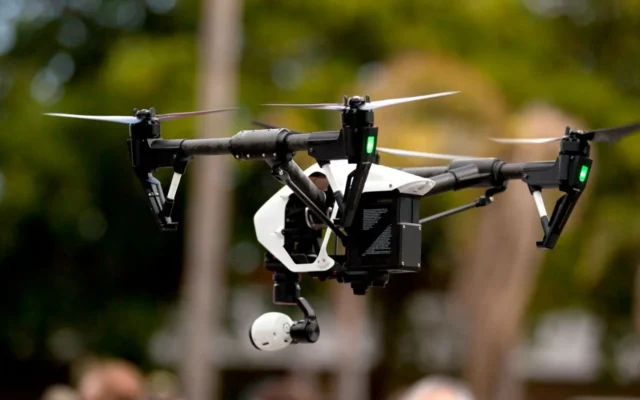
The training also provided exposure to modern military technology, reflecting the growing importance of technological capabilities in contemporary security operations.
The completion of the programme represents a significant development in defence cooperation between Nigeria and India. Officials described it as the first time in approximately eight decades that a Nigerian contingent of such magnitude had undergone training at the Indian military institution.
The Nigerian soldiers are expected to return home following the successful completion of the exercise, where their newly acquired knowledge and experience could contribute to ongoing military operations.
Nigeria continues to face multiple security challenges, including insurgency in the North-East, armed banditry in the North-West, kidnapping and other forms of organised criminal activity. These threats have placed sustained demands on the armed forces and highlighted the need for specialised training, intelligence capabilities and operational flexibility.
The experience gained in India could help strengthen the Nigerian Army’s ability to conduct operations in difficult terrain, although the effectiveness of the training will ultimately depend on how the acquired skills are integrated into operational planning, equipment deployment and field operations.
The deployment of the 600 soldiers followed an announcement by the Nigerian Army in October that it was sending personnel to India for specialised jungle and mountain warfare training. The first batch of 300 troops departed Abuja on October 22, while arrangements were made for the remaining personnel to join the programme.
India has maintained defence and military training relations with Nigeria for several decades. The two countries have cooperated through military education, professional exchanges, training programmes and institutional partnerships.
Their defence relationship is also supported by a bilateral memorandum of understanding on defence cooperation signed in October 2007. The agreement provides a framework for expanding military engagement, including collaboration in counter-terrorism and counter-insurgency operations.
The Counter-Insurgency and Jungle Warfare School in Vairengte is recognised for its specialised training in unconventional military operations. Its experience in preparing personnel for operations in challenging terrain made it a suitable institution for the Nigerian Army’s training requirements.
The latest engagement is expected to strengthen professional relationships between the two armed forces and create opportunities for further cooperation in military education and security capacity development.
For Nigeria, the priority will be translating the training into practical improvements in the field. This will require effective knowledge transfer, continued professional development, appropriate equipment and coordination with other security agencies.
The completion of the programme therefore marks not only a milestone in Nigeria-India defence relations but also another effort by the Nigerian Army to improve its capacity to respond to the country’s complex security challenges.