


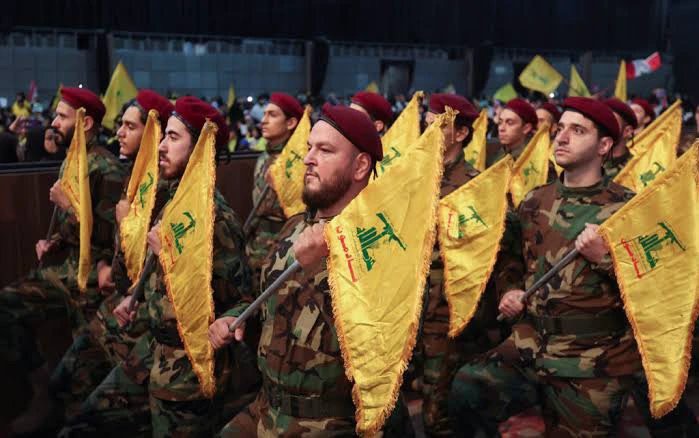
A senior Hezbollah official has stated that the group will not launch a unilateral retaliatory strike on Israel following recent Israeli attacks on Iranian targets.
Diaspora Digital Media (DDM) reports that the Lebanese-based, Iranian-backed group made the announcement as tensions rise between Israel and Iran, especially after a deadly Israeli operation killed more than 20 senior Islamic Revolutionary Guard Corps (IRGC) officers.
Among those killed was Brigadier General Amir Ali Hajizadeh, the commander of Iran’s Aerospace Force, in what Tehran considers a major blow to its military leadership.
“Hezbollah will not initiate its own attack on Israel in retaliation for Israel’s strikes,” the unnamed official told Reuters.

This decision signals Hezbollah’s reluctance to escalate hostilities amid Lebanon’s worsening internal crises and the group’s own overstretched military posture after years of fighting across the region.
Though Hezbollah has opted not to act immediately, it did issue a strongly-worded condemnation of Israel’s airstrikes, labeling them a “dangerous escalation.”
The statement described Israel as an entity that “understands only the language of killing, fire, and destruction,” but failed to indicate any concrete retaliatory plans.
Analysts believe Hezbollah’s rhetoric shows ideological alignment with Tehran, yet its tactical silence hints at a broader calculation to avoid drawing Lebanon into a full-scale war.
Israel’s military strikes reportedly targeted vital Iranian military and nuclear infrastructure.
Among the sites hit were an underground command facility and the Natanz uranium enrichment complex, both considered key to Iran’s missile and nuclear ambitions.
The Israeli Defense Forces (IDF) claimed success in significantly disrupting Iran’s strategic capacity to coordinate ballistic missile and drone operations.
Iran confirmed the attacks but dismissed the scale of damage, especially at Natanz, claiming only “surface-level impact” on operations.
The broader international community has since raised alarms about the growing threat of open warfare in the region.
The United Nations has urged all involved parties to return to dialogue and work to prevent a dangerous regional escalation.
The United States has reiterated its support for Israel’s right to self-defense but also emphasized the need for restraint and de-escalation.
Hezbollah’s decision to abstain from retaliation, at least for now, introduces a fragile calm but does not eliminate the risks.
Given the group’s historical entanglements with Israel and its loyalty to Iran, observers fear any spark could still ignite broader conflict.
For Lebanon, already reeling from economic collapse and political paralysis, a new war could prove catastrophic.
Thus, Hezbollah’s cautious posture is seen as both strategic and necessary in a country struggling to maintain internal stability.
However, questions linger about whether this position is sustainable should the conflict between Israel and Iran intensify further.
The group’s long-standing hostility toward Israel and its integration into Iran’s regional axis may eventually compel a more direct response.
Until then, the region watches closely, knowing that any shift in Hezbollah’s stance could tilt the Middle East into another devastating chapter of violence.




