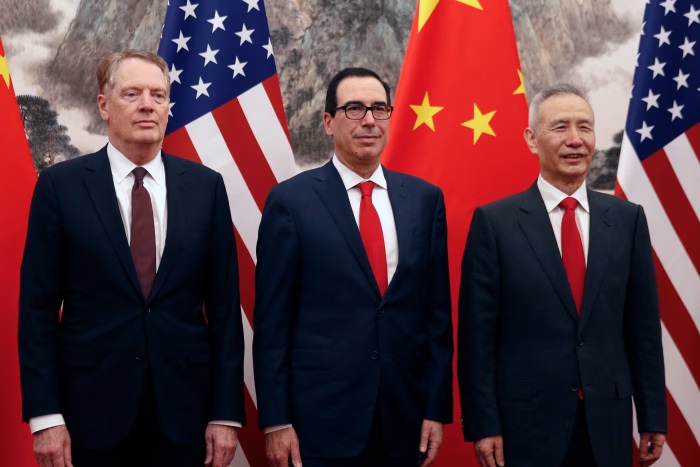
On Tuesday, high-level trade negotiations between the United States and China resumed in Stockholm, marking the third round of discussions within a three-month period.
According to online media reports, this is aimed at extending a fragile truce on the escalating tariff conflict between the world’s two largest economies.
The talks come against the backdrop of renewed tensions and complex geopolitical stakes, as President Donald Trump eyes an ambitious “world tariff” strategy that could reshape global trade dynamics.
Context of the Trade Talks
Since Trump resumed his presidency earlier in the year, the US and China have engaged in a tit-for-tat tariff battle, with duties on imports from either side soaring beyond 100% at their height.

Last June, both nations negotiated an initial truce following intense talks in London, wherein they agreed to temporarily pause the imposition of higher tariffs.
This truce, originally set for 90 days, is due to expire on August 12, 2025, prompting this latest round of talks with hopes of an extension or a more permanent agreement.
Leading the US delegation is Treasury Secretary Scott Bessent, while China is represented by Vice Premier He Lifeng.
Their discussions focus not only on continuing the tariff ceasefire but also on broader issues including US levies linked to fentanyl trafficking and China’s purchases of sanctioned Russian and Iranian oil.
The agenda also touches on technology restrictions, particularly those related to high-tech exports and Chinese firms such as the pending separation of TikTok’s US operations.
Tariff Structure and Stakes
Trump has publicly stated that the US maintains a cumulative tariff rate of 55% on Chinese goods.
These include:
- a baseline 10% “reciprocal” tariff applied to nearly all US trading partners,
- a 20% tariff on Chinese imports related to fentanyl concerns, and,
- pre-existing 25% tariffs from his first administration.
Meanwhile, China’s tariffs on US goods remain about 10%.
This complex tariff network has dramatically curtailed trade flows.
Economic simulations predict that Chinese exports to the US could plummet by nearly $485 billion by 2027 if tariffs remain at current levels or increase.
Similar impacts projected for allied manufacturers in countries such as Vietnam and South Korea are supposedly attempting to bypass Chinese goods through supply chain adjustments.
China’s Position: Growing Confidence and Strategic Leverage
Unlike previous rounds, Chinese officials appear emboldened entering these talks, having learned to leverage their significant market and supply chain influence.
President Trump has touted the deal as an American triumph.
On the other hand, Chinese leadership is said to approach negotiations with increased confidence.
It supposedly recognizes the United States’ dependence on critical Chinese exports, especially rare earth minerals and magnets vital across industries from electronics to aerospace.
In response to earlier US export controls and tariffs, China has expanded the list of controlled substances related to fentanyl precursors.
This is supposedly to demonstrate progress on combating opioid trafficking, a key US demand.
Moreover, Beijing aims to reduce or eliminate the 20% US tariff imposed under the guise of fentanyl-related measures.
It alsp seeks broader easing of US technology export restrictions hammered out during Trump’s previous term and maintained under his successor administration.
Chinese experts emphasize the dual goals of these talks: resolving tariff disputes, especially those associated with fentanyl, and deepening economic cooperation.
They assert that while confrontation remains a possibility, Beijing is firmly prepared to negotiate and pursue tangible results.
Trump’s ‘World Tariff’ Ambitions and Related Trade Deals
Parallel to the China negotiations, President Trump has advanced similarly large-scale trade accords with other major economic powers, notably the European Union and Japan.
These agreements include commitments for multibillion-dollar investments and energy product purchases.
These are coupled with moderated tariffs, around 15%, significantly lower than the highest 25% rates Trump had previously threatened.
The deals with the EU and Japan set a potential blueprint for what the US might expect or demand from China in ongoing negotiations.
Trump’s “world tariff” proposal, which envisions a baseline 10% tariff on imports from nearly all trading partners, aims to leverage American economic strength to secure investment and trade advantages.
It supposedly does this while addressing perceived imbalances and strategic vulnerabilities.
This approach has stirred mixed reactions but underpins much of the US’s current negotiating stance.
Outlook and Potential Impact
The Stockholm talks, though occurring under tight deadlines and intense scrutiny, hold significant implications for global trade stability.
Failure to extend or solidify the tariff truce by August 12 could reignite duties exceeding 100%, amplifying disruptions in global supply chains and escalating economic fallout internationally.
US officials remain cautiously optimistic, reflecting on constructive engagement and progress toward a new level of bilateral trade relations.
Nonetheless, issues surrounding tariffs linked to fentanyl, technology exports, and oil purchases continue to present major hurdles.
In parallel, China’s insistence on tariff reductions and regulatory easing illustrates the delicate balance between cooperation and rivalry.
If successful, these negotiations could extend the tariff ceasefire and pave the way for broader trade cooperation, mitigating the economic damage already endured.
Conversely, the failure to reach agreement could exacerbate tensions between Washington and Beijing.
It could also worsen tensions throughout the global economic system, especially given Trump’s push for a “world tariff” that would affect many nations.