
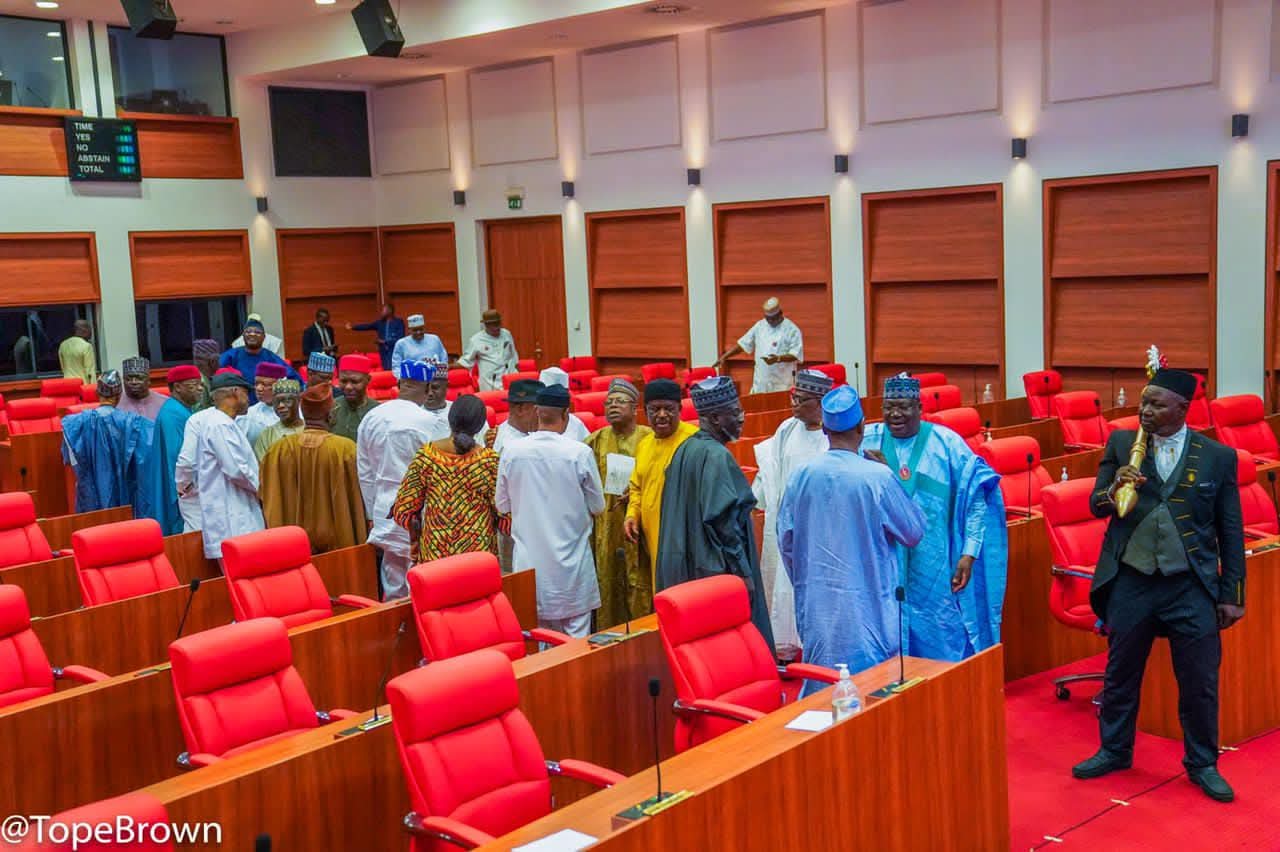
A storm brews in Nigeria’s Senate as lawmakers consider a new constitutional amendment that could unseat longtime political heavyweights like Godswill Akpabio and Ahmad Lawan.
The proposed legislation seeks to enforce a rotational system across senatorial, presidential, and governorship offices.
The bill, now before the National Assembly, targets Section 48 of the 1999 Constitution.
If passed, it will ban any federal constituency that has produced a senator from fielding another until other constituencies take their turns.
This move could end the political careers of many long-serving legislators dubbed the “landlords” of the National Assembly.

Senate President Godswill Akpabio and former Senate President Ahmad Lawan top the list of potential casualties.
Akpabio currently serves his second term, while Lawan has occupied legislative seats since 1999.
Other names that may be affected include Alhassan Ado-Doguwa, Enyinnaya Abaribe, Khadijat Bukar Abba-Ibrahim, and Mohammed Monguno.
These politicians have maintained a grip on power for decades, often cycling between executive and legislative roles.
The proposed change also affects Section 133. It mandates that Nigeria’s presidency must rotate among the six geopolitical zones.
Any region that has produced a president since 1999 will not be allowed to do so again until all other zones take their turn.
If passed, this clause will sideline the South-West, South-South, and North-West from future presidential contests, at least for the foreseeable future.
The bill also proposes rotating governors across each state’s three senatorial zones.
It further targets Section 49, requiring House of Representatives seats to rotate among local governments in each federal constituency.
Supporters say the reforms will expand political inclusion and promote equity. Constitutional lawyer Doris Bawa called it a bold attempt to reduce political monopoly.
“It forces power to circulate, not concentrate,” she said.
Political analyst Ayoola Samuel, however, warned of unintended consequences.
“Rotational laws may weaken institutional memory,” he argued. “We need lawmakers with experience and historical insight.”
Samuel said the proposed system could lead to a flood of inexperienced lawmakers.
He warned this might derail national progress and legislative efficiency.
As the Senate debates the proposal, tensions rise over what could become one of Nigeria’s most transformative political reforms.