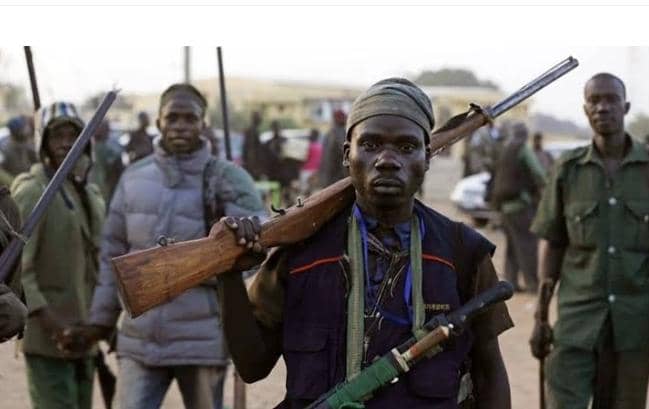
(DDM) – Nigerian farmers have expressed support for a proposal linked to the United States Congress recommending that vulnerable rural communities be allowed to defend themselves against violent attacks.
The development follows renewed international attention on Nigeria’s security crisis after former President Donald Trump redesignated Nigeria as a Country of Particular Concern due to persistent killings and displacement of farming communities.
A congressional panel set up by the US Congress submitted findings urging stronger action against armed groups operating in farmlands.
Among the recommendations was the removal of militias from occupied farmlands and support for community-based self-defence under strict regulation.
The proposal has generated widespread reactions across Nigeria, particularly in the Middle Belt and southern farming regions, where attacks on farmers have become increasingly frequent.

Middle Belt leaders, including the Middle Belt Forum and Mzough U Tiv Worldwide, described the proposal as timely.
They argued that rural communities remain exposed and unprotected despite repeated appeals to national security agencies.
Community leaders said decentralised policing and structured local defence would discourage attackers who exploit weak security presence.
One leader emphasized that farmers should not be “defenceless while attackers move freely,” suggesting that organised local security backed by law would serve as the first line of protection in emergencies.
Farmers’ groups in Plateau State also expressed support, noting that many farmers can no longer sleep in their homes or access their farms due to fear of attacks.
They called for a regulated framework that allows lawful self-defence without encouraging abuse.
In the South East, a former cassava farmers’ leader recounted how herders destroyed over five hectares of farmland worth millions of naira without consequences.
He argued that allowing licensed farmers and vigilante groups to bear arms would deter criminals and restore confidence in food production.
However, some stakeholders cautioned against civilian armament.
A former commissioner for agriculture in Abia State warned that allowing farmers to carry arms could lead to widespread gun ownership, urging the Federal Government to first implement state police and assess its effectiveness.
Women farmers in Zamfara State expressed concern that more weapons could worsen insecurity in regions already saturated with firearms.
They called instead for stronger rural security, better intelligence, and safer access to markets and farmlands.
Farmers in Edo State supported regulated self-defence, highlighting that farmers are among the most targeted groups and that licensed guns could empower communities to protect themselves.
Economic and security analysts stressed that intelligence gathering and technology, such as drones and surveillance, should be prioritised over arming civilians.
Legal experts noted that Nigeria’s constitution does not grant citizens the right to bear arms, with firearm ownership strictly controlled under existing law.
The ongoing debate places pressure on the Federal Government to balance food security, public safety, and constitutional limits while addressing growing threats faced by farmers nationwide.
As rural attacks continue, policymakers face the challenge of designing solutions that protect communities without escalating violence or undermining legal frameworks.
Farmers’ support for regulated self-defence highlights frustration with the perceived inadequacy of existing security measures and the urgent need for practical interventions.
The discussion also underscores broader concerns about Nigeria’s rural security, economic stability, and the protection of critical food production zones.
Moving forward, government authorities will need to reconcile local defence initiatives with constitutional restrictions, while strengthening institutional security to reduce the vulnerability of farming communities.