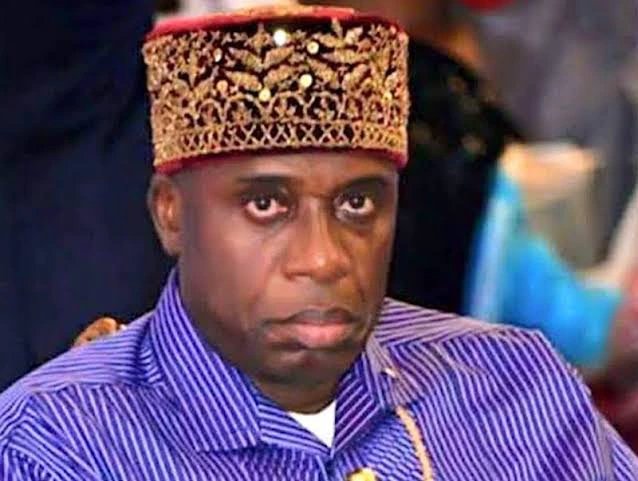
(DDM) – Former Minister of Transportation Rotimi Amaechi has sharply criticized the administration of Bola Ahmed Tinubu, questioning what he described as the lack of visible achievements since the government assumed office.
Amaechi made the remarks during a political interaction with supporters on Tuesday as debates surrounding the 2027 general elections continue to intensify across Nigeria.
The former minister said Nigerians would ultimately judge the ruling All Progressives Congress based on the tangible results it delivers before the next election cycle.
According to Amaechi, citizens are increasingly asking what concrete projects or policies the current administration has implemented since coming into power.
He specifically raised concerns about the controversial Lagos–Calabar coastal highway project, which has remained a major talking point in national infrastructure discussions.

The Lagos–Calabar Coastal Highway is one of the flagship infrastructure initiatives promoted by the Tinubu administration as part of its long-term development strategy.
Government officials have repeatedly described the project as a transformative highway expected to connect major economic hubs along Nigeria’s southern coastline.
The proposed superhighway is planned to stretch from Lagos through several coastal states before terminating in Calabar, the capital of Cross River State.
Supporters of the project argue that it could significantly improve trade, tourism, and regional connectivity across southern Nigeria.
However, critics have questioned the project’s transparency, cost, and the pace of visible construction since its announcement.
Amaechi joined those critics, arguing that many Nigerians are yet to see clear evidence that the project is progressing on the ground.
He stated that citizens expect national infrastructure projects to move beyond policy announcements and become visible developments that directly benefit the population.
According to him, large-scale government projects must produce measurable results rather than remain political promises.
The former Rivers State governor suggested that voters will likely scrutinize such projects carefully as the country approaches the 2027 elections.
Amaechi insisted that Nigerians will evaluate whether projects like the coastal highway are completed or remain symbolic government pledges.
He also used the opportunity to defend his own performance during his tenure as Minister of Transportation under former President Muhammadu Buhari.
Amaechi said several transportation projects were successfully executed during that administration.
Among those projects were rail modernization efforts and other infrastructure developments aimed at improving Nigeria’s transportation network.
During Buhari’s presidency, the government launched multiple rail initiatives intended to connect major cities and boost economic activity.
These projects included expansions within the national rail system operated by the Nigerian Railway Corporation.
Amaechi argued that many of those infrastructure developments remain visible and can easily be verified by members of the public.
He challenged the current government to present similar achievements that Nigerians can see and evaluate.
In a strongly worded statement, Amaechi questioned what the present administration has accomplished since taking office.
He argued that voters will ask a simple question when the next election approaches: what has the government actually delivered?
Amaechi said that even supporters of the ruling party would likely examine the administration’s record before deciding their political choices.
The former minister then directly referenced the Lagos–Calabar Coastal Highway while criticizing the government’s performance.
He asked where the project currently stands despite the extensive publicity surrounding it.
Amaechi also accused the government of failing to provide clear proof of major completed initiatives.
His remarks have since sparked debate among political commentators and supporters of different parties.
Some analysts believe the criticism reflects growing political positioning ahead of the 2027 presidential race.
Others argue that such statements highlight wider concerns about transparency and infrastructure delivery in Nigeria.
Infrastructure projects have historically played a major role in Nigerian political campaigns and governance narratives.
Successive governments have often used large development initiatives to demonstrate progress and attract public support.
However, delays, funding challenges, and corruption allegations have frequently slowed or undermined these projects.
The Lagos–Calabar Coastal Highway itself has generated significant controversy since its announcement.
Critics have raised questions about environmental impact, procurement procedures, and the total cost of the project.
Supporters, however, insist the road could transform economic activity along Nigeria’s Atlantic corridor if completed.
For now, the debate continues as political actors increasingly position themselves ahead of the next election cycle.
Amaechi’s comments add another voice to the growing national conversation about government performance, accountability, and infrastructure development in Nigeria.