


By John Okiyi Kalu
The ongoing debate over what Peter Obi left behind as debt in Anambra has now become largely partisan, with facts being obfuscated or lost in translation by actors trying to make political capital out of the matter rather than state the facts and analyse them for the sake of posterity.
After reviewing the facts available in the public space, I believe I am permitted to make some observations that may cut both ways politically but represent what I have established through examining publicly available records.
1. The renewed debate was triggered by the recent statement attributed to Mazi Peter Obi that he did not leave any debt for his successor and that, if facts prove otherwise, he would drop his presidential campaign.

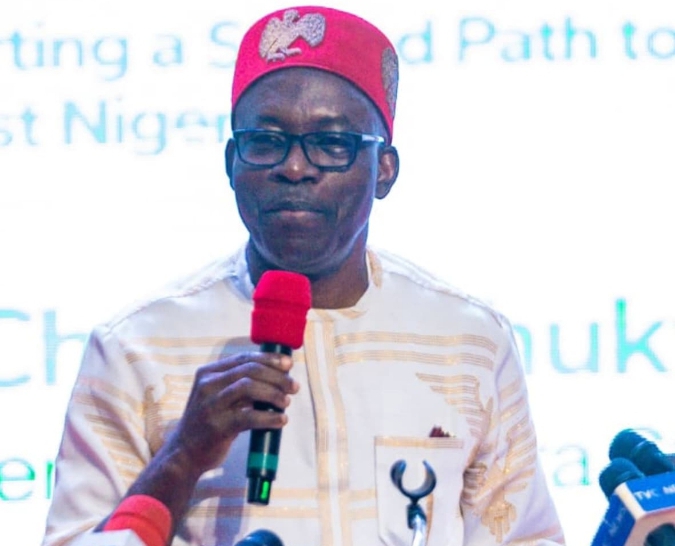
2. Prof. Chukwuma Soludo did not start this particular debate. He responded with information available to him as Governor of Anambra State. Those criticising him are essentially saying that he ought to have kept quiet rather than state facts that could hurt the political ambition of his brother and kinsman.
3. Of course, Soludo is also a partisan political actor with his own political interests and ambitions. If we locate Obi’s statement within the context of his political ambition, then we should equally locate Soludo’s response within the context of his own political interests. But neither fact makes either man’s claims automatically true or false. The facts should be independently examined.
4. In November 2015, then Anambra State Secretary to the State Government, Prof. Solo Chukwulobelu, speaking for Governor Willie Obiano, said the Obi administration had left a portfolio of ongoing and inherited projects with a total contract value of approximately ₦185.1 billion. According to the Obiano administration, ₦78.9 billion had already been paid, leaving approximately ₦106.2 billion outstanding.
5. It is important to note that ₦185.1 billion was the value of the inherited project and contract portfolio, not necessarily conventional debt. The ₦106.2 billion was the figure described as outstanding.
6. Willie Obiano was Peter Obi’s immediate successor, followed by Chukwuma Soludo. For reasons that remain difficult to understand, the political narratives of these three APGA administrations do not always align, despite their common political heritage.
7. The one-page handover document currently being circulated should also not automatically be treated as the complete handover documentation. It contains details of assets and investments but does not, by itself, provide a comprehensive schedule of liabilities.
8. In my view and based on my experience, a proper government handover should capture both assets and liabilities. The absence of liabilities from one document does not, by itself, establish that there were none.
9. On the other hand, it is factually supportable to state that Obi’s camp claimed that he left substantial financial assets and investments for his successor. In his 2015 response to the Obiano administration, Obi’s aide put the figure at over ₦75 billion, including local-currency investments, foreign-currency investments and certified State/MDS balances.
10. It is therefore important not to add the foreign-currency investment figure separately to the ₦75 billion and present the result as an additional asset. The foreign-currency investment was already included in the breakdown of the more than ₦75 billion claimed by Obi’s camp.
11. So the more reasonable description is that Obi’s camp claimed to have left more than ₦75 billion in cash, investments and certified balances, rather than ₦75 billion plus a separate foreign-investment amount.
This is where some of the current arguments have become confused.
12. The more recent information released by the Soludo administration presents another category of liability. It says the Obi administration was associated with approximately US$123.77 million in project-linked external financing. However, that figure represents the facilities contracted, not necessarily the amount outstanding when Obi left office. The Soludo administration says approximately US$92.35 million remained outstanding as of June 30, 2026, which it valued at approximately ₦127.37 billion using its stated exchange-rate basis.
13. These were largely development-project facilities and not simply commercial loans deposited into the state’s unrestricted account. There are also separate claims concerning inherited salary, pension and gratuity liabilities, which is not surprising because, as I know from my experience, all South-East state governors of the 2014/2015 class inherited varied amounts of unpaid wages, pensions and gratuities of some sort.
14. The claim that facilities such as NEWMAP were simply Federal Government loans and therefore not state debt is incomplete. States are not sovereign entities and generally access external development financing through arrangements facilitated by the Federal Government. But the fact that the Federal Government facilitates the borrowing does not automatically mean that the state is not the beneficiary or ultimately responsible for repayment. The individual financing agreements should therefore be examined. In Abia, the NEWMAP erosion-mediation facility came as a loan that the state government is repaying.
15. There is also the disputed ₦2.13 billion said by Obi to have been left in a First Bank account for the Oko/Umuchiana erosion project. Obi says the money was deliberately preserved for his successor and was not part of the ₦75 billion.
16. The Soludo administration disputes this, saying its certified bank records show that the account was an IGR Consolidated Revenue Account and that it found no ₦2.13 billion ecological-fund balance there.
17. In my view, this should be an easy matter to settle. Obi should provide the correct bank and account details if he has them, while the state government can publish the relevant certified records. The documents should resolve the matter.
18. On the DMO figures, the last available state-level DMO debt data before Obi’s departure was as at 31 December 2013. Obi left office on 17 March 2014, while the next state-level publication was for 30 June 2014.
19. As at 31 December 2013, DMO recorded Anambra’s external debt at approximately US$30.32 million and domestic debt at approximately ₦3.03 billion.
20. By 30 June 2014, the external debt had risen to approximately US$41.46 million. That was an increase of about US$11.14 million, or 36.7 percent.
21. But it would be wrong to attribute the entire increase automatically to Peter Obi because the June figure covers more than three months after he had left office.
22. It is therefore supported by the available DMO record that Peter Obi did not leave Anambra literally debt-free in the technical public-debt sense. The last DMO record before his departure shows that the state had external and domestic debt.
23. However, if Mazi Peter Obi had specifically stated that he left zero commercial bank loans as Governor of Anambra State, he would very likely have been correct, at least based on the DMO’s classification of Anambra’s external debt. The DMO’s December 2013 record shows Anambra’s entire external debt as multilateral debt, with no bilateral, commercial or Eurobond debt recorded.
24. That distinction is important. Saying that Anambra had no commercial bank loans is not the same as saying that the state had no debt or outstanding financial obligations of any kind. DMO separately recorded approximately ₦3.03 billion in domestic debt as at December 2013. DMO data are supplied by states so it is safe to state that it was Obi’s government that supplied that data to the Presidency.
25. It is equally unsafe, however, to take today’s approximately ₦127 billion figure and describe it as the amount Peter Obi handed over as debt in March 2014. That figure represents current outstanding balances associated with historical project financing and is not the same thing as the DMO debt stock at handover.
26. Likewise, the ₦185.1 billion figure should not simply be described as ₦185.1 billion of conventional debt. The Obiano administration described it as inherited project and contract obligations and said approximately ₦106.2 billion remained outstanding after ₦78.9 billion had been paid.
27. What seems clear from the available evidence is that Peter Obi left substantial financial assets and investments for his successor, while there were also outstanding public debts and contractual/project obligations.
28. That does not establish that he was corrupt or financially imprudent. Neither does it establish that he left Anambra completely debt-free.
29. For me, the honest position is to acknowledge both sides of the evidence and stop forcing every figure into a partisan narrative.
30. I am reluctant to enter into the separate political argument about whether a government should leave large amounts of money and investments for its successor or deploy more of those resources into infrastructure and other projects that can create lasting development legacies. That is a legitimate policy debate, but I have chosen to “jump and pass”.
My interest is simply to understand where the facts lead and state them publicly for others to examine.
Let the records speak. Let the numbers be reconciled. Let Nigerians make their own political conclusions. On Election Day, I will exercise my constitutional right to vote according to my own judgment, as every Nigerian should.
—JOK
17/09/2026




