



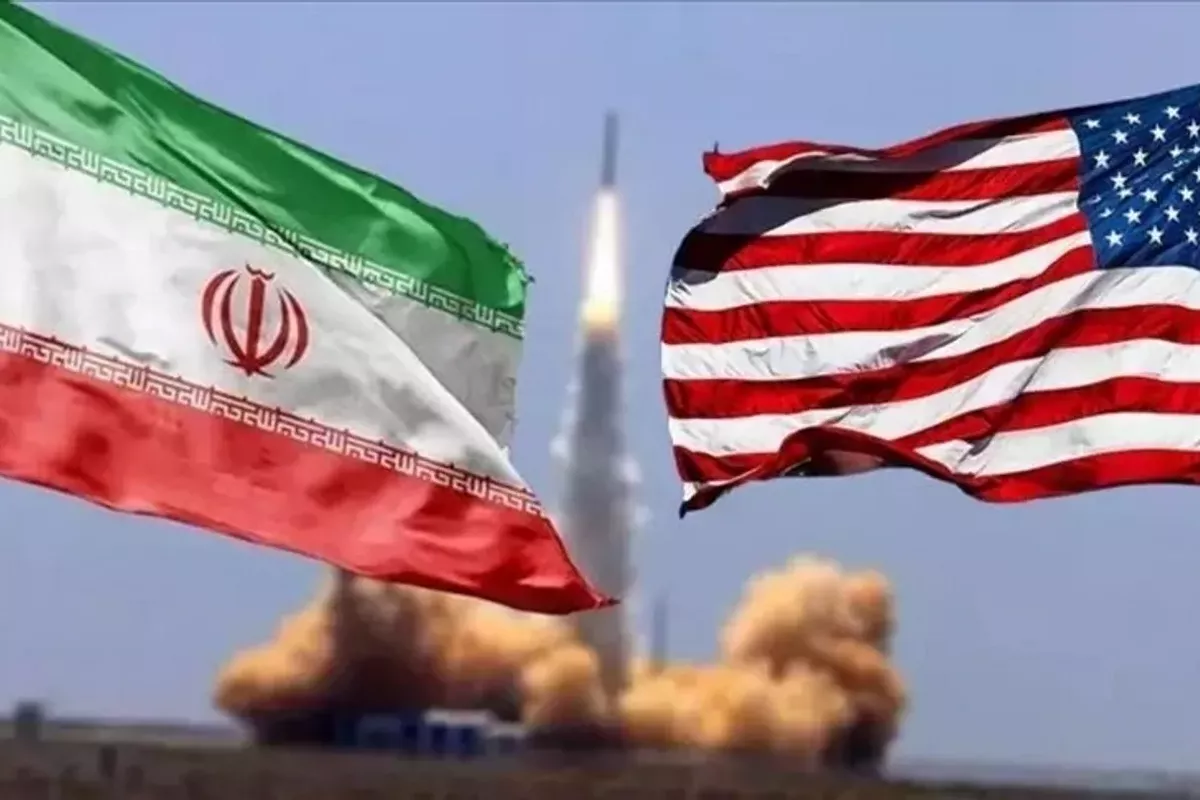
The drums of war are beating again and this time, the sound is coming from the Gulf.
The United States appears increasingly poised to strike Iran, with the language from Washington growing sharper and the military posture around the region looking less like deterrence and more like preparation.
The targets, if the strike happens, will not be hard to guess: Iran’s nuclear infrastructure, missile systems, drone networks, and the command backbone of the Islamic Revolutionary Guards Corps (IRGC).
But wars are rarely defined by the first strike. They are defined by what follows.

That is the central danger in this moment: the US may know what it wants to hit, but no one can confidently predict what Iran will hit back or how far the escalation ladder will climb before leaders lose control of it.

This is not simply another Middle East flare-up. Iran is not Iraq. It is not Libya. It is not Syria. It is a regional heavyweight with a population of about 93 million, a long memory of foreign interference, and a security state built to absorb pressure, punish opponents, and survive.
So if America attacks, the question is not just “Can the US do it?”
The real question is: Can the world contain what it triggers?
WHY THE US WOULD STRIKE AND WHY IRAN WOULD NOT BACK DOWN
From the American perspective, a strike would likely be justified under three broad goals:
To degrade Iran’s nuclear capacity and reduce the risk of Iran achieving nuclear weapons capability.
To cripple Iran’s missile and drone threat, especially after years of regional attacks linked to Iranian networks.
To reassert deterrence, sending a message not only to Tehran but to every armed proxy and rival power watching.
From Iran’s perspective, however, a US strike would not be seen as a “limited operation.”
It would be interpreted as a direct attack on the state’s sovereignty and survival.
And when regimes believe their survival is being tested, restraint becomes a luxury they often can’t afford.
Iran’s response would be driven by two instincts:
revenge, because domestic legitimacy in Tehran is tied to resistance
deterrence, because failing to respond could look like weakness
That is why this moment is so combustible. Both sides can claim logic. Both sides can claim necessity. But logic does not prevent war it often just provides the paperwork for it.
SEVEN SCENARIOS IF AMERICA STRIKES IRAN
1) THE “SURGICAL STRIKE” OUTCOME: A FAST HIT, A QUICK EXIT
This is the cleanest scenario and the one Washington would prefer: a precise campaign, limited in duration, aimed at military and nuclear assets, with minimal civilian casualties and no long-term entanglement.
In this version, the US hits hard, Iran absorbs the blow, and both sides step back from the cliff.
But this scenario depends on something history rarely provides: perfect control.
War is not mathematics. It is emotion, pride, retaliation, misinterpretation, and momentum. Even if America intends a limited strike, Iran may interpret it as the beginning of a larger campaign — and respond accordingly.
2) IRAN SURVIVES, BUT SOFTENS: THE “PRESSURE WORKS” THEORY
Another possibility is that Iran’s leadership survives but adjusts its behaviour to avoid further punishment. That could mean:
- reducing support for armed proxies
- slowing nuclear and missile development
- re-entering diplomacy under pressure
- easing internal repression to reduce domestic instability
This would be the best-case strategic win without regime collapse.
But Iran’s political identity is built on resistance, not compliance.
The Islamic Republic has survived for decades by portraying itself as the defiant fortress against Western domination.
A sudden policy moderation after a strike would require Tehran to do what it has historically struggled to do: appear flexible without appearing defeated.
3) REGIME COLLAPSE BUT NOT INTO DEMOCRACY
Some observers assume that if Iran is hit hard enough, the system will fall and democracy will rise. That is an emotionally satisfying narrative but it is not guaranteed.
A more realistic outcome, if the regime fractures, is not a civilian democratic transition but military rule or a hardened security takeover dominated by the IRGC.
Iran has a deeply entrenched security architecture. If leadership weakens, the most organised and armed institution does not retire politely. It takes the steering wheel.
The result could be a government that is even more militarised, even more suspicious, and even less open to compromise than what existed before.
4) IRAN RETALIATES DIRECTLY: US BASES AND REGIONAL ALLIES BECOME TARGETS
If Iran chooses retaliation, it may not focus only on American forces. It may strike the broader ecosystem of US influence in the region.
Iran has long invested in tools of asymmetric warfare:
- ballistic missiles
- armed drones
- covert operations
- proxy networks
- cyber attacks
The Gulf region hosts critical American assets and bases. Countries like Bahrain and Qatar, among others, are within reach. Iran could also punish states it believes enabled the strike even indirectly.
This is where the war becomes bigger than Washington and Tehran.
Neighbouring states could be dragged in not because they chose the conflict, but because geography chose them.
And once a regional ally is hit, pressure builds for wider retaliation. That is how “limited strikes” turn into “wider war.”
5) THE STRAIT OF HORMUZ CRISIS: GLOBAL TRADE AND ENERGY SHOCK
This is the scenario that terrifies economists more than generals.
Iran could respond by disrupting shipping in the Strait of Hormuz a narrow maritime corridor that functions like a global economic artery.
The figures alone explain the fear:
- about 20% of the world’s LNG exports move through this route
- roughly 20–25% of global oil and oil products pass through it annually
- Iran does not need to shut it down permanently to cause damage. Even temporary disruption triggers:
- panic in oil markets
- sharp price increases
- rising shipping insurance costs
- supply uncertainty
- inflation pressure globally
For countries like Nigeria, this would be a double-edged sword. Higher oil prices may look beneficial on paper, but the lived reality could include:
- increased fuel and transport costs
- higher prices of imported goods
- inflation pressure on households
- renewed strain on businesses and food markets
In short: the global economy would feel it and ordinary people would pay for it.
6) A MAJOR SHOCK EVENT: IRAN SINKS A US WARSHIP OR KILLS MANY AMERICANS
This is not the most likely scenario — but it is the one that would change everything overnight.
Iran has studied asymmetric naval tactics for years, including “swarm attacks” involving drones, fast boats, and missiles designed to overwhelm defenses.
If a US warship is sunk or badly damaged, or if a large number of American service members are killed, the political consequences in Washington would be immediate and intense.
In such moments, the debate shifts from strategy to emotion.
And once a superpower feels humiliated, escalation becomes not just an option but a demand.
That is how wars spiral: not because leaders want them, but because public pressure corners them into proving strength.
7) THE WORST CASE: IRAN COLLAPSES INTO CHAOS
This scenario is the nightmare for Iran’s neighbours and for the wider world.
If Iran’s central authority collapses, the aftermath could resemble the instability seen in other fractured states but on a far larger scale given Iran’s size and strategic weight.
The risks include:
- prolonged civil conflict
- ethnic tensions turning into armed clashes
- humanitarian breakdown
- mass displacement and refugee flows
- extremist groups exploiting the vacuum
- regional destabilisation from Iraq to the Gulf
Many states may dislike the Islamic Republic. But very few want to see Iran become a broken state. A weak Iran is one thing.
A chaotic Iran is a different kind of danger the kind that exports instability in every direction.
THE ROLE OF OTHER POWERS: THIS COULD BECOME A WIDER GLOBAL TEST
No major conflict today happens in isolation.
Even if the US and Iran are the main actors, other powers will calculate their interests:
Israel would likely view Iranian military degradation as beneficial, given long-standing fears about Iran’s nuclear trajectory and regional influence.
Gulf states would worry about being caught in the retaliation crossfire.
Russia and China would watch closely, not only for Middle East outcomes but for what the crisis reveals about US power, alliances, and global order.
Europe would face energy shocks, refugee risks, and security ripple effects.
This is why the world is uneasy: the battlefield may be in the Middle East, but the consequences will be global.
THE REAL DANGER: A WAR WITH NO END-STATE
The most unsettling feature of this moment is not the possibility of strikes. It is the possibility of strikes without a clear plan for what comes after.
Military action can destroy infrastructure.
It cannot easily build political stability.
If the US strikes Iran, Washington must answer hard questions:
What is the desired end-state?
Is the goal deterrence, regime change, or negotiation leverage?
How will escalation be contained if Iran retaliates?
What is the exit strategy?
Who manages the region if Iran fractures?
Without clear answers, war becomes a gamble and the stakes are too high for gambling.
THE WORLD SHOULD FEAR MISCALCULATION MORE THAN INTENTION
Sometimes wars begin with deliberate plans.
But the most dangerous wars begin with miscalculation.
A missile hits the wrong base.
A drone strike kills civilians.
A warship goes down.
A proxy acts independently.
A leader refuses to lose face.
And suddenly, diplomacy becomes a late apology instead of an early solution.
If the US strikes Iran, it may be described as “limited.”
But history teaches us a painful lesson: wars are often born limited and they grow beyond their parents.
In this moment, the world is not just watching what America will do.
It is watching what Iran will do next.
And what happens next may not remain in the Middle East.

