


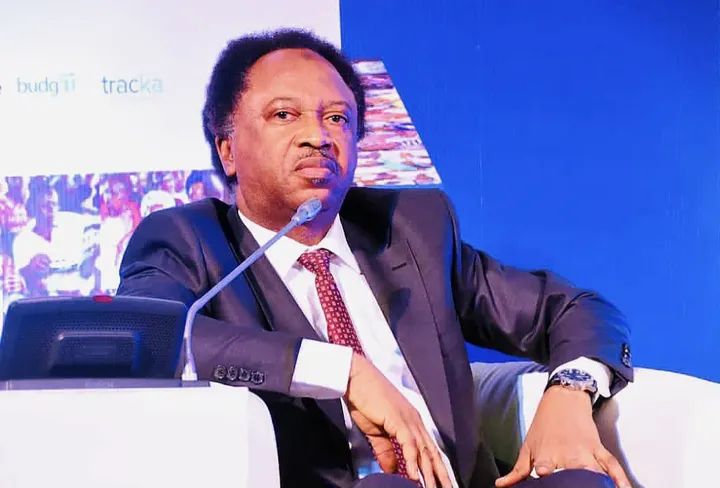
ABUJA, NIGERIA — Former Senator Shehu Sani has said that if African Democratic Congress presidential candidate Atiku Abubakar wins the 2027 election, it will mark the end of the rotational presidency in Nigeria.
Sani made the remark on Friday during an interview on a national television programme, where he analysed the political dynamics ahead of the 2027 general elections. He argued that Atiku’s candidacy, if successful, would disrupt the informal rotational arrangement that has seen the presidency alternate between the North and the South since the return to democracy in 1999.
“Atiku Abubakar is a northern candidate, and if he wins in 2027, he would have succeeded a northern president in President Bola Tinubu, who is also a northerner. That would effectively end the rotational presidency in Nigeria. It would mean that the North would have held power for 16 consecutive years, which is not what the founding fathers of our democracy envisaged,” Sani stated.
The former senator noted that the rotational presidency was an informal but widely accepted arrangement designed to promote equity, fairness, and national unity. He said the arrangement had helped to stabilise the country by ensuring that power rotated between the North and the South, and that any attempt to disrupt it could have serious implications for national cohesion.

“The rotational presidency is not enshrined in the constitution, but it is a political convention that has been observed since 1999. It is a delicate balance that has kept Nigeria together. If we jettison it, we do so at our own peril,” he said.
Sani said the South was expected to produce the next president in 2027, given that President Tinubu, a northerner, would have completed two terms by then. He argued that Atiku’s candidacy, if successful, would violate this arrangement and could lead to political instability.
“If Atiku wins, it would mean that the North has produced the president for 16 years, while the South would have been sidelined. That is not fair, and it is not sustainable. The South has capable candidates who can lead this country, and they should be given the opportunity in 2027,” he said.
The former senator also spoke about the candidacy of Peter Obi, the Nigeria Democratic Congress presidential candidate, describing him as a “credible candidate” who represents the aspirations of many Nigerians, particularly young people. He said Obi’s candidacy had energised the political landscape and had shown that the electorate was ready for a new kind of leadership.
“Peter Obi has brought a new dimension to our politics. He has shown that the people are no longer interested in business as usual. Whether he wins or not, he has already changed the conversation,” Sani said.
He urged Nigerians to vote for candidates who have the competence, integrity, and vision to lead the country, irrespective of their region or religion. He also called on the political class to respect the will of the people and to ensure that the 2027 elections are free, fair, and credible.
“The 2027 election is a defining moment for Nigeria. We must get it right. We must elect leaders who will unite us, not divide us. We must elect leaders who will work for the good of all Nigerians, not just a section of the country,” he said.
Atiku’s campaign has not yet responded to Sani’s remarks. However, the ADC has consistently argued that its candidate is the most experienced and competent person to lead Nigeria, and that his presidency would benefit all sections of the country. The party has dismissed the rotational presidency argument as a distraction, insisting that the 2027 election should be based on competence and the ability to deliver good governance. For now, the debate over the rotational presidency is likely to remain a major issue in the lead-up to the 2027 elections.




