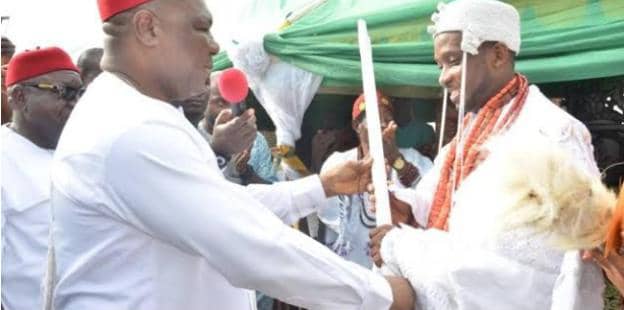
Members of the All Progressives Congress (APC) in Enugu State have erupted in jubilation following the confirmation that Governor Peter Mbah will officially join the ruling party next week.
The announcement was made by the APC National Chairman, Professor Nentawe Goshwe Yilwatda, who revealed that the defection ceremony will take place in Enugu on Tuesday.
He added that Mbah will be joined by his aides, political allies, and several loyal followers in what is expected to be a high-profile event.
According to Yilwatda, the governor’s defection is part of a broader effort by the APC to strengthen its base in the South-East and prepare for future elections.
The move is already being described as one of the most significant political realignments in recent times within Enugu State.
Reacting to the development, Barrister John Diara, a prominent APC chieftain in Enugu, described Mbah’s entry into the party as a “welcome and strategic development.”
He expressed confidence that the governor’s presence would inject new energy and credibility into the party, positioning it for greater electoral success in the coming years.
“This is the best thing that has happened to Enugu APC in recent memory,” Diara said. “Governor Mbah’s defection is a signal that the APC is ready to take over the state in the next election.”
He noted that the APC’s poor performance in past elections was largely due to internal leadership crises and the selfish interests of some party stakeholders.
However, he expressed optimism that with Mbah’s influence and political network, the party would now be repositioned to win future elections convincingly.
“The truth is that before now, we were ashamed to identify with the APC in Enugu because of how the party was being managed.
But now, we are proud to say we belong to a ruling party that is attracting quality leaders,” he added.
Political observers believe Mbah’s defection could reshape the political landscape of Enugu State ahead of the 2027 elections.
Many see his move as a calculated decision to align with the ruling party at the federal level and secure stronger political leverage for the state.
As preparations intensify for the formal event, expectations are high among APC supporters who see this as a new dawn for the party in the South-East.
The ceremony next week is expected to attract top national and regional leaders of the APC, signaling the party’s renewed focus on the zone.
FFK and the Talk Merchants: The Spy, the Silence, and the Slaughter
There is a generation of public voices in Nigeria who talk for bread, not for truth. They are the talk merchants of our tragedy — loud when the powerful need justification, mute when the powerless need justice. None embodies this betrayal more consistently than Femi Fani-Kayode (FFK) — a man who has perfected the art of prostituting his intellect for recognition, relevance, and reward.
The Spy Who Fooled Us
Femi Fani-Kayode is not a Christian; neither is he a Muslim. He is a mole for every and anything that guarantees him attention and access. His convictions are negotiable; his faith, a matter of convenience. Once upon a time, he was the advocate of Northern Christians — voicing their pain in the day and taking instructions from their oppressors at night. Then came his open turbaning as a Northern chief, confirming his genealogical loyalty to his Fulani heritage.
But this is not about ancestry; it is about duplicity. The Fulani, like every other Nigerian people, deserve dignity, education, and citizenship — not suspicion or scorn. What they need is liberation from the prison of feudalism, not applause for conquest. The tragedy lies not in the Fulani’s pursuit of power but in the state’s refusal to educate and integrate them as citizens of equal standing under a just constitution.
That failure — constitutional, not ethnic — is what sustains the cycle of blood and backwardness. The forest Fulani phenomenon is not a tribal curse; it is a systemic creation. An uneducated population raised on the theology of conquest will continue to believe that domination is destiny until a restructured Nigeria dismantles the economic and political incentives of feudal violence.
The author, Bolaji O. Akinyemi
The Merchants of Noise
Today, Nigeria’s public space is dominated by men who speak without soul — FFK, Sowunmi, Reno Omokri, Olayinka, Daniel Bwala, and their like. They are talk merchants, not truth bearers. They occupy television studios like traders in the market of manipulation — selling soundbites to buyers in power.
Their moral currency is not conscience but convenience. They claim to interpret the pulse of the nation but are merely echoing the heartbeat of their paymasters. Between them and the government’s official megaphones, Chief Bayo Onanuga now stands taller in communication credibility — a shocking testimony of how the opposition’s conscience has collapsed.
While the poor are slaughtered in Plateau and Benue, these talk merchants debate political gossip. While farmers flee ancestral lands, they trend hashtags. While widows wait for justice, they wait for appointments. Their noise fills the air; their silence fills the morgues.
The Silence that Kills
The tragedy of Nigeria today is not only that people are dying; it is that those who should speak have become partners in silence. From the Church’s hierarchy to the nation’s high offices, there is a conspiracy of comfort.
The Christian Association of Nigeria (CAN), now a political bureau rather than a prophetic body, recently claimed that the killings have “no pattern.” That statement alone should qualify as blasphemy. When blood flows in Benue and the Church calls it “patternless,” we have not just lost our faith — we have lost our moral compass.
Femi Fani-Kayode and his ilk seize upon such confusion to project themselves as “defenders of truth.” But FFK is not defending Christianity; he is defending attention. His positions shift with the tides of opportunity. He was once a friend of Nnamdi Kanu (NMK), shouting “Biafra now!” until the microphone moved elsewhere. He was once a senior brother to Sunday Igboho, trusted with secrets that only betrayal could reveal. The day the DSS raided Igboho’s home, one must wonder: whose footprints led the hunters to the door?
The Spy and the System
Fani-Kayode’s story is not an isolated tragedy; it is the parable of Nigeria’s political decay. The system rewards opportunism, not integrity. In a country where betrayal is a career path, FFK simply perfected the syllabus.
He is a child of the establishment, an heir of privilege who discovered early that truth doesn’t pay, but treachery does. When opposition dries up, he crosses over. When loyalty loses value, he auctions it to the highest bidder. In every administration, he finds a stool by the window of power — and when chased away, he returns with a hymnbook of apology and a new audience of admirers.
Yet, this is not merely about one man’s moral bankruptcy. It is about a nation without consequence. The likes of FFK thrive because the Nigerian system protects betrayal and punishes conviction. In a land where the corrupt write the rules and the courageous are written off, deception becomes survival.
The Slaughter and the Structure
The bloodshed across Nigeria is not random; it is structural. It is the inevitable outcome of a broken federation sustained by a fraudulent constitution. The 1999 Constitution, as amended, is not a social contract — it is a colonial relic dressed in civilian robes. It protects the powerful, not the people.
Until Nigeria returns to the 1963 Constitution — the last one negotiated in good faith by our founding regions — no election or rhetoric will redeem the Republic. Without true federalism, every ethnic group will remain a prisoner of another’s ambition.
That is why 2027, under the present system, holds no promise. Whatever emerges from it will be the best of a terribly bad situation. Until we reform the structure, the blood will keep flowing — and talk merchants will keep debating the colour of the river.
Beneath the Surface: The Spirit Behind the Struggle
Beneath the surface of our confrontation lies a deeper conflict — the spirituality of ethnic components driving for superiority. The cry of genocide in Nigeria is not merely about religion; it is the revelation of our low level of civilisation. We mourn not just for what it is, but for what it is not — a problem not truly and totally understood can never find a solution.
There are indeed Islamic extremist complications threatening global peace. Yet, our national peril is not fanned primarily by global jihadists; it is local in origin — rooted in the Risala of 1903, an ideological extract from the Hadith of Usman Danfodio, not from the Qur’an itself.
Any honest Muslim scholar will admit that Usman Danfodio was not a prophet but a Fulani warlord, leading his tribe in search of conquest and homeland across the African continent. Nigeria, the richest soil in Africa, became the ultimate prize. The forest Fulani has been indoctrinated to believe that Danfodio’s “victory” over Hausa lands was a divine inheritance — that Nigeria itself is the spoils of jihad granted to his offspring.
This is the theology behind the machetes and the AK-47s — not the Qur’an, but the Risala mentality of 1804: a political creed disguised as divine destiny.
In Europe and America, children belong to the state; they are protected from the ideological abuses of parents when such ideologies contradict public policy or civic values. In Nigeria, the opposite holds true — we raise children within the walls of hate and call it heritage.
Episodes of violence across Nigeria
I have given up on the current generation of Fulani politicians and clerics who have embraced hate as theology and domination as destiny. My hope is for the Fulani child — and for every Nigerian child — to be rescued from this generational curse that weaponises ignorance and glorifies violence.
The Almajiri reform initiated by Dr. Goodluck Ebele Jonathan was one of the most visionary attempts to break this cycle — an effort to dignify the existence of children born into street servitude. It remains one of Nigeria’s most productive long-term interventions against the roots of terror.
This is where the government must rediscover the courage of the late sage Chief Obafemi Awolowo, who made education compulsory and criminalised parental neglect. Any nation that fails to educate its children will one day fight them in forests and cities alike.
The ongoing episodes of violence across Nigeria are not random acts of banditry. They are rituals of renewal — desperate attempts to revalidate the supposed spiritual power of 1804, which some Fulani warlords believe was to expire after two centuries.
But history has run ahead of that myth. It has been 221 years since 1804. The emergence of the Oodua People’s Congress (OPC) to dismantle Fulani domination in Ilorin, and of Jaruma Hausa movements to reclaim Hausaland from Fulani hegemony, are not coincidences. They are spiritual and sociopolitical reactions to an expired conquest ideology.
It was this same fear — of losing that ancient grip — that birthed the political recruitment of Muhammadu Buhari into national politics, engineered by men like Engr. Buba Galadima, to preserve what they called the Fulani mandate of Usman Danfodio.
Whatever solution fails to attack the root of our national crisis merely engrafts the branches, expecting new fruits from a rotten tree. Until we confront the ideological foundation of our dysfunction — the fusion of feudal theology with federal authority — Nigeria will keep bleeding from self-inflicted wounds.
Before the curtain falls on Professor Mahmood Yakubu’s tenure, Nigeria must confront the truth that our electoral crisis was never about one man. For decades, our democracy has been trapped in a structure that rewards manipulation and punishes integrity. Each new INEC chairman — professor, Muslim, or Christian — has inherited a hoe bent toward the interests of those who appointed him. The Yoruba say, “Ti a ba fun wèrè ní loko, ó d’ò ara ẹ ni à ròkò sí” — give a madman a hoe, and he will till toward himself.
The system, not the steward, is our problem. The 2023 polls merely dramatized what we already knew: without structural reform, every election will end in the courts, every mandate will be questioned, and every government will lack legitimacy.
Yakubu’s years at INEC revealed both the promise and the peril of electoral administration under executive control. His BVAS and IReV innovations rekindled hope, yet the opaque transmission and selective compliance shattered public trust. Now, as whispers grow about his early exit, Nigeria must resist another sentimental rotation of personnel and insist on genuine institutional redesign.
Power over INEC appointments must move beyond the presidency’s reach, and transparency must become law, not discretion. The next chairman — Amupitan — will inherit the same broken hoe unless we straighten it now.
This is our transition moment: from personalities to principles, from excuses to engineering. The question is no longer who chairs INEC, but what INEC becomes.
The author, Bolaji O. Akinyemi
Amupitan: The Test Before the Turning Point
Every season in Nigeria’s democracy throws up a name — not necessarily the most competent, but the most convenient. Recent murmurs within the corridors of power have become the news; Amupitan has surfaced as the next name in Nigeria’s electoral journey. But before we hurry to hail or hate him, we must pause and ask: What system will he inherit, and who will he serve?
For decades, every INEC chairman has entered the same burning house with a new broom, only to discover that the fire was not in the ashes of the last election but in the foundation of the institution itself. If Amupitan becomes the next tenant in that house without changing the architecture, he too will end up sweeping smoke.
This is why his coming must not be treated as another appointment, but as a national test — the test of whether President Bola Ahmed Tinubu will rise above partisan instincts and become the statesman who delivers to Nigeria a truly independent electoral body.
The challenge before Amupitan, if he is confirmed by the Senate, will not be the perfection of logistics or technology but the sanctification of trust. Can Nigerians, for once, go to the polls without fear that results will be rewritten between collation centers and courtrooms?
The Yoruba say, “Ọba tí kì í fọwọ́ mú òtítọ́, a fi ẹ̀sìn ṣeré” — the king who won’t handle truth with his hands will play religion with his feet. Nigeria has played too long with faith in her democracy. The appointment of Amupitan must mark a departure from old habits — or 2027 will meet us, not with renewed hope, but with the ashes of another electoral funeral.
Amupitan and the Burden of Legacy
Every president is remembered, not for how many roads he built or appointments he made, but for the institutions he strengthened — or destroyed. For President Bola Ahmed Tinubu, the appointment of Amupitan as the new INEC Chairman will not just be an administrative decision; it will be the defining test of his Renewed Hope mantra.
Now that Amupitan is the choice, history will not ask whether he is Yoruba from Kogi in the North Central, Christian or Muslim, professor or politician. History will ask whether his emergence marked the rebirth of an independent electoral institution or the recycling of political puppetry.
In truth, Tinubu’s presidency faces two roads: one leads to the statesman’s immortality, the other to political infamy. The first requires him to separate party interest from national interest, to resist the temptation of rigging the 2027 game before it begins. The other path — the path of control, manipulation, and executive capture of INEC — will turn 2027 into a democratic doomsday.
Amupitan therefore stands as a mirror — not just of Tinubu’s conscience but of Nigeria’s capacity for reform. If he is truly independent, it will show that Tinubu is ready to rebuild the moral foundation of leadership. But if he is another partisan placeholder, it will confirm that Nigeria has learned nothing, and forgotten nothing.
The stakes could not be higher. The same system that produced Yakubu’s frustrations must not swallow Amupitan’s future. Nigeria is bleeding from the wounds of stolen mandates and silenced voices. The next INEC must not just conduct elections; it must restore faith.
A Charge to Prof. Joash Ojo Amupitan
I urge you, Amupitan, never to seek fraud in tribe, nor let it sneak past you in sentiment. Your name — Joash, “God has given” — carries the burden of divine trust; Ojo, the daring soul born with the cord of destiny; and Amupitan, the man sent to change our story. Rise to the mission. Be the fear of corrupt politicians and the joy of the people. May your tenure end as Amupitan rere — the good restorer of Nigeria — whose legacy of justice will outlive your time, your children, and your children’s children.
2027: Between Reformation and Ruin
Every election cycle in Nigeria reopens the same wound: a people desperate for change, and a system determined to resist it. But 2027 will not be another date on the political calendar — it will be a referendum on our collective sanity.
If we dare to enter that year with the same broken system that mocked the will of voters in 2023, then we are simply scheduling another funeral for democracy. The signs are already there: voter apathy growing into disbelief, judiciary reduced to arithmetic, and political elites converting public offices into private estates. What began as a constitutional crisis has now become a crisis of faith.
Yet, hope still whispers. The reform of our electoral system can still redeem the Republic. If Tinubu seizes this moment — not as a partisan general, but as a constitutional reformer — history will remember him as the man who saved Nigeria’s democracy from itself. The same constitution that empowers him to appoint an INEC Chairman also gives him the chance to rise above that power. To restrain himself is to reform the nation.
We must understand: no democracy survives long where the votes of citizens are weaker than the whims of politicians. The time to act is now — not after another rigged election, not after another street protest, not after another judicial tragedy.
The Yoruba say, “A kii fi ọwọ́ otun dá’gi, ká má f’ọwọ́ òsì gbe e” — you cannot break a tree with the right hand and raise it with the left. For democracy to stand, both the leaders and the led must uphold it.
2027 stands before us like a judgment seat. We can choose reformation — and live. Or choose ruin — and bury what remains of our Republic. The hoe is ready; may we till straight this time.
Dr. Bolaji O. Akinyemi is an Apostle and Nation Builder. He’s also President Voice of His Word Ministries and Convener Apostolic Round Table. BoT Chairman, Project Victory Call Initiative, AKA PVC Naija. He is a strategic Communicator and the C.E.O, Masterbuilder Communications.
African Democratic Congress (ADC) gubernatorial candidate, Mr. John Chuma Nwosu
The candidate of African Democratic Congress (ADC), Mr. John Chuma Nwosu, has vowed to do only one term of four (4) years in office if and when elected as governor of Anambra State.
Mr. Nwosu made the vow in an affidavit sworn at the High Court of Anambra State holden at Awka, the state capital.
The affidavit, deposed on October 9, 2025, was made available to Diaspora Digital Media (DDM) by the John Chuma Nwosu Campaign Organisation on Friday.
In the affidavit, Nwosu pledged, among other things, that he will do only one term as governor when elected.
According to him, his vow was premised on the rotational arrangement of the office of governor of the state among the three Senatorial Zones “based on equity, natural Justice and good conscience”.
The zones are Anambra North, Anambra Central and Anambra South Senatorial Zones.
He noted that the South Senatorial Zone currently occupying the seat of the governor has only one term of four years remaining of the term of office.
Afterwards, “it shall be the turn of Anambra Central Senatorial Zone to nominate a candidate for the office of the governor of Anambra State for eight years before the office rotates to the North Senatorial Zonal for eight years”.
The Vow
In total agreement and submission to the principle of rotation, he stated:
“I. Mr. John Chuma Nwosu shall, as elected governor of Anambra State under ADC on November 8, 2025, do only one term of four (4) years of office as governor of Anambra State to allow Anambra Central Senatorial Zone produce the next governor after my term of office.”
“I hereby swear under oath to honour and respect the Governorship rotation principle of Anambra State under natural justice, equity and good conscience.”
He, therefore, appealed to all Anambra Central Senatorial Zone stakeholders, entire voting population of the Zone, all men and women of good conscience to support and vote for him under ADC on Saturday 8th November, 2025.
See attached a copy of the affidavit below:
Nwosu, who hailed from the industrial town of Nnewi in Anambra State, was nominated ADC candidate on November 8, 2025.
He will be contesting against other contestants such as the incumbent governor, Prof. Charles Chukwuma Soludo of the All Progressives Grand Alliance (APGA).
Others are:
Fellow town man, Chief George Moghalu of Labour Party (LP)
Prince Nicholas Ukachukwu of the All Progressives Congress (APC)
Mr. Paul Chukwuma of the Young Progressives Party (YPP)
Chief Jude Ezenwafor of the Peoples Democratic Party (PDP)
The Seme Border Command of the Nigeria Customs Service (NCS) has intercepted five trucks loaded with expired bags of flour worth ₦1.2 billion smuggled into Nigeria from Egypt.
Comptroller Adewale Adenuga, the Customs Area Controller (CAC), disclosed this during a press briefing at the command’s headquarters in Lagos.
He said the expired flour was seized through credible intelligence and strong inter-agency collaboration with the National Agency for Food and Drug Administration and Control (NAFDAC).
According to him, the expired flour posed a major health risk to Nigerians.
He explained that consuming such products could cause severe infections, food poisoning, and long-term health complications.
Adenuga added that the goods were intercepted before they entered Nigerian markets.
He said, “The health risks associated with consuming such expired products are enormous.
These unwholesome goods could have endangered lives, undermined local industries, and weakened consumer trust.”
The Customs boss also revealed that the command seized several other illegal items.
These included 1,104 parcels of cannabis sativa, 120 packs of tramadol, 2,043 bags of foreign parboiled rice, 150 bales of second-hand clothes, 169 bottles of codeine syrup, and five used vehicles.
Adenuga stated that the total Duty Paid Value (DPV) of all seizures stood at ₦1.99 billion.
He said these results reflect the efficiency of the Comptroller-General’s reform agenda focused on compliance, transparency, and data-driven operations.
In addition to the seizures, the Seme Command recorded significant revenue growth.
It generated ₦1.5 billion in September 2025, marking an impressive 182% increase compared to ₦531.4 million collected in August.
Adenuga attributed this rise to improved compliance and effective monitoring of goods.
He said the Customs Service remains firm against smuggling, describing it as “economic sabotage that robs the nation of vital revenue and endangers public welfare.”
Adenuga also commended the Nigerian Navy for its cooperation, especially the Navy Forward Operating Base (FOB) in Badagry, for repeatedly handing over seized goods intercepted along the waterways.
He added that the command recently held two major stakeholder meetings to address multiple checkpoints, extortion, and trade barriers along the Seme–Krake corridor.
Heads of security agencies, traditional rulers, and Customs officers from Nigeria and Benin Republic attended the sessions.
Adenuga assured that all agencies reaffirmed their commitment to promoting smooth trade, eliminating illegal practices, and ensuring border security without compromising national safety
Comptroller General Of Customs Bashir Adewale Adeniyi
Introduction: The Gospel According to the Beneficiaries
In Nigeria, truth rarely travels first class; it is usually overtaken by sponsored narratives.
The latest is the sermon by Okey Ibekwe, titled “Allegations of Sidelining and Marginalizing Igbos in Comptroller General of Customs Tenure Extension: Setting the Record Straight.”
But rather than setting the record straight, the article set the record for the longest stretch of spin ever written in defense of an institutional “deal.”
Its closing line — “The Customs under CGC Adeniyi has Nd’Igbo the best deal ever” — unmasks the intent: this was not a defense of merit; it was a declaration of trade — the journalism of “what’s in it for me?” masquerading as analysis.
The author, Bolaji O. Akinyemi
1. The Deal: What Exactly Was Sold?
Since I have never met or know Okey Ibeke, his identity is of essence. Who is Okey Ibeke?
That request from A.I provided a single name as “Okey Ibeke”, how he is the only one so named from the South East and a country of over 200 million people is a mystery beyond the scope of this article and I hope their won’t be the need to unravel it.
A.I have this to say about Okey Ibeke; “it appears to be a multifaceted individual with various pursuits, a *Customs and Tax Expert*: Okey Ibeke is a customs and tax expert who has shared insights on the duties of the Nigeria Customs Service, highlighting that their role extends beyond revenue collection to include highly technical operations.
Let’s go back to where Mr. Ibeke ended — “The Customs under CGC Adeniyi has Nd’Igbo the best deal ever.”
What deal?
Who negotiated it?
And who are the beneficiaries?
Is leadership now a bazaar where ethnic groups are compensated for loyalty, silence, or flattery?
When a journalist or analyst starts using the language of deals instead of principles, it signals the death of institutional integrity and the birth of transactional governance.
Customs is not a marketplace for ethnic favour. It is majorly a revenue institution entrusted with that national duty. On the other hand, it’s a paramilitary agency, the only one with the mandate to directly protect the economy from smuggling— not an ethnic altar where tribal offerings are shared to appease anger.
And if Okey Ibeke calls Adeniyi’s leadership a “deal” for Ndigbo, then he has unknowingly confessed that the Nigerian Customs Service under Adeniyi has become a transactional service, not a transformational one.
2. The Dealers: When Journalists Become Brokers
Every corrupt system needs two things to thrive — a dealer in power and a dealer in pen.
The first writes memos; the second writes stories.
The first signs documents; the second signs off narratives.
Together, they trade truth for access and journalism for justification.
It is fair to ask:
What is Okey Ibeke’s cut in the Ndigbo deal?
Was it access? Visibility? Or a future PR contract disguised as patriotism?
When journalists become courtiers of power instead of custodians of truth, the people become victims of information laundering.
Nigeria’s decay is not just administrative; it is editorial — a system where the pen no longer pierces injustice, it polishes it.
3. The Ethnic Diversion: Turning Fairness into Favour
Okey Ibeke’s entire argument rests on a false premise — that Adeniyi’s tenure extension, and his leadership, have been a favour to the Igbo nation.
Let’s be clear: Equity is not a gift. It is a right!
When fairness becomes something to thank your oppressor for, you are no longer a citizen; you are a client in a corrupt republic.
The Igbos do not need “a deal” in Customs.
They need a system where competence, not connection; merit, not manipulation, determines progress.
The celebration of crumbs from a table built on patronage is an insult to the Igbo intellect, industry, and integrity.
4. The Tinubu–Adeniyi Symbiosis: Reform or Retention?
When President Tinubu extended the tenure of Comptroller-General Adeniyi, Nigerians were told it was to “consolidate reforms.”
But real reform begins with renewal, not repetition.
Adeniyi’s “Customs Modernisation Project,” or B’Odogwu software, may sound glamorous, but modernization without moralization is mechanized corruption — efficient in collection, selective in accountability.
If after decades of Customs automation, Nigeria still bleeds from under-declaration, smuggling syndicates, and revenue leakages, then the problem is not software — it is soft conscience.
Let us be honest: this extension was not about reform; it was about relationship.
And Okey Ibeke’s article is a thank-you note disguised as journalism — a subtle down payment in the ongoing trade between media and power.
5. Ndigbo Deserve Justice, Not “Deals”
The Igbos, like every Nigerian ethnic group, deserve inclusion, not indulgence.
Justice is not a political favour; it is a constitutional guarantee.
What Okey Ibeke calls “the best deal ever” is simply the bare minimum any fair-minded administration should offer — equity in appointment, fairness in posting, and respect in retirement.
To hail this as generosity is to normalize marginalization.
To praise it as progress is to participate in our own oppression.
When you are given what was always yours by right, and someone tells you it’s a deal, you must ask:
“Who sold my rights, and at what price?”
6. The Nigerian Customs Service: From Reform to Transaction
The tragedy of the Nigeria Customs Service today is not in the uniform; it is in the underbelly of its operations.
A service captured by a cartel of contractors and consultants.
A leadership obsessed with image rather than integrity.
A reform agenda that looks more like a revenue syndicate than a restructuring effort.
When Customs becomes transactional, the nation becomes vulnerable.
Revenue reforms become rent-seeking, and modernization becomes monetization.
Okey Ibeke’s praise-piece only confirms it — Customs has become a deal-making arena, and every ethnic justification is a receipt for silence.
7. The Way Forward: From Transaction to Transformation
If President Tinubu truly desires a reformed Customs Service, he must dismantle this culture of “deals.”
Reform must begin with accountability, not with public relations campaigns.
Publish Customs revenue, exemptions, and leakages quarterly.
Audit the Trade Modernisation Project for ownership transparency.
Stop the tenure-extension culture that rewards loyalty over legality.
Protect career officers from ethnic manipulation.
And above all, restore Customs to its founding mandate — a guardian of trade, not a trader in power.
Until then, the “deal and the dealers” will continue to prosper, while Nigeria pays the price.
Conclusion: Nigeria Cannot Be Reformed by Transactions
The problem with Nigeria is not lack of progress; it is the commercialization of conscience.
A system that rewards spin over service, loyalty over law, and deals over duty, cannot be reformed by press releases or praise-writers.
The Nigeria Customs Service must decide:
Will it be a service of nation-builders or deal-brokers?
Will it serve the republic or the cartel?
Okey Ibeke may have written his deal. But Nigerians must write their truth.
Because when propaganda becomes policy, silence becomes complicity.
Dr. Bolaji O. Akinyemi is an Apostle and Nation Builder. He’s also President Voice of His Word Ministries and Convener Apostolic Round Table. BoT Chairman, Project Victory Call Initiative, AKA PVC Naija. He is a strategic Communicator and the C.E.O, Masterbuilder Communications.
A ceasefire between Israel and Hamas has finally come into effect in the Gaza Strip, marking a possible end to a brutal two-year conflict that has claimed more than 67,000 Palestinian lives.
The Israeli military confirmed the truce on Friday, October 10, saying its forces had begun to pull back from parts of Gaza in line with the deal approved overnight.
According to Israel’s public broadcaster, KAN, the ceasefire began early Friday following marathon negotiations mediated by the United States, Egypt, Qatar, Turkey, and the United Arab Emirates.
However, Israeli troops remain stationed in some areas, raising questions about how long the fragile peace will hold.
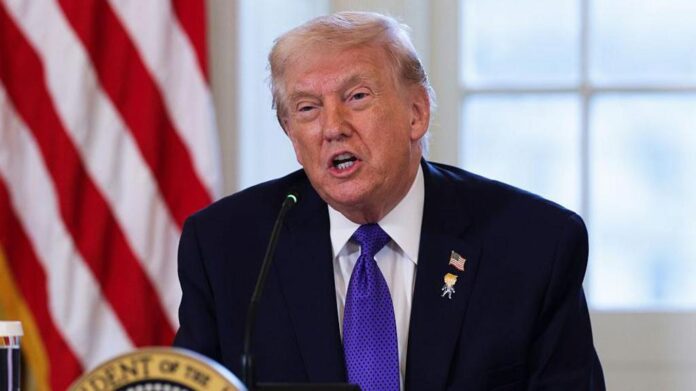
The ceasefire agreement includes the release of all hostages held in Gaza, an Israeli military withdrawal to an agreed point, and the exchange of Palestinian prisoners. U.S. President Donald Trump said all remaining hostages would be freed by Monday or Tuesday, marking the first phase of the peace plan.
In Gaza City, the aftermath of Israeli withdrawal revealed tragedy beneath the rubble.
Health officials said at least 19 bodies were recovered after troops retreated from some parts of the city.
The Health Ministry and the United Nations warned that the actual death toll could be far higher due to the difficulty of recovering bodies in destroyed neighborhoods.
As news of the ceasefire spread, Palestinians in camps and shelters took to the streets waving flags and singing in cautious celebration.
“We are happy just to return to where our homes were, even if they are in ruins,” said displaced resident Mahdi Saqla. “After two years of pain, that alone feels like peace.”
Yet despite the announcement, reports of airstrikes continued in parts of Khan Younis and Gaza City.
The Gaza Civil Defense warned residents not to return to former conflict zones until the Israeli army officially confirms its full withdrawal.
Humanitarian agencies are preparing to move swiftly. The Red Cross said its teams in Gaza, Israel, and the West Bank were ready to help with the exchange of prisoners, hostages, and remains.
UNICEF also announced plans to deliver over 1,300 aid trucks carrying food, medicine, and water to address what it confirmed as a famine in Gaza City.
Cardinal Pierbattista Pizzaballa, the top Catholic leader in Jerusalem, described the suffering in Gaza as “morally unjustifiable.”
He urged the world not to forget the children who have now gone three years without school.
Though the ceasefire brings relief, many remain skeptical. As one Gaza resident put it, “We’ve celebrated truces before.
We just hope this one means peace for real this time.”
Venezuelan opposition leader Maria Corina Machado has won the 2025 Nobel Peace Prize for her tireless fight to restore democracy in her country.
The Norwegian Nobel Committee announced the award on Friday, praising her courage and leadership in defending human rights under an authoritarian regime.
Machado, a 58-year-old industrial engineer, has been one of the strongest voices against President Nicolás Maduro’s rule.
She was barred from contesting Venezuela’s 2024 presidential election by the country’s courts, a move widely condemned as politically motivated.
Forced into hiding, Machado has continued to rally global attention to Venezuela’s democratic struggle.
In its citation, the Nobel Committee described Machado as “a courageous defender of freedom who stood firm against oppression.”
The committee said her recognition serves as a reminder that “when authoritarians seize power, it is crucial to honour those who resist.”
The announcement comes at a politically charged time. U.S. President Donald Trump, whose recent Gaza peace initiative has drawn international headlines, had publicly expressed hopes of winning the Nobel Peace Prize.
However, experts had earlier dismissed his chances, arguing that his foreign policies often clashed with the values the Nobel Committee promotes.
The committee clarified that the decision to honour Machado was made before the announcement of Trump’s ceasefire deal between Israel and Hamas earlier this week.
Machado’s victory has sparked celebrations among Venezuelans and democracy advocates worldwide.
Many view the award as a powerful message to authoritarian governments and a boost to pro-democracy movements across Latin America.
Maria Corina Machado has long been a thorn in the side of the Maduro administration.
She has led numerous peaceful protests calling for free elections, the release of political prisoners, and an end to widespread corruption.
Her supporters see the Nobel recognition as a global endorsement of her movement’s legitimacy.
The Nobel Peace Prize, valued at 11 million Swedish crowns (about $1.2 million), will be formally presented in Oslo on December 10 — the anniversary of Alfred Nobel’s death.
Machado joins a list of historic figures honoured for promoting peace and democracy, including Nelson Mandela, Malala Yousafzai, and Aung San Suu Kyi.
Despite living in secrecy, Machado released a brief message through her spokesperson, saying, “This prize belongs to every Venezuelan who refuses to give up on freedom.”
The visit spoke of the high-octane nature of an increasingly contentious issue, fraught with allegations of bigotry and recriminations. I watched, too, with bemused skepticism.
I have no sympathy for those whose buildings get demolished because they built out of zone, and in violation of extant building and land codes. That is as it should be.
The author, Oseloka H. Obaze
I say so as a technocrat and erstwhile policymaker and administrator. Laws are made to be respected. That’s what rule of law is all about. Such persons should not complain about the consequences of their greed and stupidity.
Such things happen because the Nigerian society is now so unapologetically transactional and imbued with impunity that some affluent people believe that they can subjugate rules and regulations, violate statutory laws and still buy their way out of attendant reprisals.
Nowhere is such an attitude more rampant than with acquisition of landed property in major cities. Green areas, public parks, golf courses and playgrounds have been carved up and sold to rich speculators.
The same fate has befallen water causeways and even lands earmarked for special public projects. Invariably, the master plans of major cities, including Abuja, have been at risk.
Nevertheless, there comes a point when discretionary authority and powers need to apply in law enforcement matters. That’s what adaptive leaders do. That’s what good governance does.
“Buildings should be demolished”
Buildings should be demolished when they are unfit for habitation and pose clear and present danger to the general public. But buildings should not always be demolished simply because they violate zoning laws. And that’s not to say that zoning laws should be disrespected or impunity not be punished.
Lately, there has been a spate of demolitions in Lagos State. Some suggest such demolitions are punitively targeted. The contention is debatable. Yet, as policy, demolitions cannot be used for the purposes of gerrymandering or disenfranchisement. But that is not the kernel of this writeup.
The point here is that, in a nation with over 75 million housing deficit, of which 17 million of the shortfalls is in Lagos, demolishing already completed buildings is defeatist and not the best policy option or punishment. Such a practice is also not in the best interest of the larger society.
It is myopic, except there are ulterior motives. As a social scientist, I favour without apologies the use of history in present and future decision-making, especially in governance matters. That use of history may be applicable to the ongoing demolitions.
A precedent
Many years back, in the late 1980s, there was an interesting and celebrated case in New York City that speaks to zoning, building code enforcement, respect for the rule of law and discretionary authority. It also speaks to arbitration and legal adjudication of such matters.
In the New York case, a luxury high-rise building was approved for construction on the Upper East Side of Manhattan. The building’s structure, height, floors, air rights and related codes were all sorted out and the approvals and permits granted.
The high-rise building was mixed commercial and residential. This meant that the ground and lower floors could house high-end stores and the rest of the 30-floor building would house various-sized apartments.
As it happened, the builder made a subjective internal adjustment to accommodate the then fashionable high ceilings in all the residential apartments. This meant additional three feet per floor outside the approved plan.
This did not seem like a big deal but the additional three feet per floor resulted cumulatively to an extra 75 feet being added to the height of the building. Technically, this equated with adding an additional five floors to the original design. The high-rise building was still the stipulated 30 floors, but the height was far in excess of what was statutorily approved.
Consequentially, the additional height of the building violated the air rights of some neighbouring buildings. It was also at variance with the approved design. The owners and occupants of the contiguous buildings filed complaints.
The City’s housing authorities that issue construction permits, investigated and found that the complaints were meritorious. There were deviations from the approved plan and, therefore, violations. What to do?
The high-rise building could not be certified for occupancy. The developers were losing money. The City was also losing money from property taxes via sales of the apartments. Litigation seemed likely, but would be time-consuming and financially costly for both sides.
Quid pro quo
The parties submitted to arbitration. At mediation, it was determined that the only practical remediation required to meet compliance, would be to knock off the equivalent of five floors in order to bring the building in line with extant codes and the approved building plan.
That solution itself would be also costly for the developer. So, there was need to find common ground; a win-win solution, for the developer, the City authorities and potential investors/owners of the condominium apartments.
While the unapproved and uncertified building stood vacant for several months, arbitration commenced aimed at protecting public and private interests by allowing the law to adapt to some discretionary flexibility, away from rigid enforcement that would be totally punitive.
In a city that badly needed more houses in order to meet growing demands and existing shortfalls, demolition, though an option, would be the final resort, and only if all else failed.
Two issues were critical to agreeing to arbitration. Both the developer and city supervisors were respectively found not to have been willfully negligent of the law.
When all parties are culpable
Nonetheless, the developers took some architectural and structural liberties; and the city building supervisors were lax in their due diligence, and, thus, had failed to catch the additional three-feet-per-floor adjustment at the foundational level, where it could have been stopped or the building plan revised accordingly.
Thus, the city did not meet its remit obligations fully. While the developer met the approved floors specifications, it failed to comply with the overall building height specifications.
Rather than pursue demolition, which would have resulted in obliterating about 50 apartment units of various sizes and configurations, the City decided to allow the building to stand.
For consequences, the developer would allocate three contiguous floors out of the thirty floors to the city, as low income houses, for subsidized rents over a thirty-year period. The developer would still collect rent for those three floors of about thirty units, but not at premium market rental rate.
It was also agreed that a separate entrance would be created for the city-assigned floors, thus segregating that section from the remaining twenty-seven luxury stores and luxury home floors. Contextually, the building would still be designated a luxury high-rise, but with some intrinsic conditionalities.
In essence, the errant developer was sanctioned and punished, as required by law, but not by way of punitive demolition, in which the developer, investors and the City would all be losers. The mutually accepted outcome was the essence of decision making at its best.
The non-exculpatory resolution also served as deterrent for future developers.
The Lagos State saga
Traders protesting the demolition of Lagos Trade Fair Market
If so, the rule of law has gone awry. Everyone loses; even as it may seem that the developer or owner incurs the greatest loss.
While I’m unsympathetic to law breakers, the ongoing policy of outright demolition, is without doubt, hare-brained. Lagos state still has a high 17 million housing deficit.
Most buildings targeted for demolition could have been stopped at the foundational level, but for obvious complicity, when approvals are granted by a criminal cartel of local government and state officials, bereft of any moral compass, who take advantage of very greedy and stupid rich persons.
Besides outright demolition, several policy options exist for resolving these matters. There ought to be some compartmentalization of the problems and solutions. State governors have statutory authority to revoke Right of Occupancy on any land in the public interest.
“When the rule of law goes awry”
So, rights to a house or structure built on a water causeway, green area, or access road, rather than being demolished could be rendered a state property, with a statutory revocation.
The city, local government or state authorities and the owner of the structure can then negotiate a settlement that might save the property built at great cost from demolition. The property could also be placed on high-luxury property tax bracket. Such decision will avert outright demolition and help in reducing the national housing deficit.
Demolitions might seem the only way out, when the rule of law goes awry. But they are not since demolitions also have unintended binary consequences. They stultify housing development. They also disincentivize and chase investors and developers away.
The greatest danger, however, especially in the case of Lagos state, is the contention that such demolitions target certain ethnicities. That policy choice is dangerous, whether such allegations are myth or reality.
Since various policy options still exist for addressing thorny zoning questions, political leaders must explore every option before embarking on a lineal policy of outright demolition that might backfire or in the long run, hurt public interest.
Obaze is MD/CEO, Selonnes Consult – a policy, governance and management consulting firm in Awka.
Nigeria’s Senate has dismissed foreign claims suggesting an ongoing Christian genocide in the country.
Lawmakers instead resolved to engage directly with the United States Congress to clarify the nation’s security realities.
The move followed a motion sponsored by Senator Ali Ndume, which sparked a heated debate on how international bodies portray Nigeria’s internal security issues.
Lawmakers argued that many foreign narratives have unfairly described the country’s complex terrorism problem as religious persecution.
The motion came after discussions in the U.S. Congress and Senate, alongside renewed calls by advocacy groups to list Nigeria as a “Country of Particular Concern” over alleged religious attacks.
During the debate, senators voiced concern that such claims though sometimes based on genuine worries mislead global partners and harm Nigeria’s reputation and economy.
Senate President Godswill Akpabio suggested forming an ad hoc committee to visit Washington and hold direct talks with American lawmakers.
He stressed that quiet diplomacy and factual engagement were the best ways to correct misconceptions.
“There are false impressions that must be corrected,” Akpabio said. “We face a complex terrorist threat, not a religious war. Both Christians and Muslims suffer these attacks.”
Senator Jimoh Ibrahim called for a more knowledge-driven counterterrorism strategy, rooted in Nigeria’s local realities.
He reminded his colleagues that the approved national security summit was designed to develop practical solutions, not foreign-driven ones.
The motion also cited several examples showing that the violence cuts across faith lines. It highlighted the Plateau State attacks in July 2023 that killed more than 20 Christians.
It also referenced the Katsina and Zamfara raids in August 2023, where dozens of Muslim villagers died in bandit strikes.
In Borno and Kaduna states, lawmakers noted, terrorists have attacked both churches and mosques, killing victims from both religious groups.
These incidents, senators argued, prove that the conflict is not religious but rooted in criminality and terrorism.
Due to the sensitivity of the issue, the Senate agreed to step down the motion temporarily for further deliberation in a closed executive session.
The lawmakers are also expected to finalise the composition of the delegation that will travel to the United States.
The motion was seconded by Senator Abdul Ningi (Bauchi Central), who supported the call for balanced engagement with U.S. officials to protect Nigeria’s image on the global stage.
The Senate’s resolution reflects growing frustration among Nigerian leaders over what they consider biased and inaccurate portrayals of the country’s fight against terrorism and banditry.
President Bola Tinubu has granted presidential pardon to 175 Nigerians following the approval of the Council of State. The decision came after the presentation of recommendations by the Attorney-General of the Federation and Minister of Justice, Lateef Fagbemi (SAN).
The Attorney-General presented the list based on the report of the Advisory Committee on the Prerogative of Mercy. The move reflects the president’s commitment to reforming Nigeria’s justice and correctional systems.
The approval was reached on Thursday during the Council of State meeting held at the Presidential Villa, Abuja.
Kaduna State Governor Uba Sani briefed reporters after the meeting, confirming that 82 inmates received full pardon, 65 had their sentences reduced, and seven death sentences were commuted to life imprisonment.
According to the governor, the total of 175 beneficiaries includes inmates across different correctional facilities nationwide.
He said the decision was part of President Tinubu’s broader plan to strengthen justice delivery and promote rehabilitation.
Governor Sani added that the president’s action demonstrated compassion and fairness in the justice process.
“The decision underscores the President’s commitment to justice and correctional reform,” he stated.
Among those granted clemency were members of the Ogoni Nine and Ogoni Four, whose names hold symbolic significance in Nigeria’s human rights history.
President Tinubu had earlier posthumously honoured the Ogoni Four to promote peace and restore oil production in Ogoniland.
The Council also ratified key national appointments.
These include Dr. Aminu Yusuf from Niger State as the new Chairman of the National Population Commission, and Tonge Bularafa from Yobe State as Federal Commissioner in the same commission.
The Council of State, chaired by President Tinubu, comprises past presidents, state governors, and key government officials.
It serves as an advisory body on matters of national importance, including clemency and security policies.
Governor Sani explained that the Council unanimously approved the president’s recommendations after a detailed presentation by the Minister of Justice.
He emphasized that the gesture would encourage ongoing correctional reforms and support decongestion of prisons across the country.
The Prerogative of Mercy is a constitutional power that allows the president to pardon or reduce the sentence of offenders based on specific recommendations.
Tinubu’s latest decision follows his administration’s drive to promote national reconciliation, fairness, and social justice.
With this approval, the Federal Government aims to give deserving inmates a second chance at rebuilding their lives and contributing positively to society.
The National Council of State has endorsed Professor Joash Ojo Amupitan, SAN, as the new Chairman of the Independent National Electoral Commission (INEC) a move that could redefine Nigeria’s electoral future ahead of the 2027 general elections.
The announcement came after the Council’s meeting on Thursday, chaired by President Bola Ahmed Tinubu, with former Presidents, Vice Presidents, and Governors in attendance.
According to Bayo Onanuga, the President’s Special Adviser on Information and Strategy, Tinubu presented Amupitan’s nomination to fill the position vacated by Professor Mahmood Yakubu.
In line with Nigeria’s Constitution, the President will now forward Amupitan’s name to the Senate for screening and confirmation.
This approval by the Council signals a new phase in the country’s electoral leadership one that could shape the credibility, transparency, and technological evolution of future elections.
Who Is Joash Ojo Amupitan?
Professor Amupitan, aged 58, is a distinguished Senior Advocate of Nigeria (SAN) and a respected law professor at the University of Jos (UNIJOS).
A native of Ayetoro Gbede in Ijumu Local Government Area of Kogi State, he currently serves as the Deputy Vice-Chancellor (Administration) at UNIJOS.
He holds an LLB from the University of Jos (1987), an LLM (1993), and a PhD in Law (2007).
After being called to the Nigerian Bar in 1988, he began lecturing at UNIJOS in 1989, rising through the ranks to become Dean of the Faculty of Law (2008–2014).
Beyond academics, Amupitan has served in several key leadership roles, including:
Chairman, Committee of Deans and Directors (2012–2014)
Head, Department of Public Law (2006–2008)
Pro-Chancellor, Joseph Ayo Babalola University, Osun State
Member, Council of Legal Education (2008–2014)
Member, Governing Council, Nigerian Institute of Advanced Legal Studies
He is also on the board of Integrated Dairies Limited, Vom.
Author and Legal Thought Leader
Amupitan is widely recognised for his academic contributions, having authored several textbooks that are essential references in Nigerian legal education. His publications include:
Corporate Governance: Models and Principles (2008)
Documentary Evidence in Nigeria (2008)
Evidence Law: Theory and Practice in Nigeria (2013)
Principles of Company Law (2013)
Introduction to the Law of Trust in Nigeria (2014)
Why His Appointment Matters
If confirmed by the Senate, Professor Amupitan will assume leadership of INEC at a critical time for Nigeria’s democracy.
His tenure would coincide with growing debates over electoral integrity, technological innovation, and institutional independence.
Observers believe his legal background and administrative experience could strengthen INEC’s internal systems, improve compliance with electoral laws, and enhance transparency in election processes.
Analysts also say the choice of Amupitan, described by President Tinubu as “apolitical and a man of integrity”, may reflect the administration’s intention to restore public confidence in the commission’s neutrality.
Notably, he is the first Kogi indigene ever nominated for the INEC chairmanship.
What Comes Next
The Senate confirmation hearing will be the next step, where lawmakers are expected to question Amupitan on issues such as digital election management, voter data protection, and institutional autonomy.
If confirmed, he will become the eighth substantive INEC Chairman since Nigeria’s return to democracy in 1999, overseeing both off-cycle elections in 2026 and the 2027 general elections
Ten days after the shocking death of Somtochukwu “Sommie” Maduagwu, a popular news anchor and producer with Arise Television, the Nigeria Police Force has confirmed the arrest of 12 suspects linked to the armed robbery that claimed her life.
Sommie was killed in the early hours of September 29 after armed robbers invaded her residence in the Katampe area of Abuja.
The incident also claimed the life of a private security guard on duty at the compound.
Police spokespersons announced the arrests on Thursday, saying the suspects had confessed to the crime during interrogation.
Four of the suspects were initially tracked down shortly after the attack through the mobile phones stolen from the scene.
One of the suspects, Shamsudeen Hassan, reportedly confessed to shooting the security guard who tried to stop them from entering the compound.
Another, Sani Sirajo, claimed he attempted to stop Sommie from falling off a storey building during the attack but was unable to due to her weight.
The suspects, according to the police statement, include:
12. Musa Umar (Small), 31 (Maiduguri LGA, Borno State).
The police said investigations are ongoing to determine the full extent of the suspects’ involvement and to recover any stolen property. Authorities also assured the public that justice would be served for Sommie’s killing.
The tragic incident has sparked widespread grief across Nigeria’s media community. Prominent figures, including Anambra State Governor Chukwuma Soludo, have described Sommie as “a shining star” and called for swift prosecution of those responsible.
The Federal Government has launched a major security operation to reclaim Nigeria’s forests from bandits, kidnappers, and other criminal groups. Under the new Forest Guards Initiative, more than 130,000 armed personnel will be deployed nationwide to strengthen internal security and restore peace in rural communities.
The National Security Adviser (NSA), Nuhu Ribadu, announced the initiative on Thursday during the opening session of the Federal and States Security Administrators’ Meeting (FSSAM), held at the National Counter-Terrorism Centre (NCTC) in Abuja.
Ribadu said the initiative, approved by President Bola Tinubu, represents a turning point in the country’s fight against insecurity.
He explained that forests, long used as hideouts by criminals, would now be placed under tight security control.
“We are taking the fight to where the criminals hide.
The Forest Guards Initiative is a bold step to secure our forests, restore peace to rural communities, and deny bandits and kidnappers freedom of action,” Ribadu stated.
According to him, the deployment will begin with pilot operations in Adamawa, Borno, Niger, Kebbi, Kwara, Sokoto, and Yobe States before extending across Nigeria’s 1,129 forest and game reserves.
Ribadu emphasized that the plan aligns with President Tinubu’s broader vision of building a secure environment for peace, development, and prosperity.
Speaking earlier, Mr. Muhammed Danjuma, Permanent Secretary of the Special Services Office, described the project as a “security game-changer”.
He noted that the program was jointly coordinated by the Office of the National Security Adviser (ONSA) and the Federal Ministry of Environment, in collaboration with state governments.
Danjuma added that the initiative aims not only to combat insecurity but also to protect Nigeria’s natural resources and vulnerable populations living near forest regions.
He, however, cautioned that the program’s success would depend on strong political will, adequate funding, and cooperation between federal and state authorities.
The three-day meeting brought together security administrators from all 36 states and the FCT to assess the country’s internal security challenges and recommend practical measures for improvement.
The Forest Guards Initiative is expected to serve as a critical component of Nigeria’s evolving counter-insurgency and anti-kidnapping framework, focusing on preventive security rather than reactive force.
The Northern Support Group of the Peoples Democratic Party (PDP) has officially endorsed former President Goodluck Jonathan as its preferred candidate for the 2027 presidential election.
The endorsement was one of the major resolutions adopted during the group’s 8th meeting, held in Birnin Kebbi, Kebbi State, between October 8 and 9, 2025.
The gathering brought together delegates and loyalists from all 19 northern states to discuss strategies for rebuilding the party ahead of the next general elections.
In a communiqué jointly signed by the Northern Coordinator, Hon. Yusuf Abubakar, and the North-West Zonal Secretary, Hon. Adamu Ahmed Narayi, the group described Jonathan as a unifying figure who embodies peace, progress, and loyalty.
They praised his democratic credentials and commitment to the PDP, noting that his leadership could restore the party’s image and public trust.
“There is no going back on Goodluck Jonathan to redeem our party’s image in 2027. He remains a loyal party man who never abandoned the PDP and continues to command respect across the country,” the communiqué stated.
The group dismissed ongoing debates about Jonathan’s eligibility to contest, insisting that the matter had already been settled legally and politically.
It urged the PDP to launch aggressive grassroots and media campaigns, particularly in northern Nigeria, to promote Jonathan’s candidacy and highlight his legacy of national unity.
The communiqué also expressed confidence in the PDP National Chairman, Ambassador Iliya Umar Damagum, commending his reconciliation and peace-building efforts within the party.
However, it warned against actions by some members allegedly undermining unity and collaboration.
The group accused certain leaders, including the Minister of the Federal Capital Territory (FCT), Nyesom Wike, of divisive conduct and alleged anti-party activities. “Minister Nyesom Wike’s actions have been detrimental to the PDP’s unity despite his claims of being a member.
His continued recruitment of party members to sow discord is unacceptable and must be addressed decisively,” it declared.
It further urged the party’s leadership to discipline any member sabotaging reconciliation efforts or secretly working with the ruling All Progressives Congress (APC).
Reaffirming its loyalty to the PDP, the Northern Support Group said it remains committed to the party’s supremacy and rebuilding efforts.
“The PDP retains strong grassroots support across the North. The party must seize this opportunity to restore its lost glory, rebuild its structures, and promote discipline and progress,” the communiqué concluded.
The Foundation for Environmental Rights Advocacy and Development (FENRAD), has announced its support for the planned Abuja rally led by human Rights Activist, Omoyele Sowore calling for the unconditional release of Mr. Nnamdi Kanu, the leader of the proscribed Indigenous People Of Biafra (IPOB).
In a statement made available to Diaspora Digital Media by the Executive Director of FENRAD, Nelson Nnanna Nwafor, the group underscored the organization’s commitment to the promotion of civil liberties, justice, and the rule of law.
It viewed the rally as both timely and necessary, given the continued detention of Kanu despite multiple court orders in his favour and mounting national and international pressure.
The statement reads: “We align with all democratic voices demanding that the Nigerian government respect its own judiciary and adhere to its obligations under the Nigerian Constitution and relevant international human rights protocols.
“The continued detention of Mazi Nnamdi Kanu, in defiance of the law, sets a dangerous precedent and undermines the credibility of our judicial system. No true democracy can thrive where court orders are treated with disdain.
“Having engaged with several Southeast political leaders—including South East Governors , National Assembly members and Abia State House of Assembly—FENRAD welcomes all lawful efforts aimed at resolving this impasse, but emphasizes that public action, unity of purpose, and moral courage are now urgently required.
“We particularly commend the encouraging response from Hon. Obinna Agwuocha of the House of Representatives and the stated intention of members of the Abia State House of Assembly to approach the Attorney General of the Federation in pursuit of lawful redress. These efforts, though commendable, must now move beyond dialogue to coordinated, collective action.
“FENRAD strongly believes that the time for hesitation has passed. If leaders of conscience across Nigeria truly believe in the values of democracy, equity, and justice, then this is the moment to act—boldly and publicly.
“We commend the courage and consistency of Mr. Omoyele Sowore, and call on other human rights defenders, lawmakers, civil society actors, and well-meaning Nigerians to join this peaceful rally in Abuja as a demonstration of national unity in defense of justice,” the statement partly reads.
Speaking further, the group made the following demands—Immediate and unconditional release of Nnamdi Kanu, respect for judicial authority and adherence to court rulings, a stop to the political persecution of individuals exercising legitimate rights to self-expression and peaceful advocacy.
It added that the organization is mobilizing its members and partner organizations to join the Abuja rally in solidarity, and calls on Southeast leaders to either physically participate or publicly support the initiative.
“This is a critical moment. Justice must not be delayed further. No one is free until we are all free”, the group said.
Biafra Nations League (BNL), a separatist movement operating in Bakassi peninsula, has deployed dragon fighter marine to Ndian division of Ambazonia ahead of Sunday presidential poll in Cameroon.
Ambazonia is a political entity proclaimed by Anglophone separatists seeking independence from Cameroon.
The deployment was confirmed by the group in a post on its official Facebook page on Thursday.
“BnL Deploys Dragon Fighter Marine to Ndian Division of Ambazonia Ahead of Sunday Presidential Election, As Fighters Block Bakassi Waterways”, the posts reads.
Coalition of Civil Society Organizations protesting at Abuja branch of Sterling Bank Plc.
A Coalition of Civil Society Organizations against Banks Fraudulent Practices and Customers Victimization, on Wednesday, staged a peaceful protest at the Abuja headquarters of Central Bank of Nigeria and an Abuja branch of Sterling Bank Plc.
At the apex bank’s office, the group submitted a petition, which was received by the Acting Director, Corporate Communications, Central Bank of Nigeria.
The petition dated Monday 6th October, 2025, was addressed to Mr. Olayemi Cardoso, Governor, Central Bank of Nigeria, Abuja.
The protesters displayed placards with several inscriptions such as:
conspiracy;
forgery;
criminal breach of trust;
taking loan is not a crime;
Sterling Bank Plc stop suffocating your customers;
theft;
make loan repayment transparent, etc.
Comrade Flora Elekwa, Director, Mobilization and Advocacy of the CSO, told officials of the CBN that the trend of fraudulent activities occasioned by unwarranted deductions is becoming alarming and portrays the banking sector in bad light.
The petition was signed by Comrade (Dr.) Sam Wisdom, National Coordinator; Comrade Flora Elekwa, Director, Mobilization and Advocacy; and Lady Cecilia Bisong, National Organizing Secretary.
The CSO stated that it is common knowledge that for a long time, bank customers have been at the mercy of some banks, which on a regular basis debit them for all manner of reasons, some of which are questionable and dubious including hidden charges.
She said the coalition was starting with Sterling Bank on Monday and would picket other banks later.
When put together, according to Mrs Elekwa, “these charges amount to loss of millions of Naira by banks customers to the effect that banks declare trillions yearly as profit at the detriment of the customers who lacked the voice to complain.
“Even the regulatory agencies seem to be helpless in this situation.
“The street protest and advocacy match was aimed at drawing the attention of the government, regulatory authorities, and the general public to these unwholesome, illegal practices with a view to rectifying the situation” Mrs Elekwa said.
Particularly, the group pleaded with the CBN as a supervisory government agency responsible for monitoring and supervision of all banks and financial institutions in Nigeria to immediately ask the Management of a new generation bank to meet the Management of Miden Systems Ltd and harmonize the accounts and refund the company it’s money.
The company alleged that the bank, through its Chief Executive Officer together with the bank’s Financial Holdings Company Plc and four other defendants, used its name to open various spurious accounts through which it allegedly syphoned the company’s funds domiciled with the bank up to the tune of over $200,000,000 (two hundred million Dollars).
The Company alleged: “Funds were moved and misappropriated by the bank at reckless abandon with huge and massive spurious debits to the company’s account.”
It further stated that in line with standard bank practices and extant applicable laws, it continuously and consistently demanded for its statement of account.
However, the bank, rather than do so, denied it access to its funds, the group stated in the petition.
Responding, the Acting Director, Corporate Communications, CBN, assured the protesters that their grievances would be addressed.
The Director thanked the group for organizing a peaceful protest.
Similarly, the group headed to the office of Sterling Bank in Abuja’s Central Business District, to submit a petition.
However, the bank authorities didn’t come out to address the group of protesters who felt slighted and disrespected.
For over two hours, the about 500 protesters occupied the frontage of the bank’s office, chanting songs.
Meanwhile, many passersby joined the frenzy and voiced out their anger against the punitive charges many banks make against their customers.
The two day protest is billed to continue on Tuesday.
Detained leader of the Indigenous People of Biafra (IPOB), Mazi Nnamdi Kanu
Former Vice President Atiku Abubakar has condemned the prolonged detention of Nnamdi Kanu, leader of the proscribed Indigenous People of Biafra (IPOB), describing it as “an open sore on our nation’s conscience.”
Atiku, a prominent statesman and 2023 presidential candidate of the Peoples Democratic Party (PDP), called for Kanu’s immediate release, emphasizing that his detention constitutes a serious breach of the rule of law.
Kanu has been in the custody of the Department of State Services (DSS) since June 2021, following his re-arrest in Kenya and extradition to Nigeria.
He faces a seven-count charge related to alleged terrorism activities. Atiku criticized the government’s failure to comply with multiple court orders granting Kanu bail, calling it “an abuse of power and an assault on justice.”
Atiku expressed full support for the campaign led by activist Omoyele Sowore, which demands Kanu’s immediate release or prosecution in line with due process.
“We fail as patriots if we allow Kanu’s case to fester as yet another wound this nation refuses to heal”, Atiku stated.
The trial of Nnamdi Kanu was recently adjourned to October 16 by Justice James Omotosho of the Federal High Court in Abuja due to the inability of the Nigerian Medical Association to present a report on Kanu’s health status to the court.
Atiku’s call for Kanu’s release highlights ongoing concerns about the rule of law and human rights in Nigeria.
The National Council of State has approved the nomination of Professor Joash Ojo Amupitan (SAN) from the North-Central as the new Chairman of the Independent National Electoral Commission (INEC).
The spokesman of the president, Chief Bayo Onanuga in a statement issued on Thursday, said that President Bola Ahmed Tinubu presented Amupitan as the nominee to fill the vacant position, following Professor Mahmood Yakubu’s exit. Yakubu served from 2015 till October 2025.
He said Tinubu told the council that Amupitan is the first person from Kogi, North-Central state, nominated to occupy the position and is apolitical.
“Council members unanimously supported the nomination, with Governor Ahmed Usman Ododo describing Amupitan as a man of integrity.
“In compliance with the constitution, President Tinubu will now send Amupitan’s name to the Senate for screening.
“Amupitan, 58, from Ayetoro Gbede, Ijumu LGA in Kogi State, is a Professor of Law at the University of Jos, Plateau. He is also an alumnus of the university.
“He specialises in Company Law, Law of Evidence, Corporate Governance and Privatisation Law. He became a Senior Advocate of Nigeria in September 2014”, the statement partly reads.
Amupitan was born on April 25, 1967.
After completing primary and secondary education, he attended Kwara State Polytechnic, Ilorin, from 1982 to 1984, and the University of Jos from 1984 to 1987. He was called to the bar in 1988.
He earned an LLM at UNIJOS in 1993 and a PhD in 2007, amid an academic career that began in 1989, following his National Youth Service at the Bauchi State Publishing Corporation in Bauchi from 1988 to 1989.
Currently, he serves as the Deputy Vice-Chancellor (Administration) at the University of Jos, a position he holds in conjunction with being the Pro-Chancellor and Chairman of the Governing Council of Joseph Ayo Babalola University in Osun State.
Among the academic positions he has held at UNIJOS are: Chairman of the Committee of Deans and Directors (2012-2014); Dean of the Faculty of Law (2008-2014); and Head of Public Law (2006-2008).
Outside of academics, Amupitan serves as a board member of Integrated Dairies Limited in Vom, a member of the Nigerian Institute of Advanced Legal Studies Governing Council, and a member of the Council of Legal Education (2008-2014), among other roles. He was a board member of Riss Oil Limited, Abuja(1996-2004).
Amupitan is the author of many books on law, such as Corporate Governance: Models and Principles(2008); Documentary Evidence in Nigeria (2008); Evidence Law: Theory and Practice in Nigeria(2013), Principles of Company Law(2013) and an Introduction to the Law of Trust in Nigeria (2014).
Dr. Reuben Abati’s Tuesday, 7 October 2025 essay, “UNN, Nnaji’s Certificate and a Troubled Nation,” was, characteristically, an eloquent piece — polished, persuasive, and steeped in his trademark intellectual flourish. Yet beneath its literary elegance lay a disquieting lapse in professional judgment, fairness, and ethical moderation. In interrogating the controversy surrounding the now-resigned Minister of Innovation, Science, and Technology, Chief Geoffrey Uche Nnaji, Abati’s intervention veered from sober analysis into the realm of prejudgment and institutional disparagement. His sweeping assertion that the University of Nigeria, Nsukka (UNN) “has raised questions about its own integrity” was not only hasty but gratuitously damaging to an institution that, for more than six decades, has symbolized academic rigor and moral rectitude in Nigeria. Instead of a measured dissection of facts, Abati elected to caricature UNN and its Vice-Chancellor, Professor Simon Uchenna Ortuanya, as though the university were complicit in deceit. That rhetorical overreach, more accusatory than analytical, blurred the line between critical commentary and character assault — an avoidable descent from reasoned journalism into the perils of moral grandstanding.
In a curious but telling twist, Dr. Abati did not pause to reflect on the measured reactions that followed his initial remarks; instead, he chose to double down on his castigation of the University of Nigeria, Nsukka, during the Morning Show of Wednesday, 8 October 2025, a live programme on Arise News. Picking up from his Tuesday commentary, he reiterated and amplified his earlier accusation that UNN was “speaking from both sides of its mouth” over its handling of the matter, this time adding that the institution was “flip-flopping” over its records, a phrase he repeated for emphasis. Abati went further to mock the university’s alumni, remarking that the situation was a “thorough embarrassment” to those who proudly parade themselves as “Lions and Lionesses.” This rhetorical escalation, bordering on ridicule, was both unnecessary and unfair. While robust debate remains the lifeblood of democracy, such sweeping generalizations from a respected public intellectual risk deepening public cynicism toward national institutions rather than encouraging introspection or reform. Indeed, for someone of Abati’s journalistic pedigree and legal training, this descent into invective against an institution still navigating an unfolding controversy was unbecoming. His recourse to language like “flip-flopping” and “speaking from both sides of its mouth” – metaphors more suited to political combat than academic critique – not only trivializes the complexity of institutional record-keeping but also undermines the very ethic of restraint expected when judicial proceedings are pending.
Like every reputable institution of higher learning, the University of Nigeria, Nsukka (UNN) operates within established procedures designed to protect both the integrity of its academic records and the rights of individuals. When discrepancies emerge—especially those involving student data from several decades ago— the university is obliged to verify and re-verify before issuing any categorical public statement. To dismiss this institutional prudence as “speaking from both sides of the mouth” or, as Dr. Abati reiterated, “flip-flopping,” is to fundamentally misconstrue how due process functions in academia. The university’s initial correspondence merely acknowledged that existing records confirmed Mr. Nnaji’s enrolment in the Department of Biochemistry/Microbiology. A later clarification, following more exhaustive verification, established that he did not complete the requirements for graduation and, therefore, could not have been awarded a degree. These are not contradictions but sequential stages in fact-finding. In academic terms, attendance is not graduation. Universities confer degrees only after all prescribed conditions such as coursework, examinations, and requisite clearances, have been fully satisfied. The distinction may appear subtle to outsiders, but within the academy, it is a cornerstone of institutional credibility and scholarly integrity.
In the weeks following the publication of Abati’s piece, developments have moved swiftly and decisively. Chief Geoffrey Nnaji has tendered his resignation as Minister of Innovation, Science, and Technology. In a statement by the Special Adviser to the President on Information and Strategy, Mr. Bayo Onanuga, President Bola Tinubu confirmed that he had “accepted the resignation of Geoffrey Uche Nnaji following certain allegations against him,” while commending his service and wishing him well in future pursuits. In his resignation letter, the former Minister clarified that his decision was not an admission of guilt but a “principled step to uphold due process and protect the integrity of the ongoing judicial process.” His own words were unequivocal: “My decision to step aside is therefore a personal choice — not an admission of guilt, but rather a principled decision to respect the sanctity of due process and to preserve the integrity of the judicial proceedings currently before the court.” This statement highlights two essential points that Abati’s commentary failed to recognize: first, that the matter is sub judice; and second, that UNN’s cautious, methodical approach to the inquiry was not only appropriate but entirely warranted.
The sub judice principle — which cautions against public commentary on matters still before the courts — is far from a procedural nicety. It exists to safeguard the sanctity of judicial proceedings and to forestall the dangerous spectacle of trial by media. This is where Dr. Abati’s gravest lapse lies. As both a journalist and a trained legal mind, he ought to know that pronouncing judgment on a case pending before a competent court is not only injudicious but ethically untenable. His essay, though dressed in eloquence and erudition, effectively sought to convict both Mr. Nnaji and the University of Nigeria, Nsukka, in the court of public opinion. Meanwhile, the Enugu State Government has unequivocally dissociated itself from the entire controversy. In an official statement signed by the Director of Information, Mr. Chukwuemeka Nebo, the government urged the former Minister to “carry his own cross and clear his name before Nigerians,” emphasizing that it had no involvement whatsoever in the allegations. That categorical clarification renders untenable the narrative that the saga was politically orchestrated — a point Abati, in his haste to dramatize, failed to substantiate.
Perhaps the most disquieting aspect of Abati’s essay was its slide into ridicule. His insinuations that Nnaji could “rent a crowd,” “play the ethnic card,” or “hire spiritualists” were unbecoming of the lofty intellectual stature from which he has so often moralized to the nation. Even more ironic was his derision of Nigerians for their “obsession with titles” — his sneer that “even mechanics now call themselves Doctor this or Doctor that.” This comes from the same Abati who once publicly rebuked an Arise News reporter, on live television, for omitting the prefix “Dr.” before his name. Such inconsistencies betray a strain of selective morality: a readiness to hold others to standards he himself occasionally sidesteps. The philosopher’s robe, it appears, drapes uneasily on one who preaches virtue but falters in practising it.
The University of Nigeria, Nsukka (UNN), remains one of the country’s most esteemed centres of learning — a reputation no fleeting controversy can diminish. Founded in 1960 as Nigeria’s first indigenous and autonomous university, UNN has remained steadfast in its mission encapsulated in its timeless motto: “To Restore the Dignity of Man.” Its alumni distinguish themselves across every sphere — medicine, law, engineering, diplomacy, the arts, and academia. To malign the integrity of such an institution on the basis of a single, disputed episode is both unreasonable and unjust. In fact, UNN’s handling of the Nnaji matter reflects institutional restraint and maturity. It eschewed the lure of sensationalism, choosing instead to rely on official records, procedural rigour, and due process. If public institutions across Nigeria demonstrated this level of discipline and adherence to principle, our democracy would undoubtedly rest on a sounder ethical foundation.
Abati’s essay unwittingly exposes a larger malaise — the tendency among segments of Nigeria’s media elite to blur the line between commentary and condemnation. The duty of the press is not to usurp the courts, but to enlighten the public with accuracy and balance. When journalists assume the role of prosecutors, the moral authority of the profession erodes. Public intellectuals, more than most, should appreciate the potency of language in shaping perception and influencing judgment. In sensitive moments, restraint is not a sign of timidity but an expression of wisdom. What Nigeria urgently requires is not heightened indignation but heightened discernment — the capacity to distinguish verified fact from conjecture, and genuine substance from mere spectacle.
Now that Chief Nnaji has stepped aside, it is only proper that the storm be allowed to subside where it rightly belongs, in the courts, not in the commentariat. The facts should be tested by law, not by the loudness of opinion. Thus far, the University of Nigeria has demonstrated commendable fidelity to due process and respect for the rule of law. Both the Vice-Chancellor and the Senate have acted squarely within their statutory mandate, guided by institutional integrity and decorum. That alone deserves public acknowledgement. In the meantime, self-appointed commentators would do well to refrain from remarks that may verge on contempt, since the matter remains before the judiciary. Dr. Abati, as both a journalist and a legal practitioner, should have been the first to recognize this boundary.
In conclusion, the University of Nigeria, Nsukka, owes no defence to any mob tribunal. Its name rests securely on a legacy of diligence, integrity, and resilience. The certificate controversy surrounding Chief Geoffrey Nnaji and his subsequent resignation, though regrettable, offers valuable lessons in accountability and humility. It reinforces the truth that in a democracy, public office is a trust, not a birthright. It also reminds every commentator that words, once released, can either strengthen institutions or undermine them. As a local proverbial lore aptly puts it, “The sun may hide behind the clouds, but it never disappears.” In due course, the light of truth will break through – and Nigerians will discern clearly who stood for justice and who merely sought the glare of attention.
WhatsApp is testing a groundbreaking update that will allow users to connect through usernames instead of phone numbers, marking one of the most significant privacy changes in the app’s history.
According to reports, the Meta-owned platform is currently experimenting with the feature in its beta testing programme.
The update would let users create unique usernames similar to handles on Instagram, Telegram, or X (formerly Twitter) and use them to chat or join groups without revealing their personal phone numbers.
The new feature aims to boost privacy and give users more control over their personal information, particularly in large group chats or business conversations where sharing phone numbers can feel intrusive or unsafe.
Leaked screenshots from the beta version show a new “Username” field within user profiles.
This allows individuals to select a distinctive handle that others can use to contact them directly, without needing their phone number.
If implemented, the change would make WhatsApp more social-media-oriented, bridging the gap between messaging and networking platforms.
However, analysts have warned that the shift could also introduce challenges such as username impersonation and account squatting issues that have affected other social platforms.
To prevent abuse, WhatsApp is reportedly developing verification tools and security layers to ensure usernames remain authentic and trustworthy.
The feature remains under testing and has not yet been rolled out publicly.
When fully launched, the username option could revolutionize how more than two billion people communicate on WhatsApp, shifting the app’s identity from being number-based to name-based.
Human rights activist and former presidential candidate of the African Action Congress (AAC), Omoyele Sowore, has announced October 20 as the date for a mass protest in Abuja to demand the release of detained Indigenous People of Biafra (IPOB) leader, Nnamdi Kanu.
Sowore made the announcement in a post on his X handle on Thursday, describing the planned protest as a “historic march” to the Aso Rock Villa.
He emphasized that the demonstration would be peaceful and lawful, urging Nigerians to come out in solidarity.
“We now have a date for the historic #FreeNnamdiKanuNow protest march to the Aso Rock Villa in Abuja. It is October 20 at 7 am,” Sowore wrote.
The activist also called on prominent Igbo leaders, including governors, lawmakers, and traditional rulers, to join the protest. “
No more empty noise. Let @CCSoludo, @SenatorAbaribe, @alexottiofr, @PeterObi, and all others who claim to care step up and join us in person,” he said.
Sowore disclosed that he had personally reached out to key political figures, including Anambra State Governor Chukwuma Soludo, Abia State Governor Alex Otti, Senator Enyinnaya Abaribe, and Labour Party’s 2023 presidential candidate, Peter Obi.
He also mentioned contacting former Vice President Atiku Abubakar through his team.
While some leaders expressed interest, others reportedly failed to respond. “Alex Otti and Soludo neither took my calls nor responded to my messages,” Sowore said. “They promised to tell Mr. Peter Obi about our plans, although he is currently travelling.”
He noted that members of the Abia State House of Assembly had informed him of their plan to visit the Attorney General of the Federation before joining further actions in Abuja.
“This is not the time for hesitation. If we genuinely believe that Mazi Nnamdi Kanu deserves freedom, then every leader of conscience must act now, not later,” he added.
Kanu has been detained by the Department of State Services (DSS) since 2021 after being re-arrested and extradited from Kenya.
Despite several court rulings ordering his release, the Federal Government has refused to comply, drawing criticism from human rights groups and political leaders.
He faces charges of terrorism, treasonable felony, and incitement before the Federal High Court in Abuja. In October 2022, the Court of Appeal discharged and acquitted him of all charges, ruling that his extradition violated international laws.
Sowore’s call for mass action marks a renewed push by civil society and political figures demanding Kanu’s immediate release and respect for judicial rulings.
Labour Party (LP) presidential candidate, Mr. Peter Obi
Labour Party (LP) presidential candidate, Mr. Peter Obi, has warned individuals and groups using his name and image to promote online businesses and commercial ventures, especially those that have been confirmed to be fraudulent in nature to desist from such with immediate effect.
Mr. Obi issued the warning following series of online adverts “credited to him”.
In the advert, the perpetrator used AI lip sync mechanism to make it seem that Peter Obi was actually speaking.
The quick-tongued speaker with a Caucasian accent was urging his target audience to invest one hundred and forty thousand Naira.
If they do, they will reap two million Naira in a ridiculously short while.
See the two screenshots below:
Peter Obi reacts
Obi condemned such “fraudulent, deceptive, and… exploiting” activities in a statement entitled “ATTENTION! False Use of My Name for Online Promotions”.
He warned the perpetrators to stop ‘using his name to promote or endorse online businesses and ventures’.
Peter Obi said: “My attention has been drawn once again to the activities of individuals and groups who persist in using my name to promote or endorse various online businesses and ventures.
“Despite earlier clarifications issued by my aides, some persons have continued to exploit my identity for personal and commercial gain, thereby misleading unsuspecting members of the public.
“I wish to state categorically that I have no connection whatsoever with any of these endorsements or promotional activities.
“At no time have I authorised any individual, business, or online platform to use my name, image, or identity for commercial purposes or profit-making ventures.
“Such acts are fraudulent, deceptive, and aimed solely at exploiting public trust.”
Warning to the public
The former Anambra State governor, therefore, strongly advised the general public to disregard such false claims.
He also advised them to exercise utmost caution when engaging online content that purports to represent or involve him in business dealings.
He added: “The general public is therefore strongly advised to disregard these false claims and exercise utmost caution when encountering any online content that purports to represent or involve me in business dealings.
“Genuine information concerning me or my engagements will continue to be communicated through officially verified channels.”