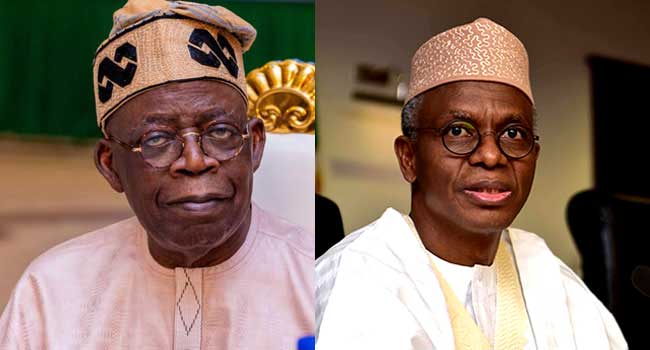
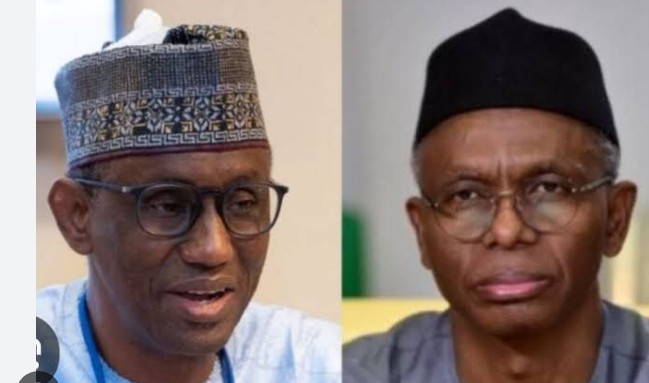
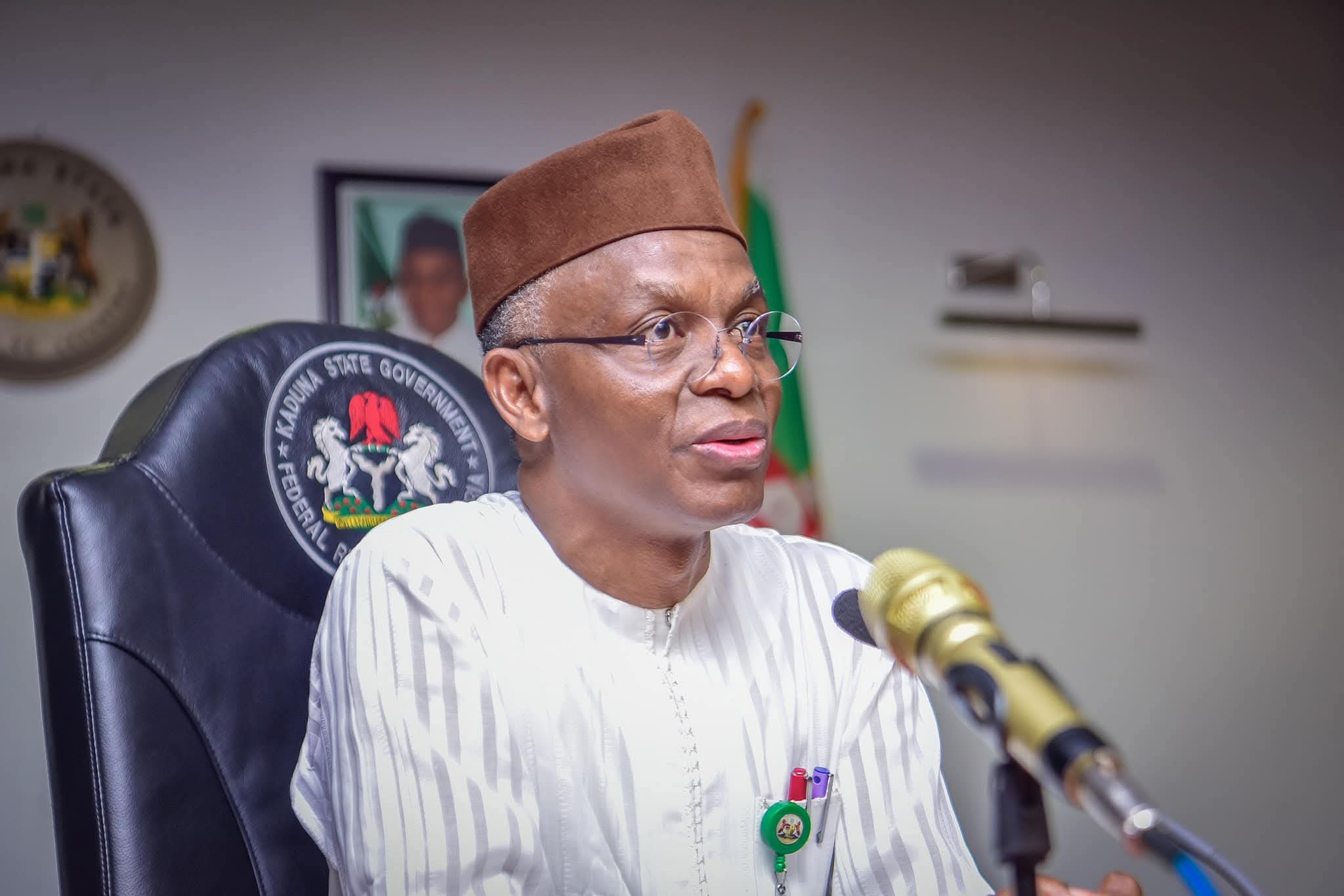
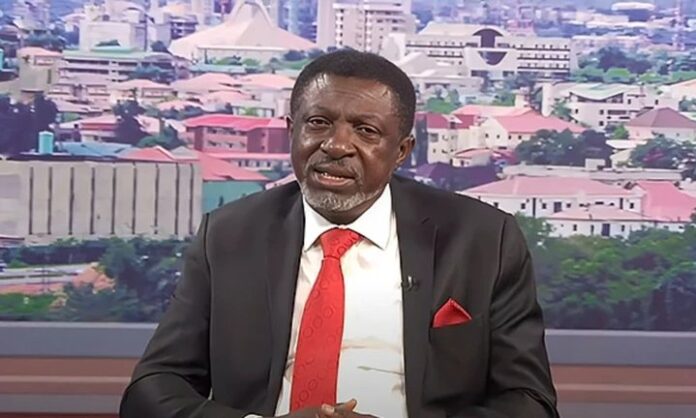
Former Kaduna State governor Nasir El-Rufai has alleged that the administration of President Bola Ahmed Tinubu may be behind a move by a United States lawmaker to blacklist former Kano State governor Rabiu Musa Kwankwaso over alleged religious freedom violations.
Speaking Friday on Prime Time, a programme on Arise TV, El-Rufai suggested the proposed action could be linked to Kwankwaso’s refusal to defect to the ruling All Progressives Congress (APC). He added that rumours of Kwankwaso’s possible move to the African Democratic Congress (ADC) may have triggered political pressure.
US bill targets alleged religious freedom violators
U.S. Representative Riley Moore announced the proposed Nigeria Religious Freedom and Accountability Act of 2026, co-sponsored by Chris Smith. The bill seeks targeted sanctions — including visa bans and asset freezes — against individuals and groups accused of religious freedom violations in Nigeria.
Those named include Kwankwaso, Fulani nomadic militias, the Miyetti Allah Cattle Breeders Association of Nigeria, and Miyetti Allah Kautal Hore.
El-Rufai questions fairness of inclusion
El-Rufai described Kwankwaso’s inclusion as unfair and politically motivated, questioning why other northern governors who implemented Sharia law were not listed.
He argued that Zamfara State pioneered Sharia implementation and noted that Kano’s enforcement under Kwankwaso was not among the strictest.
The former governor urged Nigerians to remain cautious about what he described as foreign political posturing, claiming the bill reflects domestic political considerations in the United States rather than genuine concern for Nigeria’s security situation.
Security concerns remain central
El-Rufai also expressed concern about Nigeria’s internal security challenges, saying the government has failed to adequately protect citizens regardless of religion.
He called for a reassessment of the nation’s security architecture, warning that restoring public safety requires difficult questions and decisive reforms.
The Federal Government has yet to respond to El-Rufai’s allegations.
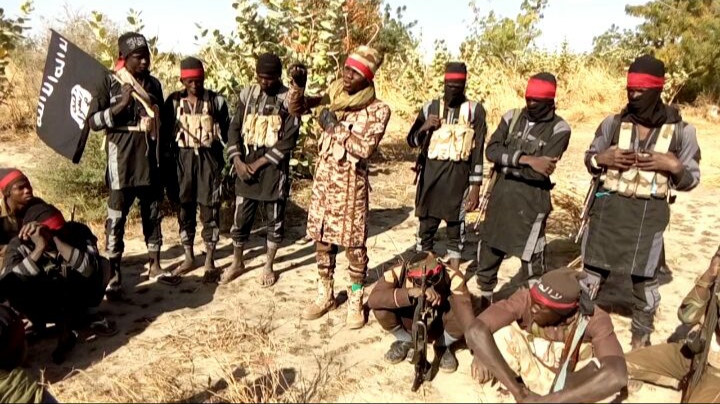
Suspected Boko Haram terrorists have released a disturbing video showing 176 abducted victims, including women, children, and a nursing mother, allegedly taken from Woro community in Kwara State’s Kaiama Local Government Area.
The video shows the captives, visibly distressed, with dirty and worn clothing, and some children without trousers, highlighting the harsh conditions they’re being held in.
One terrorist accuses the Kwara State government of misleading Nigerians and the international community about the scale of the abduction, claiming 176 victims are in their custody, contrary to the government’s claim of 20-30 people kidnapped.
The video has heightened fears over the security situation in Kaiama Local Government Area, particularly across Kwara North and South senatorial districts.
The abduction is linked to a February 4, 2026, attack on Woro community, where dozens were massacred, including two wives of the Emir of Woro, several of his children, the Chief Imam, a school principal, and students.
The Emir, Alhaji Saliu Bio Umar, remains missing, sparking fears he may have been abducted or killed.
A geopolitical tremor is quietly building in North America, and at its center lies a startling revelation: a group of Canadian separatists advocating for the oil-rich province of Alberta to break away from Canada have reportedly held a series of private meetings with officials from the United States government. The development, first reported by international outlets including the Financial Times and NBC News, has ignited political outrage in Canada, stirred debate in Washington, and intensified already fragile tensions between the two longtime allies. Now, as details continue to emerge, DDM NEWS examines the explosive implications of a movement seeking not just independence, but potential alignment with the United States.
The group behind the initiative calls itself the Alberta Prosperity Project, a separatist organization that has long argued that Alberta — often nicknamed the “Texas of Canada” because of its vast energy reserves and conservative political leanings — would thrive as a sovereign nation free from what it describes as federal overreach from Ottawa. What elevates this latest chapter beyond routine separatist rhetoric, however, is the group’s admission that it has engaged in at least three meetings with officials from the U.S. Departments of State and Treasury to discuss the mechanics of Alberta potentially separating from Canada.
According to reports cited by DDM NEWS, discussions in those meetings allegedly included practical considerations such as transitioning to the U.S. dollar, restructuring trade agreements, and even establishing a new defense structure should Alberta become an independent country. A fourth meeting is reportedly being planned to explore further transitional frameworks in the event that a legally binding referendum produces a majority vote in favor of independence. While U.S. officials have downplayed the significance of the meetings, describing them as involving lower-level staff and yielding no commitments, the mere fact that such talks occurred has sent shockwaves through Canadian political circles.
Dennis Modry, co-founder of the Alberta Prosperity Project, has publicly characterized the conversations as encouraging. He claimed that U.S. representatives signaled broad support for Alberta becoming a sovereign state. Meanwhile, the group’s legal counsel, Jeff Rath, was quoted in international media as saying that the United States appeared “extremely enthusiastic about a free and independent Alberta.” These remarks have only intensified scrutiny, as critics argue that such discussions tread dangerously close to interference in Canadian domestic affairs.
The backlash within Canada has been swift and fierce. Polling released this week indicates that a majority of Canadians view the separatists’ negotiations with Washington as tantamount to treason. Political commentators have described the move as unprecedented in modern Canadian history — a scenario in which a domestic separatist movement seeks strategic backing from a foreign government, particularly one that has recently demonstrated assertive geopolitical ambitions under President Donald Trump.
The controversy unfolds against a backdrop of heightened diplomatic tension between Washington and Ottawa. During an address at the World Economic Forum in Davos, Canadian Prime Minister Mark Carney warned of what he described as a “rupture” in the global order, widely interpreted as criticism of President Trump’s trade and foreign policy positions. Although Carney did not mention Trump by name, the reference was unmistakable in the context of ongoing disputes over tariffs, trade balances, and border policies.
President Trump has repeatedly floated the provocative idea that Canada should become the 51st U.S. state, a notion he has framed as mutually beneficial due to Canada’s vast natural resources and geographic proximity. In 2025, then-Prime Minister Justin Trudeau acknowledged that Trump’s comments about absorbing Canada were not merely rhetorical but reflective of genuine strategic interest. Trudeau stated publicly that the United States was acutely aware of Canada’s resource wealth and that Trump viewed absorption as a means of gaining easier access to those assets.
These remarks have fueled suspicions among Canadian observers that Alberta’s separatist overtures to Washington may be exploiting — or being exploited by — broader geopolitical ambitions. Critics argue that any encouragement from U.S. officials could embolden separatist actors and destabilize Canada’s constitutional framework. Former U.S. diplomats, speaking anonymously to American media, have sharply criticized the meetings, calling them “irresponsible” and warning that engagement with separatist groups risks undermining a critical bilateral alliance.
For Alberta, the stakes are enormous. The province accounts for a significant portion of Canada’s oil and gas production and has long harbored grievances over federal environmental regulations, equalization payments, and national energy policies. Separatist sentiment in Alberta has historically surged during periods of economic strain or political friction with Ottawa. However, it has never before advanced to the level of reported engagement with foreign government officials about sovereign transition plans.
DDM NEWS analysis suggests that the Alberta Prosperity Project is attempting to capitalize on the convergence of domestic frustration and international tension. By positioning Alberta as economically self-sufficient and ideologically aligned with conservative U.S. leadership, the group hopes to frame secession not as radical fragmentation but as pragmatic realignment. The proposal to adopt the U.S. dollar and create a new military force underscores how far their ambitions extend beyond symbolic protest.
Nevertheless, constitutional barriers loom large. Under Canadian law, provincial secession would require complex negotiations with the federal government and likely face significant legal challenges. A referendum alone would not automatically confer independence. Furthermore, international recognition — including from the United States — would be critical to any successful transition. The suggestion that U.S. officials may have entertained discussions about such recognition, even informally, is precisely what has unsettled policymakers in Ottawa.
Prime Minister Carney has reiterated his expectation that the United States respect Canadian sovereignty and refrain from actions that could be perceived as interference. In diplomatic language, he underscored the importance of maintaining the integrity of the bilateral relationship — one built over decades of trade cooperation, security collaboration, and shared defense commitments through NATO and NORAD.
Despite official assurances from Washington that no further meetings are anticipated, the episode has already had tangible political consequences. It has energized nationalist sentiment across Canada and deepened ideological divides within Alberta itself. While separatist leaders portray themselves as champions of economic autonomy, critics accuse them of jeopardizing national unity at a time when geopolitical stability is increasingly fragile.
For observers around the world, the unfolding saga raises profound questions about sovereignty in an era of populist politics and shifting alliances. Can a provincial separatist movement legitimately seek backing from a neighboring superpower without triggering diplomatic crisis? And if Alberta were to hold a referendum that favored independence, how would the United States balance strategic interest with respect for international norms?
As DDM NEWS continues to monitor developments, one thing is clear: what began as regional discontent has escalated into a geopolitical flashpoint. Whether the Alberta Prosperity Project’s ambitions remain symbolic or evolve into a constitutional confrontation, the conversations already held have irrevocably altered the political landscape. In an age where borders, alliances, and power structures are increasingly contested, Alberta’s secessionist gambit stands as a dramatic reminder that sovereignty is never merely local — it is always global.
Chairman of the Independent National Electoral Commission (INEC), Prof. Joash Ojo Amupitan (SAN)
The Independent National Electoral Commission (INEC) has excluded the Peoples Democratic Party (PDP), Labour Party (LP), and African Democratic Congress (ADC) from the February 21 bye-election for two constituencies in Rivers State.
Resident Electoral Commissioner Gabriel Yomere disclosed the decision during a security stakeholders’ meeting in Port Harcourt on Friday.
Constituencies affected
The bye-election will fill vacant seats in:
Ahoada East Constituency II, following the resignation of former lawmaker Edison Ehie
Khana Constituency II, after the death of legislator Dinebari Loolo in September 2023
INEC cleared 12 candidates from seven political parties to contest the election.
Parties cleared to participate
The participating parties include:
AA
All Progressives Congress (APC)
APN
BP
New Nigeria Peoples Party (NNPP)
Young Progressives Party (YPP)
Zenith Labour Party (ZLP)
Seven candidates will contest in Ahoada East II, while five will compete in Khana II.
Reasons for exclusion
INEC said the excluded parties failed to meet mandatory requirements:
ADC conducted primaries but failed to upload results to the INEC headquarters portal within the stipulated period.
PDP reportedly did not conduct primaries.
Labour Party cited ongoing litigation as the reason for non-participation.
Yomere stressed that the commission had no interest in excluding any party but was bound by electoral guidelines.
Election arrangements
INEC assured residents of a free and credible poll, noting that:
Movement will be restricted in the affected constituencies on election day.
Bi-modal Voter Accreditation System (BVAS) machines have been configured.
Non-sensitive materials have been received.
Only INEC staff not ad hoc personnel will conduct the election.
The commission urged voters to remain peaceful and participate in the electoral process
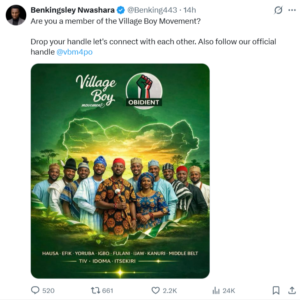
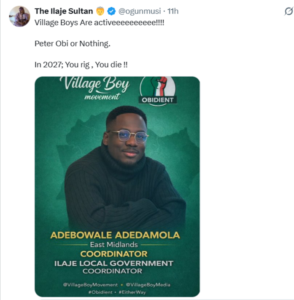
In the simmering political heat of Nigeria’s journey toward the 2027 general elections, a new socio-political force has emerged from the depths of online youth mobilisation, igniting spirited debate and challenging established narratives about who speaks for the everyday Nigerian. Known simply as the Village Boy Movement, this loosely organised but rapidly expanding collective has taken to social media to position ordinary Nigerians — particularly those from rural, small-town, and grassroots backgrounds — at the forefront of political discourse and as a counter-weight to elite-driven campaigning in support of President Bola Ahmed Tinubu’s bid for re-election. The movement’s emergence on February 13, 2026 has captured the attention of commentators, activists, and political strategists alike, not merely for its rhetoric but for what it signals about the evolving dynamics of political engagement in Nigeria’s fractured and highly contested public sphere.
At its core, the Village Boy Movement presents itself as the authentic voice of “the people who built Nigeria with their sweat, ambition, and resilience,” unfiltered by elite interests and free from what they portray as the commercial and celebrity-driven political machinery that has dominated the last election cycle. This self-described grassroots uprising has explicitly aligned itself with supporters of Peter Obi — the former Labour Party presidential candidate and prominent opposition figure — urging adherents to rally behind his vision ahead of 2027 under the rallying cry #PeterObiOrNothing. Although Obi himself has not publicly endorsed the movement or directly commented on its formation on his official social media platforms, the campaign’s creators have made no secret of their intent to tap into the deep well of enthusiasm that buoyed his 2023 presidential bid and to channel it into a sustained force of popular mobilisation for the next election cycle. This online energy contrasts sharply with the more structured, well-financed campaigns backing President Tinubu, particularly the City Boy Movement, a pro-Tinubu youth platform reportedly supported by influential figures and corporate backers across Nigeria’s economic diaspora.
The movement’s rise is inseparable from the broader terrain of Nigerian political identity — a battleground where narratives about authenticity, elite influence, and socio-economic marginalisation are fiercely fought. As its name suggests, the Village Boy Movement rejects the urban-elitist imagery and influence associated with what its members term “City Boy” politics — epitomised by well-heeled business leaders, celebrity figures, and metropolitan networks that have rallied behind President Tinubu’s Renewed Hope Agenda and his introduction of nationwide reforms. The City Boy Movement has boldly proclaimed intentions to mobilise millions of votes nationwide and continues to enjoy significant visibility and institutional backing, with marches, empowerment programmes and endorsements from key political stakeholders.
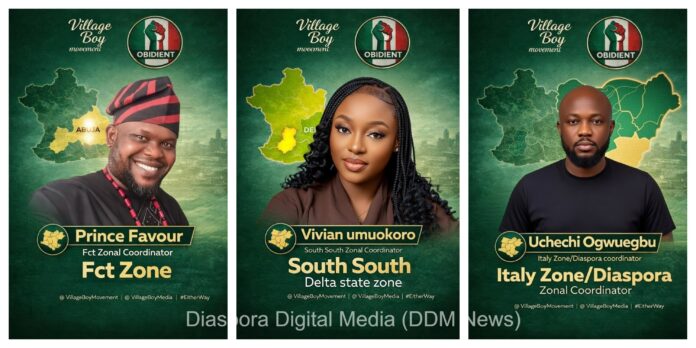
In contrast, the Village Boy Movement’s appeal is rooted in the conviction that Nigeria’s villages, small towns, and rural communities have long been excluded from political influence and economic opportunity. Their messaging leans heavily on culturally resonant themes — pride in humble origins, distrust of perceived elite paternalism, and a desire for political representation that “sounds like us, feels like us, and fights for us.” In practice, this has translated into social media campaigns featuring self-styled regional leaders representing areas such as the South East, North America diaspora, the Federal Capital Territory (FCT), and Rivers State — all echoing similar sentiments about reclaiming political agency for the undercounted and underserved.
What makes the Village Boy Movement particularly noteworthy is not merely its opposition posture but its strategic use of digital platforms to carve out a narrative space in Nigeria’s highly polarized political discourse. In a country where digital activism has previously fuelled major socio-political moments — from the #EndSARS protests to vibrant political advocacy groups — the movement’s architects are deliberately positioning their campaign as both cultural and political resistance. They are tapping into a set of frustrations that resonate across Nigeria’s multi-ethnic population: economic hardship, perceived disconnects between leadership and the masses, and long-standing debates over equitable representation and governance. In doing so, they have effectively reinvented grassroots mobilisation for the digital age, staking their claim in the political arena long before official campaign structures are fully formed around the 2027 elections.
For its part, the movement has not escaped criticism or skepticism. Observers aligned with pro-Tinubu camps have dismissed the Village Boy rhetoric as superficial online posturing with little measurable impact beyond social media engagement. Meanwhile, some political analysts caution that the absence of formal organisation, clear leadership structures, and defined policy frameworks could limit the movement’s influence, particularly when contrasted with the resource-rich machinery backing the incumbent president. Nevertheless, the emotional resonance of the Village Boy message — amplified by countless social media posts, viral hashtags, and communal exchanges — reflects a palpable yearning among segments of Nigeria’s youth and rural population for more inclusive political expression.
Despite the absence of an official endorsement from Peter Obi, the movement’s leaders have intentionally refrained from overtly personalising their appeal, instead framing their activism as a collective journey towards systemic change. This stance resonates with Obi’s own 2023 campaign legacy, which energised many Nigerians with its promise of economic reform, institutional accountability, and a break from traditional power politics. Whether Obi re-enters the fray for 2027 — a question that has yet to be answered — the Village Boy Movement’s existence suggests that his ideas remain influential and that a segment of Nigeria’s electorate remains eager for leaders who embody humility, authenticity, and a connection to grassroots experiences.
The emergence of the Village Boy Movement comes at a time of heightened political activity nationwide, with public figures, celebrities, and influential business leaders openly declaring their political affiliations and future ambitions. Backers of President Tinubu, such as socialite Obi Cubana and other high-profile personalities, have already thrown their weight behind the incumbent’s re-election bid through initiatives like the City Boy Movement, generating visibility, brand partnerships, and coordinated outreach efforts across Nigerian states and beyond.
In the end, the Village Boy Movement’s story is about more than just another faction within Nigeria’s 2027 electoral contest. It speaks to deeper questions about identity, power, and the nature of political belonging in a nation where demographic diversity and youth activism are reshaping the rules of engagement. Whether it translates into measurable electoral support or evolves into something more structurally potent remains to be seen. What is undeniable, however, is that in the digital agora of contemporary Nigerian politics, voices once relegated to the sidelines are finding new platforms, new confidence, and, perhaps most importantly, new audiences — rewriting the narrative not just of who makes noise, but who might ultimately decide the future of Nigeria.
In the ornate chambers of the National Assembly of Nigeria this week, what was supposed to be a procedural defence of the 2026 budget quickly morphed into a stinging indictment of the federal government’s handling of the 2025 fiscal year. Ministers stood before senators with heads bowed, numbers in hand, and a single, unshakeable admission — the bulk of funds appropriated for capital projects were never released, leaving infrastructure, critical services, and development initiatives in limbo, stalled or entirely unfunded. The fallout from these revelations has exposed deep fiscal fragilities in Nigeria’s economy, generating public outcry and raising urgent questions about fiscal discipline, governance, and the future of the nation’s development agenda. Recent exchanges in the Senate and budgetary analyses by civic advocacy groups have unveiled a grim story of unfulfilled promises and financial mismanagement that now threatens to define the current administration’s economic legacy.
The drama unfolded against the backdrop of the 2026 budget defence hearings, where ministers and agency heads were summoned to account for the previous year’s performance. What emerged was a sobering consensus: despite the federal government’s declaration of ambitious capital spending plans and a record-setting expenditure framework, actual capital releases were disproportionately low. In some ministries, allocated funds never materialised; in others, they trickled in at levels too insignificant to sustain even the most modest projects, crippling infrastructure plans nationwide.
Among the most striking admissions came from Saidu Ahmed Alkali, the Saidu Ahmed Alkali — Nigeria’s Minister of Transport. Charged with defending the ministry’s 2026 appropriation, Alkali stunned observers when he disclosed that out of an enormous N256.73 billion capital budget allocated to the ministry for 2025, barely N2.5 billion was released — a mere one percent of what was budgeted. Such a paltry release effectively froze plans for rail and road expansions, modern bus terminals, and other strategic transport infrastructure vital to economic growth. Numerous agencies under his portfolio, including the Nigerian Institute of Transport Technology and the Nigerian Railway Corporation, reported zero capital allocations, forcing most development plans to be either postponed or shelved indefinitely.
The transport sector was not alone in this distressing predicament. Across federal ministries, departments, and agencies — widely referred to as MDAs — capital release figures were reported to be so minimal that key projects remained unfunded. Some ministries recorded zero capital votes, a reality that drew sharp rebukes from lawmakers. In a heated session before the Senate Committee on Finance, senators grilled Dr. Shamseldeen Ogunjimi, the Shamseldeen Ogunjimi and Accountant-General of the Federation, over the incomplete disbursement of capital funds and mounting unpaid contractor liabilities.
Senators were particularly incensed by reports that a significant number of federal projects — numbering 471 and more according to civic group budget tracking data — had not even been started, despite being part of the 2025 budget appropriation. The lack of progress on these projects has sparked disbelief and fury among legislators and constituents alike, many of whom are now questioning where billions of naira earmarked for development went or why they were never released.
The Senate’s confrontation with the Accountant-General was explosive. Lawmakers described the situation as “embarrassing,” expressing frustration that contractors across the country were seeking intervention from legislators to settle unpaid contract bills that had accumulated due to delayed or absent capital releases. “Here at the National Assembly, we have never seen contractors bombarding us weekly for intervention on non-payment of executed contracts,” one senator fumed during the hearing. The frustration was not limited to transport projects: road construction, school rehabilitation, health infrastructure, water supply schemes, electrification plans, and even essential constituency projects were among the stalled works cited by senators.
A critical flashpoint during the hearing was the ongoing debate over Nigeria’s centralised payment system — a Treasury-managed mechanism intended to streamline government disbursements. Senators described the system as “compromised” and “slowing down payment processing,” arguing that it contributed to bottlenecks that prevented capital funds from reaching MDAs on time. They also questioned why more revenue was not available for release, especially after major economic reforms in the last year, including the removal of fuel subsidies and foreign exchange harmonisation, were expected to boost government revenues.
For its part, the Office of the Accountant-General defended its performance by attributing disbursement challenges to cash-backing issues — essentially saying that funds could not be released because they were not available in the Treasury in the first place. Dr. Ogunjimi also pointed to indiscriminate contract awards by MDAs that were not backed by actual cash, further compounding the implementation gaps. While promising improvements and adjustments to the centralised system, he stopped short of offering a full explanation for the stark shortfall in capital releases, a stance that did little to soothe legislative ire.
Adding to the unease, lawmakers also questioned broader fiscal management trends, including debt servicing that continues to consume a disproportionate share of government revenues. Debt obligations are believed to have consumed an estimated 72 percent of revenue in the first seven months of 2025, echoing patterns seen in previous years where servicing debt eclipsed funds available for capital development and social services. Though comprehensive, independent figures on this percentage were not immediately available, it reflects a widely acknowledged structural challenge in Nigeria’s public finances.
Civil society organisations have also weighed in, underscoring that the official budget implementation figures reveal systemic weaknesses in budget execution and transparency. The BudgIT report on federal budget insertions highlighted that tens of thousands of projects worth trillions of naira were included in the 2025 budget with contentious prioritisation and implementation prospects — raising caution about oversight and value-for-money outcomes in national budget processes.
For ordinary Nigerians, the implications are all too real. Roads that should have been built remain dirt tracks; hospitals and schools cry out for renovation; rural electrification initiatives languish; and communities wait indefinitely for promised development. Across social media, citizens are venting their disillusionment, arguing that a “budget of hopes” has turned into a narrative of unmet expectations.
As senators continue to scrutinise the 2026 budget proposal, the glow of fiscal annual planning has dimmed under the harsh light of execution realities. Unless urgent reforms are implemented to ensure timely and adequate capital releases, coupled with robust revenue mobilisation and transparent oversight, the gap between what Nigeria plans and what it delivers risks widening further.
For now, the 2025 budget saga stands as a cautionary chapter in Nigeria’s fiscal history — a reminder that appropriations mean little without effective implementation, and that a nation’s development is measured not by figures on paper but by tangible transformations on the ground.
In a dramatic political upheaval that has sent shockwaves from Abuja to the grassroots, Nigeria has been plunged into one of its most explosive controversies in recent memory — a saga that lays bare the fault lines within the nation’s political and security establishments. At the center of this storm is former Kaduna State Governor and veteran political strategist, Nasir El-Rufai, whose televised assertions that he and his associates accessed wiretapped communications of the nation’s National Security Adviser (NSA), Nuhu Ribadu, have sparked intense scrutiny, official outrage, and nationwide debate over national security, legality, and political rivalry.
The tension ignited when El-Rufai, speaking live on national television, claimed that he became privy to intercepted phone calls involving the NSA, including what he described as direct evidence of a plot to have him detained at the Abuja airport by state security agents. While detailing the incident, he insisted that purported intercepted communications revealed Ribadu’s alleged order to arrest him — a claim that has now become the flashpoint of a national scandal.
From an Airport Fracas to National Headlines
The controversy began in earnest at Abuja’s Nnamdi Azikiwe International Airport, where El-Rufai was reportedly stopped by security personnel upon arrival and his passport was temporarily seized. According to El-Rufai, confusion reigned as operatives sought to detain him without presenting the formal invitation letters that are a procedural necessity before arrest or questioning. “All I asked for was a letter of invitation, and I would have honoured it,” he told reporters, painting the episode as unlawful and politically motivated.
He alleged that what initially appeared to be an approach by the Economic and Financial Crimes Commission (EFCC) was actually orchestrated under the influence of the Independent Corrupt Practices and Other Related Offences Commission (ICPC), procuring operatives of the Department of State Services (DSS) to take him into custody — a move he claimed stemmed directly from a call made by the NSA. And how, he asserted, did he know that? He said the NSA’s phone had been tapped and he heard the instructions. “The government thinks that they’re the only ones that listen to calls. But we also have our ways,” he said on live television.
Wiretap Allegations Elicit Presidential Storm
The presidency reacted with palpable fury. Presidential spokesperson Bayo Onanuga promptly called for a full investigation, describing El-Rufai’s remarks as tantamount to a confession of illegal wiretapping and a direct challenge to national security protocols. Onanuga warned that no individual, regardless of status or influence, is “above the law,” and suggested that if El-Rufai indeed had access to clandestine surveillance tools, the nation’s security apparatus must probe and hold him to account.
On social media, press aides argued that El-Rufai not only admitted to listening in on intercepted calls — an act considered illegal without proper judicial order — but that he may face severe repercussions once the identity of the person behind the alleged interception is established. Some presidential aides even cautioned that the former governor might label any arrest or inquiry into his actions as political persecution of President Bola Tinubu’s administration.
Son’s Contradictory Statement Adds Complexity
In a twist that has added further confusion to an already volatile situation, El-Rufai’s son, Bashir El-Rufai, took to social media to insist that his father did not tap anyone’s phone. According to Bashir, the claim has been widely misconstrued, arguing that his father merely relayed information shared with him by a third party and did not personally conduct any surveillance activities. This clarification has done little to quell skepticism but has provided an unexpected new angle in the dispute.
Wider Allegations: Abuse of Agencies and Political Targets
Beyond the wiretap allegation, El-Rufai’s interview spiraled into broader accusations — most notably that Nigeria’s security and anti-corruption agencies are being misused for personal or political vendettas. While denouncing the ICPC’s conduct, he offered praise for the EFCC’s professionalism, indicating he would comply with its invitation for questioning, even as he lambasted the ICPC for allegedly leveraging the DSS against him without due process.
The claims have drawn condemnation and support in equal measure. Civil society organisations such as the Democracy Watch Initiative branded the accusations as reckless and unfounded, warning that such public disputes erode confidence in Nigeria’s security institutions. Statements from civic groups have underscored the fragility of public trust and the danger of inflaming divisions without verified evidence.
Politicisation or Legitimate Security Debate?
Analysts and political commentators are divided over the implications. Some see the episode as emblematic of deeper fractures within Nigeria’s political elite — a clash not just over personal rivalry but over influence within the ruling structure as the 2027 general elections approach. Others warn that dragging matters of national security into political contention risks damaging institutions that must remain above partisan dispute.
Legal scholars emphasise that, under Nigerian law, interception of private communications without explicit court authorization is a criminal offence. Whether El-Rufai’s account reflects a reckless public claim or exposure of clandestine practices, the legal ramifications are significant and unavoidable.
A Test for Nigeria’s Democratic Institutions
As the presidency presses for investigation, civil liberties advocates are demanding transparency, due process, and constitutional adherence — insisting that any inquiry must uphold the principles of justice without becoming a tool for political revenge. The controversy now stands as a litmus test for Nigeria’s democratic resilience, testing whether institutions like the DSS, ICPC, and EFCC can retain credibility amid intense political pressure.
What began as a routine security allegation has ballooned into a story with legal, political, and institutional consequences that extend far beyond one man’s claims. Nigeria’s future, observers say, may rest as much on the outcome of this dispute as on any future ballot box.
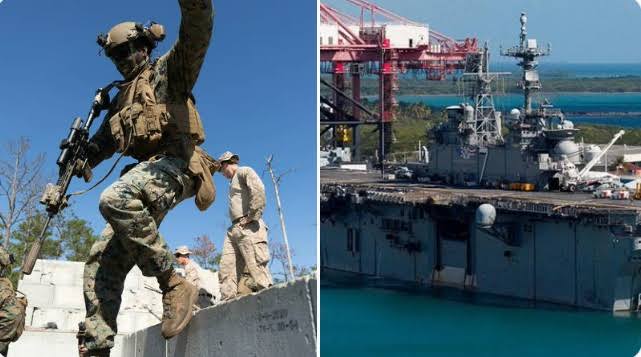
A 21-year-old Nigerian-born U.S. Marine, Lance Cpl. Chukwuemeka E. Oforah, has been declared dead after falling overboard from the USS Iwo Jima in the Caribbean.
The United States Marine Corps confirmed that Oforah, a Florida native of Nigerian descent, fell from the vessel on February 7, 2026.
Despite an intensive three-day search-and-rescue operation involving five ships and 10 aircraft, his body was not recovered. The search was officially called off on February 10, and he was pronounced dead.
Military officials have not disclosed the circumstances surrounding the fall, noting that the incident remains under formal investigation.
Col. Tom Trimble, commanding officer of the Marine Expeditionary Unit (Special Operations Capable), said the loss has deeply affected the unit.
“He will be profoundly missed, and his dedicated service will not be forgotten.”
Oforah was supporting Operation Southern Spear, a mission targeting drug-trafficking networks in parts of the Caribbean and Latin America.
His death has resonated within military circles and the Nigerian diaspora in the United States, highlighting the life of a young man with Nigerian roots who died while serving abroad.
(DDM) – The African Democratic Congress (ADC) officially flagged off its Membership Mobilization, Revalidation, and Registration (MMRR) exercise in Abuja on Thursday, signaling a major step to strengthen its grassroots structure ahead of the 2027 general elections.
At the event, the party announced the appointment of Hon. Prince Kingsley Acharabagu as the ADC MMRR Enugu State Secretary, tasking him with coordinating membership registration and mobilization activities across the state.
Party officials explained that the ADC MMRR initiative aims to revalidate existing members, recruit new supporters, and ensure an accurate membership database, which will be crucial for internal elections and delegate selection processes.
Hon. Prince Acharabagu, in his acceptance speech, highlighted the importance of engaging youths, women, and grassroots leaders to expand the party’s reach in Enugu State and enhance participation in the MMRR exercise.
The flag-off event brought together ADC leaders, stakeholders, and members from various states, all emphasizing the need for unity, discipline, and active participation to strengthen the party’s foundation ahead of national contests.
ADC leaders said the appointment of Hon. Prince Acharabagu as MMRR Enugu State Secretary reflects the party’s commitment to selecting experienced, trusted individuals to drive the registration and revalidation processes.
Officials noted that the MMRR exercise under Acharabagu’s supervision will also help identify inactive members, streamline communication, and position the party to respond effectively to upcoming political challenges.
The ADC MMRR program is a continuation of the party’s long-standing focus on grassroots mobilization, organizational discipline, and transparent processes, aimed at building a robust political base nationwide.
Observers highlighted that the appointment of Hon. Prince Acharabagu under the ADC MMRR structure sends a strong signal of the party’s readiness to strengthen its operations in Enugu State and maximize voter engagement in the lead-up to 2027 elections.
At the conclusion of the Abuja ceremony, party officials reiterated their commitment to ensuring that the MMRR exercise is inclusive, transparent, and effective, urging all members to support Hon. Prince Acharabagu in executing his responsibilities.
The flag-off of ADC MMRR and the appointment of Hon. Prince Acharabagu underscore the party’s determination to consolidate its grassroots influence, enhance member participation, and prepare strategically for the next general elections.
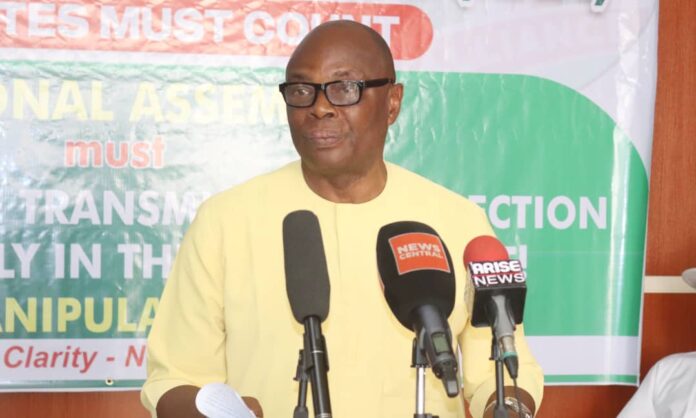
Abuja, February 13, 2026 — The Rescue Nigeria Alliance has strongly condemned the decision of the National Assembly of Nigeria, particularly the Nigerian Senate, to reject mandatory real-time electronic transmission of election results in the amended Electoral Act, describing the move as a “direct attack on transparency” and a setback for Nigeria’s democracy ahead of the 2027 general elections.
In a press statement issued on Friday in Abuja, the group said the 2027 elections represent a defining test for Nigeria’s democratic future and warned that any dilution of electoral safeguards could undermine public trust and national stability.
The Alliance criticized lawmakers for refusing to adopt compulsory real-time upload of polling-unit results to the official results portal, despite conducting a five-hour clause-by-clause review of all 155 clauses of the amendment bill. While the amendment reportedly reduced the timeline for the Independent National Electoral Commission (INEC) to publish notices of election from 360 days to 180 days, it retained what the group described as a “weaker, discretionary” provision on electronic transmission of results.
Senate President Godswill Akpabio had maintained that electronic transmission was not removed but preserved in its previous form — a position the Alliance dismissed as an attempt to “camouflage” a retreat from enforceable transparency.
“Nigerians did not ask for ambiguity,” the statement read. “They asked for enforceable, real-time transparency that shuts the door against manipulation during manual collation.”
The group linked the controversy to broader concerns about governance, insecurity, and economic hardship, arguing that credible elections remain the “last peaceful rescue route” for national renewal. It warned that weakening electoral openness in a country grappling with insecurity and public distrust could fuel deeper instability.
The Alliance has called for peaceful and lawful civic action, urging Nigerians to assemble at the National Assembly complex in Abuja and other symbolic locations nationwide from Monday, February 16, 2026, to press for reforms.
Among its key demands are:
Mandatory real-time electronic transmission of polling-unit results to the official portal.
Full protection of INEC’s independence and all technology-based safeguards against electoral manipulation.
Rejection by the harmonisation committee of any provisions that weaken transparency in the amended law.
The group specifically addressed members of the Senate–House harmonisation committee, co-chaired on the Senate side by Senator Niyi Adegbonmire and including Senators Tahir Monguno, Adamu Aliero, Orji Kalu, Abba Moro, Asuquo Ekpeyong, Aminu Abass, Tokunbo Abiru and Simon Lalong, urging them to “defend the integrity of Nigeria’s future elections.”
Emphasizing that its call is not an invitation to disorder, the Alliance stressed that its campaign would remain constitutional, peaceful and disciplined. It also encouraged citizens to participate in civic engagement efforts aimed at safeguarding electoral integrity.
“The struggle for clean elections and the struggle for accountable leadership are two sides of the same coin,” the statement concluded. “Transparent, technology-backed elections in 2027 are the minimum standard. Anything less is an assault on the Republic, and Nigerians will not be silent.”
The statement was jointly signed by Dr. Basil Nwolisa, National Chairman, and Mr. Akor Christian Oche, National Secretary of the Rescue Nigeria Alliance.
Fresh anxiety has gripped Ira, Inaja, and Aho communities in Kwara State’s Oyun Local Government Area after a threatening letter was allegedly left at Ira market, warning of an impending terrorist assault.
The letter, reportedly found on Thursday morning, has thrown the communities into fear, with security agencies convening operational meetings with local government authorities.
The writers of the letter, identified as “NTA (Nigeria Terrorist Association)”, claimed to have relocated from Kaiama Local Government Area to Oyun, declaring their intention to strike the communities “anytime soon”.
The letter taunted residents, stating, “We heard about this town IRA ‘You people strong, and have many Powerful men to face Our Organisation”.
The threat has unsettled the entire axis, especially after the recent Woro massacre, where at least 162 people were brutally slaughtered by suspected Boko Haram terrorists.
Military sources disclosed that the Nigerian Army’s Forward Operation Base in Ilemona has intensified patrols across the threatened communities to prevent infiltration.
Residents fear a repeat of the Woro bloodbath, and anxiety continues to mount across Oyun Local Government as they brace for an uncertain wait.
Former Kaduna Governor Nasir El-Rufai is accusing the Independent Corrupt Practices and Other Related Offences Commission (ICPC) of directing the Department of State Services (DSS) to arrest him upon his arrival in Nigeria.
The alleged incident occurred at the Nnamdi Azikiwe International Airport in Abuja, where DSS operatives reportedly tried to detain El-Rufai without a formal invitation.
During an interview with BBC, El-Rufai said operatives of the secret police met him after he stepped off the plane and asked him to come for a meeting at their office.
He said he demanded a letter of interview, but the operatives told him it would be shown to him outside the airport.
The former governor claimed that about 50 security operatives were at the airport because of him.
“We walked towards the immigration counter and they (DSS operatives) said I should give them my passport for them to go and do…. I said, ‘no, I always do my immigration biometrics’. I went there, did that and walked out,” he said.
“Two more senior people came and said they are from the DSS and they wanted me to go to their office. I didn’t know whether they have an office at the airport or they meant the headquarters.
“All I asked for is a courtesy of a letter of invitation. That is what I believe I am entitled to as a Nigerian. They did not have a letter.
“Subsequently, we learnt that it was ICPC that procured the DSS to do the abduction. I was supposed to be abducted by the DSS and taken to ICPC.”
While responding to remarks questioning why he was afraid of arrest, El-Rufai said his concern was about undemocratic practices.
“I’m afraid of tyranny, undemocratic practices and people that don’t understand that in a democracy, the executive is not all-in-all,” the former governor said.
“There is a legislature that should be allowed to function, which has not been allowed to function. There is a judiciary that is supposed to be independent, which is being procured and weaponised against the opposition.”
He has since announced plans to voluntarily appear before the Economic and Financial Crimes Commission (EFCC) on Monday, February 16, 2026, at 10 a.m.
Google has disclosed that its flagship artificial intelligence model, Gemini, was targeted in a large-scale attempt to replicate its capabilities through a technique known as model extraction.
According to the company, attackers submitted more than 100,000 carefully structured prompts in an effort to reverse-engineer how the AI system reasons and generates responses. The incident has raised fresh concerns about the security of advanced AI systems and the growing threat of intellectual property theft in the sector.
Suspicious Activity Detected
Google’s security teams identified unusual usage patterns involving repeated and highly structured queries sent to Gemini. Unlike typical user prompts, the queries were strategically designed to probe the model’s reasoning processes and decision-making patterns.
By collecting and analysing a large number of responses, attackers can potentially build a dataset sufficient to train a separate AI system that mimics the behaviour of the original model.
Google said it detected and blocked the activity before significant damage occurred. The company also confirmed that there was no breach of its core systems and no compromise of user data.
Understanding Model Extraction
Model extraction — sometimes referred to as “distillation” — does not involve hacking into servers or stealing source code. Instead, it relies on interacting with an AI system through legitimate interfaces such as APIs or chat platforms.
In such attacks, individuals submit thousands of targeted prompts, gather the responses, and use them to train a secondary “student” model designed to approximate the original system’s capabilities.
As AI models become more valuable and expensive to develop, the risk of such attempts increases. Training large language models like Gemini requires billions of dollars in computing infrastructure, research, and specialised talent. Successfully replicating similar behaviour at lower cost could erode a company’s competitive advantage.
Broader Industry Implications
The incident highlights a shifting security landscape in artificial intelligence. Unlike traditional cyberattacks that seek unauthorised access, model extraction attempts operate within normal usage channels, making detection more complex.
While Google did not identify the source of the attempt, reports suggest that such efforts are often commercially motivated rather than state-sponsored.
The company said it is strengthening its monitoring systems to better identify behaviour indicative of model extraction, including unusual prompt patterns and abnormal query volumes.
As competition intensifies in the AI race, companies are increasingly focusing not only on building more advanced systems but also on protecting them from replication.
Google’s disclosure underscores a growing reality: in the AI era, innovation and cybersecurity are becoming inseparable.
(DDM) – The Independent National Electoral Commission (INEC) has officially announced the timetable for Nigeria’s 2027 general elections, with key dates now set for early next year.
INEC’s Chairman, Joash O. Amupitan, SAN, made the announcement on Friday in Abuja while launching the Notice of Election as well as the official Timetable and Schedule of Activities for the polls.
According to the released schedule, voting for the Presidential and National Assembly elections will hold on Saturday, February 20, 2027.
Subsequently, the Governorship and State Houses of Assembly elections will take place on Saturday, March 6, 2027.
Amupitan said the fixed dates reflect the commission’s commitment to conducting transparent, credible, and lawful elections throughout the federation.
He explained that early publication of the timetable is intended to give political parties, candidates, civil society organisations, and voters sufficient time to prepare for their respective roles in the process.
The 2027 election cycle marks another critical moment in Nigeria’s democratic journey, with a growing clamor from various stakeholders demanding reforms in electoral laws, especially around processes like electronic transmission of results, voter registration updates, and ballot security.
INEC’s announcement comes amid heightened public debates and protests over the recently amended Electoral Act, which critics say contains loopholes that could weaken the integrity of election outcomes if not adequately addressed.
Supporters of the reforms argue that the timetable gives the commission and political parties a clear roadmap to follow as they gear up for campaigns, primaries, and logistics planning.
Observers note that setting early dates can help reduce uncertainties and ensure a structured approach to election preparations.
Political parties are expected to commence internal primaries and nomination processes following the publication of the timetable, with deadlines for submitting candidates’ names to INEC outlined in the schedule.
The Presidential and National Assembly elections on February 20 will elect the country’s next president and members of the Senate and House of Representatives.
The March 6 polls will determine 36 state governors and members of the 36 State Houses of Assembly.
Amupitan has repeatedly emphasised that adherence to the timetable is essential to avoid any disruptions in the electoral calendar.
He urged all political stakeholders to comply with the timeline and cooperate with INEC in meeting statutory deadlines.
Civil society organisations have welcomed the clarity, but some continue to push for amendments that would strengthen fairness and transparency ahead of the polls.
INEC’s clear schedule now provides room for strategic planning by political actors and increased civic awareness among voters nationwide.
As Nigeria approaches the 2027 election season, the conduct of the polls will likely dominate public discourse, with stakeholders watching closely to ensure that the exercise meets expected standards of credibility and inclusiveness.
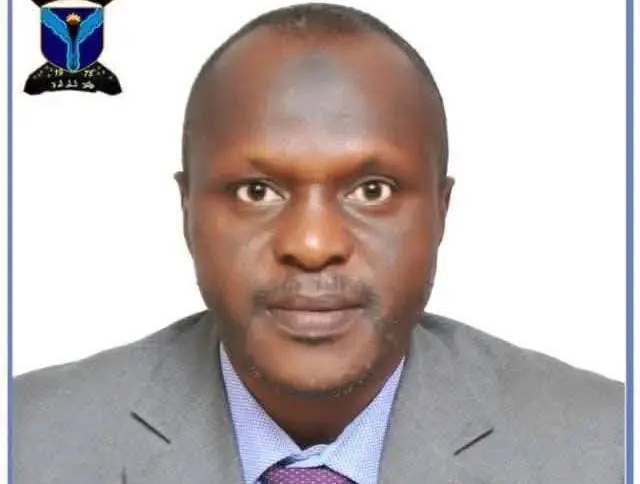
Professor Abubakar El-Jummah, Dean of the Faculty of Engineering and Technology at the Nigerian Army University, Biu, Borno State, has died in Boko Haram captivity.
He was abducted on March 3, 2025, while traveling from Biu to Maiduguri along the Damaturu–Buni Yadi–Biu road.
The insurgents reportedly informed his family that he died after a year in captivity due to illness.
A funeral prayer in absentia was held at the Ngomari Old Airport Juma’at Mosque in Maiduguri, with hundreds of sympathizers attending.
The family expressed gratitude for support during this difficult time, but it’s unclear if a ransom was demanded.
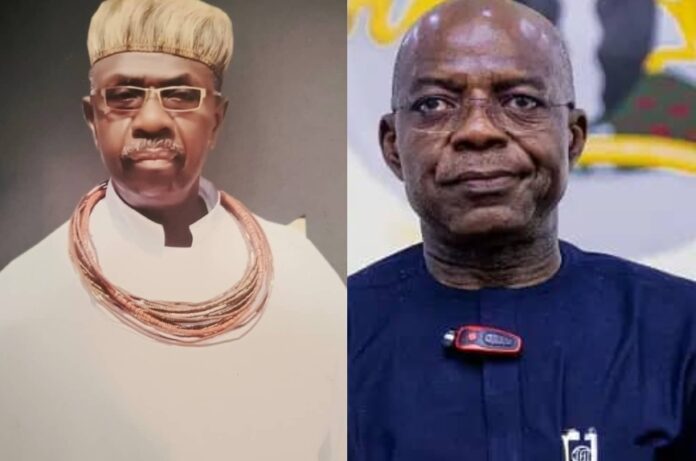
The traditional ruler of Ekeoba Ancient Kingdom, Ohuhu, Umuahia North Local Government Area of Abia State, HRM Eze Iheanyichukwu Nwokenna, has stated that the governor of Abia State, Alex Otti, has cleared the backlog of salary, pension and gratuity of Abia workers, adding that if the three immediate past governors of the state from 1999 till 2023, has paid off all the arrays, it would have been very easy for the governor to do more better.
The monarch urged Governor Otti not to be distracted, assuring him that his performance would speak volumes for him ahead of the 2027 general election.
While speaking in Umuahia, on a radio program tagged, “the truth” aired by the Broadcasting Cooperation of Abia State (BCA) Eze Nwokenna decried that: “Governor Alex Otti has cleared the arrays of salary to the best of his knowledge and records available, adding that the governor has started defraying the gratuities.
“It is a gradual process. The governor is not a magician. He promised that he must completely pay up all the gratuity of retired workers. Most of these arrays cleared by the governor were owed by the previous administration and even the Bible says that a worker is entitled to his wages.
“You can’t get the best from your workers if you are not paying them their salaries and wages. The previous administration did the way they wanted, but this governor thought that owing salary is not the best for his administration to go forward and he decided to pay off all the arrays. That shows he wanted his administration to be a very good one. The only magic he adopted is to keep paying them regularly”.
He lamented that within a relatively short period, the current administration has recorded far better achievements than previous ones.
The traditional ruler insisted that Abia State has witnessed massive and unprecedented infrastructural development under Otti in less than three years.
According to him, while criticism is a legitimate part of democracy, it should be constructive rather than misleading.
Chairman of the Independent National Electoral Commission (INEC), Prof. Joash Ojo Amupitan (SAN)
The Independent National Electoral Commission (INEC) has announced February 20, 2027, as the date for Nigeria’s next presidential and National Assembly elections, while governorship and state Houses of Assembly polls will hold on March 6, 2027.
INEC Chairman, Joash Amupitan, disclosed this on Thursday while formally setting in motion the electoral process for the 2027 general election.
Briefing journalists, Amupitan said the timetable was released in strict compliance with constitutional and statutory provisions guiding elections in Nigeria.
“By virtue of the Constitution of the Federal Republic of Nigeria, 1999 as amended, the tenure of the President, the Vice-President, the Governors, and Deputy Governors of states of the Federation… will expire on the 28th day of May, 2027,” he said.
He added that membership of the National and State Assemblies would stand dissolved in June 2027, in line with constitutional timelines.
Constitutional Backing
Citing Sections 76(2), 116(2), 132(2), and 178(2) of the 1999 Constitution (as amended), the INEC chairman explained that elections must be held not earlier than 150 days and not later than 30 days before the expiration of the tenure of elected office holders.
He also referenced Section 28(1) of the Electoral Act 2022, which mandates the Commission to publish a notice of election at least 360 days before the scheduled date.
“This action we are taking today is pursuant to the provisions of the Constitution of Nigeria and the Electoral Act 2022,” Amupitan stated, reaffirming the Commission’s independence in fixing election dates.
Scope of the 2027 General Election
According to INEC, the 2027 general elections will be conducted nationwide for the following offices:
President and Vice-President of the Federal Republic of Nigeria
Governors and Deputy Governors (except in states with off-cycle elections)
Members of the Senate
Members of the House of Representatives
Members of State Houses of Assembly
Amupitan said the detailed timetable and schedule of activities had been uploaded to the Commission’s website and circulated to registered political parties and other stakeholders.
He directed all 36 Resident Electoral Commissioners and the FCT Commissioner to publish notices of election in their respective constituencies.
Next Steps and Electoral Reform
INEC said party primaries, submission of nomination forms, and campaign activities would be conducted within the statutory timeframes outlined in the approved schedule. Campaigns are expected to end 24 hours before election day.
The chairman also addressed the pending Electoral Amendment Bill before the National Assembly, acknowledging ongoing debates around proposed reforms.
“We recognise the necessity of enhancing our electoral framework to ensure that it meets the ever-evolving needs of our society and reflects our aspiration for free, fair, and credible elections,” he said.
The announcement effectively marks the official commencement of preparations for Nigeria’s 2027 general elections.
David Ibiyeomie has addressed critics questioning his lifestyle after revealing that he owns luxury wristwatches worth millions of dollars, including one he said was valued at about $2 million.
Speaking during a church gathering, the cleric explained that the timepieces were not personal purchases but gifts. According to him, a man was divinely instructed to present the watches to him, and he simply received them in obedience to what he believed was God’s direction.
The pastor added that he has not even worn many of the watches in his collection. He suggested that if some of his critics were to see the items up close, they might be overwhelmed by their value. His comments appeared aimed at pushing back against accusations that he spends church resources on luxury.
The statement has since stirred conversations online. Supporters argue that gifts given out of goodwill should not be a source of controversy and that spiritual leaders are not forbidden from enjoying wealth. Others, however, maintain that high-value luxury items can send the wrong message, especially in a country where many struggle economically.
As reactions continue to pour in, the remark has once again placed the spotlight on the broader debate about prosperity, perception, and expectations of religious figures in public life.
(DDM) – Emma Ogidi, South-South Caretaker Chairman of the Peoples Democratic Party (PDP), has delivered a scathing critique of Nigeria’s electoral body, describing it as potentially the “worst INEC” in the country’s history.
In an exclusive interview with a Vanguard correspondent, Ogidi, a prominent figure in the Dr. Kabiru Turaki-led faction of the PDP, linked the growing dysfunction within the party to internal conflicts that have escalated in recent years.
Ogidi explained that the party’s problems are largely self-inflicted, stemming from anti-party politics among members. He lamented that, unlike in the past when disagreements were resolved through internal consensus, party members now openly declare their intentions to act against the organization. “People are now saying, ‘I am doing this,’” he said, noting that such declarations are unprecedented in the PDP’s history.
The PDP official also raised concerns about the independence and credibility of the electoral commission.
He criticized the current INEC leadership for what he described as a lack of experience, noting that the chairman has served less than four months yet has already engaged in controversial political interactions. “The other man stayed two tenures before they compensated him with ambassadorial appointments. This man has not even done four months, he has gone to see Wike,” Ogidi said.
Ogidi’s comments also targeted federal judges who visited Governor Nyesom Wike. He argued that the judges failed to acknowledge that certain houses under dispute were funded with Federal Capital allocations, not Wike’s personal money. “As judges, they knew the money did not belong to Wike but to the government, and it was tied to the President,” he said.
The interview highlights persistent tensions within the PDP, which continues to face public scrutiny over factionalism and leadership disputes. Analysts note that internal divisions, if left unchecked, could weaken the party’s cohesion ahead of the 2027 general elections.
Emma Ogidi’s remarks also underscore broader concerns about judicial independence in politically sensitive matters. His statements suggest that political favoritism may influence decision-making in cases involving high-profile politicians.
Historically, INEC has faced criticism over the transparency of its operations and the management of elections, with observers often highlighting infrastructural and logistical challenges. Ogidi’s warning that the current leadership could be the “worst INEC” signals potential unrest if public confidence in the electoral process diminishes further.
As one of the vocal leaders in the Turaki faction, Ogidi has consistently positioned himself as a defender of party principles while calling out what he perceives as political interference by opponents and public officials.
The PDP’s internal rifts, coupled with Ogidi’s criticism of INEC and the judiciary, may influence the political discourse ahead of 2027, shaping debates over electoral reforms, judicial accountability, and governance in Nigeria.
Ogidi concluded by stressing the importance of truth in governance, citing biblical principles: “The truth must be told in this country… it is only the truth that can set you free.”
This latest pronouncement from Emma Ogidi signals escalating tensions within Nigeria’s political landscape and raises questions about INEC’s readiness to conduct transparent elections under the current leadership.
Cardi B had a vulnerable moment on stage as she kicked off her Little Miss Drama tour in Palm Desert, pausing between songs to speak directly to fans about protecting their joy.
“I do not want to be emotional,” she told the crowd, her voice shaking. “Don’t let nobody take your happiness away from you.”
The comment immediately struck a chord with concertgoers, many of whom saw it as a subtle response to the swirling headlines about her rumored split from Stefon Diggs. While she never mentioned him by name, the timing and the raw emotion in her delivery had fans reading between the lines.
Throughout the night, Cardi balanced high-energy performances with moments of reflection, at times appearing to hold back tears before jumping back into full superstar mode. Supporters in the audience cheered her on, shouting words of encouragement and reminding her she’s loved.
Clips from the show quickly spread online, with many praising her honesty and strength for pushing through a difficult period while still showing up for her fans. Others admired how she turned a personal moment into a message of empowerment, urging people not to let heartbreak or outside noise steal their peace.
If opening night proved anything, it’s that Cardi is determined to keep the spotlight on her music, her growth, and the connection she shares with her audience no matter what may be happening behind the scenes.
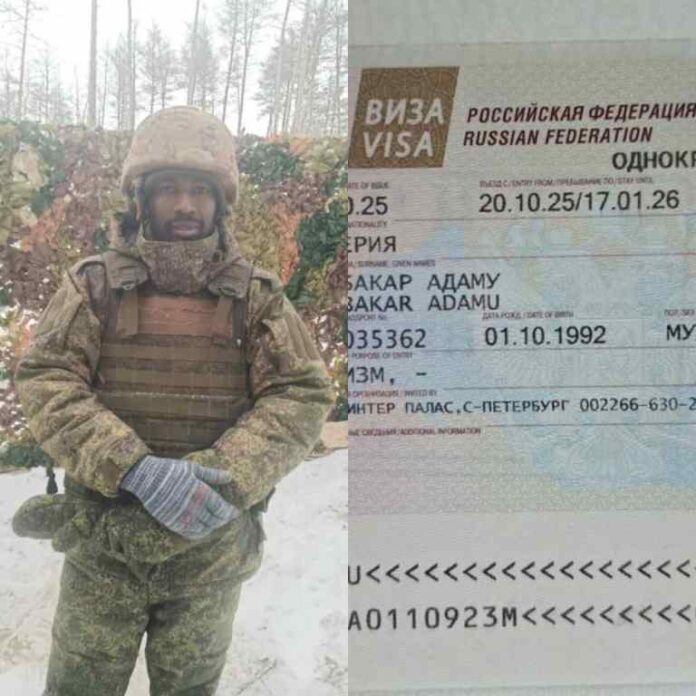
Abubakar Adamu, a Nigerian citizen, is seeking urgent repatriation from Russia after allegedly being deceived into joining the Russian military.
He was promised a civilian security guard job but had his travel documents seized upon arrival and was forced to sign enlistment papers in Russian without an interpreter.
Adamu’s legal representatives argued that he didn’t understand the contract due to the language barrier and cite “Non Est Factum” and fundamental misrepresentation.
They’re demanding Russia halt his deployment, return his documents, and facilitate repatriation.
This case follows reports of African nationals being recruited into Russia’s military under false pretenses, with promises of high salaries and citizenship.
Many are forced into combat zones with minimal training, facing racial abuse and coercion.
Ukraine’s Foreign Minister disclosed over 1,400 Africans from 36 countries are fighting for Russia, with many held as prisoners of war.
The Russian Ambassador to Nigeria denied state-sponsored recruitment, saying any involvement is by illegal organizations.
However, Nigerian Ministry of Foreign Affairs hasn’t commented on Adamu’s appeal, sparking calls for swift diplomatic action.
Pro-Wike Lawmakers Take Away Fubara's Authority To Appoint LG Chairmen
The governor of Rivers State Siminalayi Fubara, has dissolved the State Executive Council, directing all commissioners and special advisers to hand over to permanent secretaries or the most senior officers in their ministries with immediate effect.
The directive was disclosed in a statement issued on Thursday by the Chief Press Secretary to the governor, Onwuka Nzeshi.
He said Fubara expressed appreciation to the outgoing members of the executive council for their service to the state.
“His Excellency, Sir Siminalayi Fubara, GSSRS, Governor of Rivers State, has dissolved the State Executive Council.
“His Excellency, the Governor, has therefore directed all Commissioners and Special Advisers to hand over to the Permanent Secretaries or the most Senior officers in their Ministries with immediate effect.
“His Excellency further expresses his deepest appreciation to the outgoing members of the Executive Council wishing them the best in their future endeavours,” the statement reads.
Meanwhile, the dissolution of the cabinet comes in the wake of the recent political truce between Governor Fubara and his predecessor, the Minister of the Federal Capital Territory, Nyesom Wike, following months of political acrimony that had polarised the state’s political structure.
The face-off between both leaders had led to a prolonged power struggle within the state’s political system, resulting in the resignation and reappointment of lawmakers, parallel political alignments, and a split within the executive arm.
However, recent reconciliation efforts by President Bola Tinubu and other political figures reportedly led to a truce between the two camps, paving the way for a reconfiguration of the state’s political structure.
Political observers say the dissolution of the executive council is widely seen as part of the implementation of the peace deal, which is expected to produce a new cabinet reflecting the balance of interests agreed upon by both sides.
A new set of commissioners is expected to be announced in the coming days.
(DDM) – A fresh war of words has erupted within Nigeria’s opposition political space after Paul Ibe publicly criticised former Ekiti State governor Ayodele Fayose over a 48-hour ultimatum linked to a controversial statement.
Ibe, who serves as media adviser to former Vice President Atiku Abubakar, rejected Fayose’s demand that a statement concerning him be withdrawn, and instead mocked the timeframe given for compliance.
The exchange followed comments Fayose reportedly made in which he threatened to reveal more details about a political meeting in Minna if the statement was not retracted within two days.
Reacting on his verified X account, Ibe argued that Fayose failed to distinguish between him and diplomat Phrank Shaibu, whom he said actually authored the statement in question.
Ibe used sharp language and sarcasm in his response, suggesting that Fayose may have misread the situation or confused the identities involved.
He questioned whether the 48-hour ultimatum was excessive and ridiculed the demand by making references to alcohol and recovery time, framing Fayose’s reaction as misguided.
The dispute quickly drew attention because both men remain influential voices within the Peoples Democratic Party (PDP) ecosystem and Nigeria’s broader opposition politics.
Fayose, a former two-term governor of Ekiti State, has long built a reputation as a blunt and outspoken political figure who frequently comments on national issues.
He has also maintained a complicated relationship with Atiku and other PDP leaders, sometimes supporting party positions and at other times offering public criticism.
Atiku, who has contested multiple presidential elections, remains a central figure in opposition politics as conversations quietly build toward the 2027 general elections.
Analysts say internal disagreements like this reflect deeper tensions within opposition ranks as politicians position themselves for future influence.
Public clashes among party stakeholders often signal ideological rifts, personal rivalries, or strategic disagreements over party direction.
In Nigeria’s political culture, media advisers and spokespersons play key roles in shaping narratives, defending principals, and countering rivals.
Their statements, especially on social media, frequently escalate into headline-making disputes that ripple across party lines.
Observers note that such exchanges can energise supporters but also risk portraying disunity within parties seeking to present themselves as credible alternatives to ruling powers.
As of now, Fayose has not issued a detailed counter-response to Ibe’s latest remarks.
The situation adds to a growing list of public disagreements among Nigerian politicians conducted in the media rather than behind closed doors.
Political watchers expect more reactions as stakeholders interpret the implications for party cohesion and future alliances.
For many citizens, the episode highlights how personality clashes continue to shape Nigeria’s political discourse as much as policy debates.
The report was first highlighted by Daily Post and has since circulated widely across online platforms, drawing mixed reactions from supporters and critics alike.
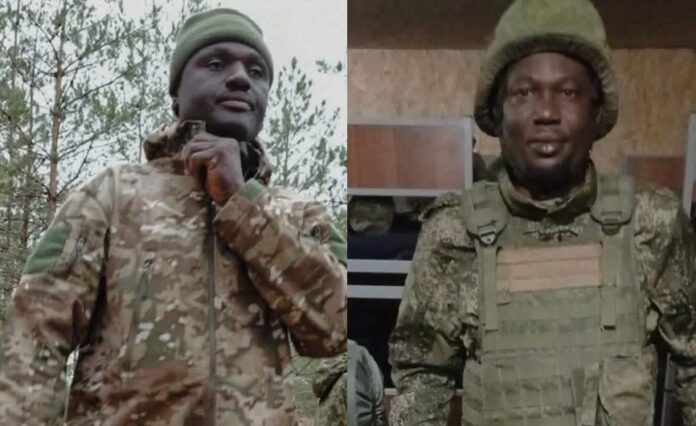
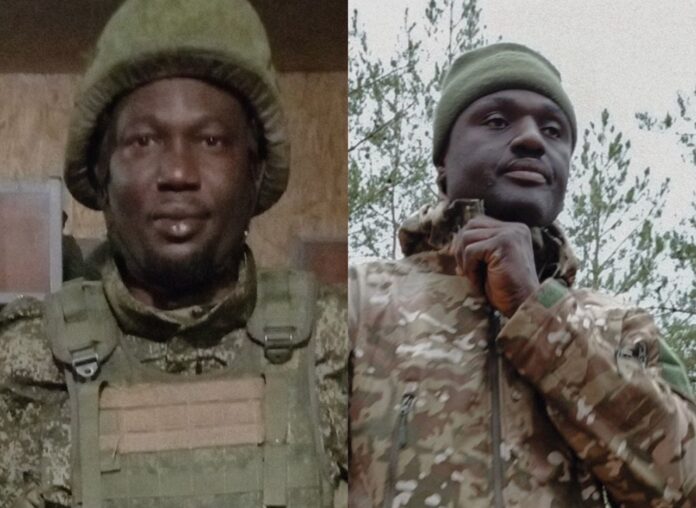
The bodies of two Nigerian nationals, Hamzat Kazeen Kolawole and Mbah Stephen Udoka, have been recovered on the battlefield in eastern Ukraine, specifically in the Luhansk region, after being killed by drone strikes while attempting to storm Ukrainian positions.
Ukrainian intelligence (DIU) has described the situation as the brutal exploitation of African recruits, who were deployed in deadly “meat assault” missions with little or no military training.
The two Nigerians were among foreign recruits allegedly sent directly to the front lines, where they were used in high-risk infantry assaults with extremely high casualty rates.
Udoka, who signed a military contract on September 28, 2025, Diaspora Digital Media gathered, received no formal training before being drafted into active combat just five days later.
Ukrainian intelligence has warned that foreign nationals, particularly from African countries, are being recruited with promises of employment or financial incentives, only to be immediately deployed to front-line combat zones.
The agency has described this as a disturbing pattern, with recruits often used in “meat assaults” designed to exhaust Ukrainian ammunition and expose enemy positions, often at the cost of heavy casualties among poorly trained foreign fighters.
The DIU noted that the brutal cost of Russia’s recruitment of African nationals has been laid bare.
The deaths of the two Nigerians come amid growing reports that African nationals recruited into Russian forces are being used in high-risk operations with little regard for their safety.
Ukraine has announced the discovery of the bodies of two Nigerian nationals in the Luhansk region, alleging that the men were fighting on the side of Russia in the ongoing four-year war.
In a statement issued on Thursday, Ukraine’s Defence Intelligence agency said the men were identified as Hamzat Kazeen Kolawole, 42, and Mbah Stephen Udoka, 38.
According to the agency, both men served in the 423rd Guards Motor Rifle Regiment (military unit 91701) of the 4th Guards Kantemirovskaya Tank Division of the Armed Forces of the Russian Federation.
The statement said Kolawole and Udoka signed contracts with the Russian Army in the second half of 2025 — Kolawole on August 29 and Udoka on September 28.
Udoka was reportedly deployed on October 3, just five days after signing his contract, and was assigned to a unit operating in what Ukraine described as temporarily occupied territories. The intelligence agency claimed he had no prior military training before his deployment.
“No training records for Kolawole have been preserved; however, it is highly likely that he also received no military training. His wife and three children remain in Nigeria,” the statement added.
The Luhansk region in eastern Ukraine has been a focal point of intense fighting since Russia’s invasion began in 2022. Ukrainian authorities did not provide further details on the circumstances surrounding the deaths of the two Nigerians.
As of the time of filing this report, there has been no official confirmation or response from Russian authorities or the Nigerian government regarding the claims.