


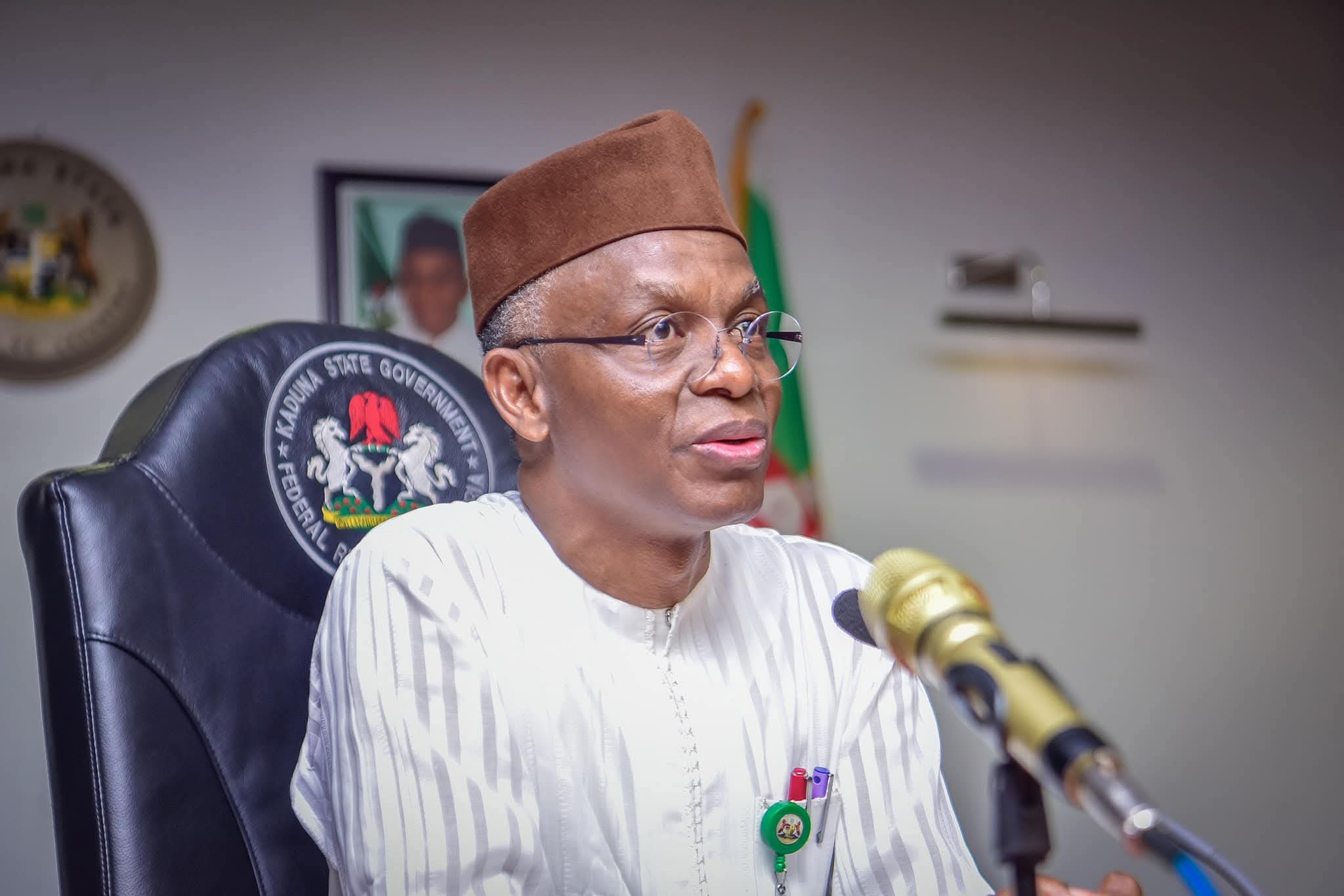
Former Kaduna Governor Nasir El-Rufai is accusing the Independent Corrupt Practices and Other Related Offences Commission (ICPC) of directing the Department of State Services (DSS) to arrest him upon his arrival in Nigeria.
The alleged incident occurred at the Nnamdi Azikiwe International Airport in Abuja, where DSS operatives reportedly tried to detain El-Rufai without a formal invitation.
During an interview with BBC, El-Rufai said operatives of the secret police met him after he stepped off the plane and asked him to come for a meeting at their office.
He said he demanded a letter of interview, but the operatives told him it would be shown to him outside the airport.

The former governor claimed that about 50 security operatives were at the airport because of him.
“We walked towards the immigration counter and they (DSS operatives) said I should give them my passport for them to go and do…. I said, ‘no, I always do my immigration biometrics’. I went there, did that and walked out,” he said.
“Two more senior people came and said they are from the DSS and they wanted me to go to their office. I didn’t know whether they have an office at the airport or they meant the headquarters.
“All I asked for is a courtesy of a letter of invitation. That is what I believe I am entitled to as a Nigerian. They did not have a letter.
“Subsequently, we learnt that it was ICPC that procured the DSS to do the abduction. I was supposed to be abducted by the DSS and taken to ICPC.”
While responding to remarks questioning why he was afraid of arrest, El-Rufai said his concern was about undemocratic practices.
“I’m afraid of tyranny, undemocratic practices and people that don’t understand that in a democracy, the executive is not all-in-all,” the former governor said.
“There is a legislature that should be allowed to function, which has not been allowed to function. There is a judiciary that is supposed to be independent, which is being procured and weaponised against the opposition.”
He has since announced plans to voluntarily appear before the Economic and Financial Crimes Commission (EFCC) on Monday, February 16, 2026, at 10 a.m.




