


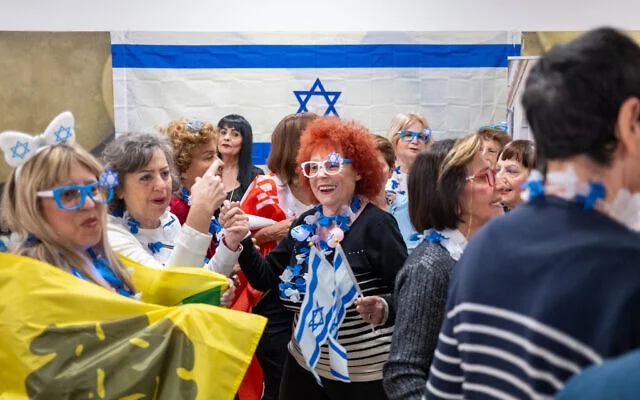
On Wednesday, April 22, 2026, Israel marked its 78th Independence Day (Yom Ha’atzmaut) with a remarkable display of national confidence.
Across Jerusalem, Tel Aviv, Jaffa, beaches, promenades, parks, and open nature sites were packed with families grilling meat, flying kites, waving flags, and celebrating under the spring sun.
The date corresponds to Israel’s official 2026 observance of Independence Day.
But beneath the smoke of barbecues and festive music lies a deeper question:

Why Was Israel Not Afraid?
Just weeks earlier, fears of a broader regional war involving Iran had dominated headlines.
Missile threats, proxy conflicts, and military tension made many observers expect a subdued holiday.
Some municipalities even announced scaled-back events.
Yet on April 22, Israelis filled public spaces in massive numbers.
That was not accidental. It was strategic.
Celebration as a National Security Message
In Israel, public life often doubles as political signaling. Celebrating openly during a period of tension sends a clear message:
“We are not paralyzed.”
When citizens gather in parks instead of bunkers, it communicates resilience to enemies and reassurance to allies.
It tells adversaries that fear has not altered civilian life.
This kind of psychological posture matters in modern conflict.
Nations do not only fight with weapons.
They fight with morale, continuity, and optics.
The Invisible Shield: Why Citizens Felt Safe
Israelis likely celebrated because they trusted layers of security that outsiders do not always see:
- Advanced Missile Defense Systems
Israel’s multi-tier air defense architecture, including systems like Iron Dome and David’s Sling, has built public confidence over years of repeated threats.
- Preemptive Intelligence Capacity
Israel’s intelligence agencies are known globally for aggressive monitoring of threats before they materialize.
- Rapid Emergency Infrastructure
Public alerts, shelters, mobile warnings, and rehearsed civilian response systems reduce panic.
- Normalization of Risk
For many Israelis, living under threat has become part of national routine. What would stop public life elsewhere is often absorbed into daily resilience.
The Political Reality Behind the Picnic Tables
There is also a domestic dimension.
Governments under pressure often rely on national holidays to restore unity.
In a country deeply divided over war policy, hostages, leadership disputes, and judicial tensions, Independence Day becomes more than celebration. It becomes a temporary glue.
Crowded parks can project internal cohesion even when society remains politically fractured.
The Other Side of the Story
Not everyone celebrates this day in the same way.
For many Palestinians, Israel’s Independence Day coincides with remembrance of displacement and loss connected to the events of 1948.
So while fireworks rise in one community, grief remains alive in another.
That contrast is central to understanding the region’s unresolved conflict.
What the World Saw on April 22
The images were powerful:
- Families grilling in Sacher Park
- Crowds filling the Tel Aviv Promenade
- Boats cutting across the Mediterranean
- Restaurants overflowing in Jaffa
- Flags everywhere
What the world really witnessed was not just a holiday.
It was a nation staging normalcy in a dangerous neighborhood.
Final Verdict
Israel was not “unafraid” because danger disappeared.
Israel celebrated openly because it has built a system; military, technological, psychological, and cultural, that allows daily life to continue under threat.
That may be its greatest strength.
Not merely the ability to win wars.
But the ability to hold a barbecue while others predict one.




