



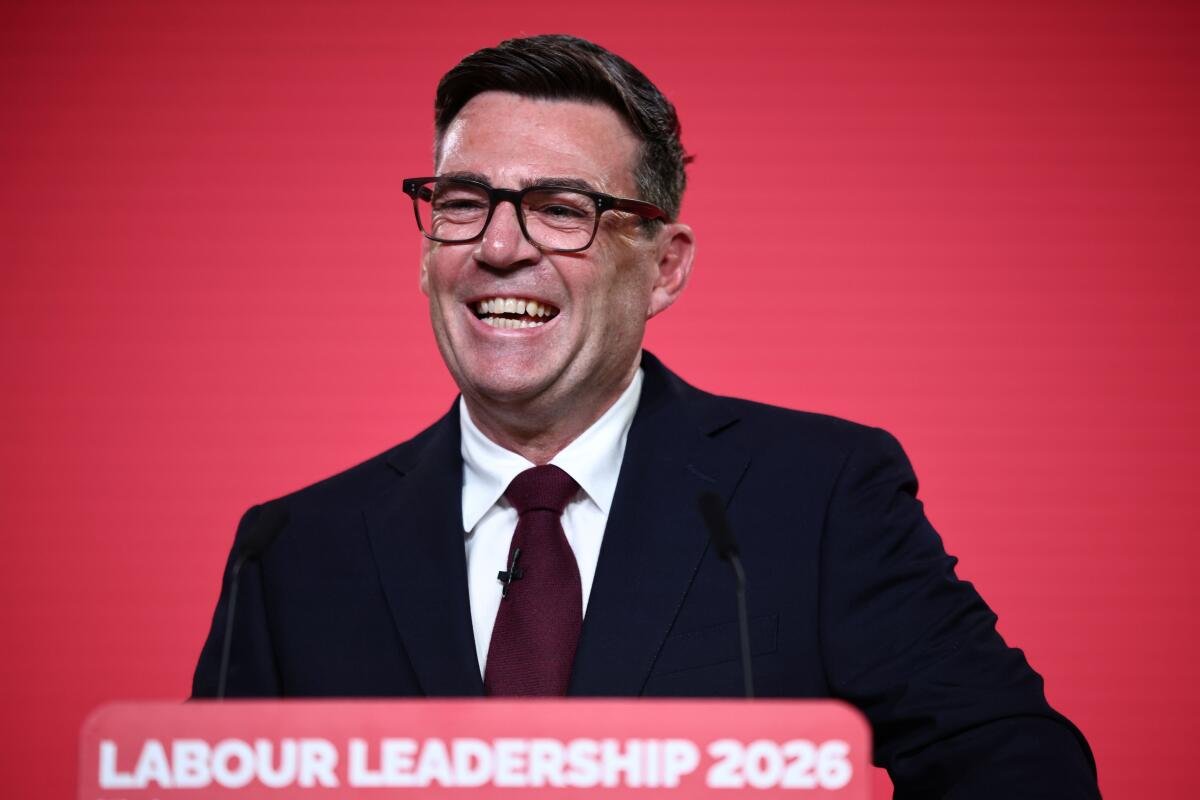
Andy Burnham has officially become the United Kingdom’s prime minister after meeting King Charles III at Buckingham Palace, where the monarch invited him to form a new government.
The appointment followed the resignation of Keir Starmer, who stepped down after two years in office. Before leaving Downing Street on Monday, Starmer defended his record, saying his government had made Britain “stronger and fairer.”
“I go with good grace, I go with a smile, and I go proud of everything that we have achieved,” the outgoing prime minister said in his farewell address.
After accepting Starmer’s resignation, King Charles formally asked Burnham to become prime minister. Burnham accepted the invitation, making him Britain’s sixth prime minister in the past decade.

The 56-year-old now inherits a government facing mounting economic and political challenges, including sluggish growth, rising public borrowing costs, welfare spending pressures and the ongoing cost-of-living crisis.
He will also have to contend with irregular migration, volatile global energy prices linked to tensions between the United States and Iran, and uncertainty surrounding US President Donald Trump’s policies.
In an interview with The Times ahead of taking office, Burnham said he intended to break from recent approaches to government.
“What we’ve been doing hasn’t been working. That’s the way I see it,” he said. “I am going to try and do things in a different way.”
His first address as prime minister is expected to focus on rebuilding public trust in government, easing pressure on households struggling with the cost of living, boosting economic growth and expanding powers for regional communities.
Burnham is also expected to unveil his first cabinet, with particular attention on who will replace Rachel Reeves as finance minister.
A former mayor of Greater Manchester and cabinet minister under Tony Blair and Gordon Brown, Burnham returned to Parliament just four weeks ago before emerging as Labour leader following Starmer’s resignation.
He has pledged to adopt a more proactive approach to public spending by investing early to tackle long-term problems.
One of his first policy decisions was to scrap the nationwide digital ID scheme introduced by the previous administration, saying the estimated £1.8 billion earmarked for the project would instead be redirected to measures aimed at easing the cost-of-living crisis.
With the next general election expected in 2029 and Reform UK gaining momentum in opinion polls, Burnham faces the challenge of proving his government can deliver results within a limited timeframe.




