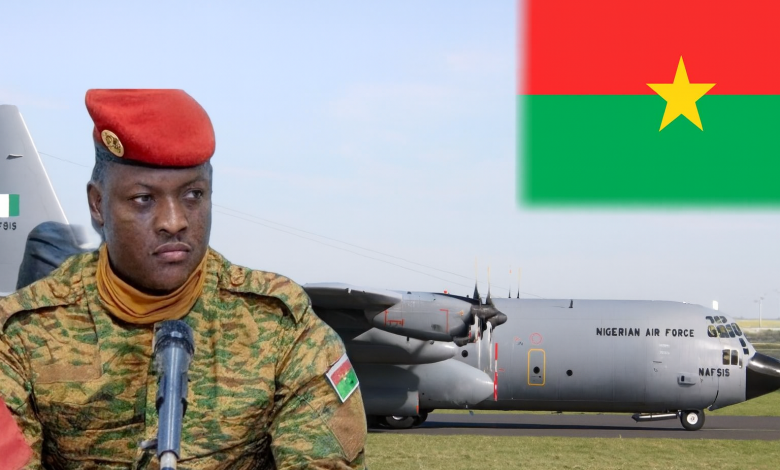
Burkina Faso’s continued detention of 11 Nigerian Air Force (NAF) pilots and crew members now exceeding 48 hours has escalated concerns within diplomatic and military circles, raising questions about regional cooperation and adherence to international aviation protocols.
Despite sustained high-level diplomatic engagement from Abuja, conducted discreetly to prevent escalation, the Burkinabè authorities have yet to release the personnel or provide any official explanation for their detention in Ouagadougou.
Officials familiar with the matter describe the situation as a “disturbing breach” of international norms governing aircrew safety and cross-border military cooperation.
The silence from key institutions, including the International Civil Aviation Organization (ICAO) and the Economic Community of West African States (ECOWAS), has deepened Nigeria’s frustration.
The detentions come despite years of security cooperation between both nations.

In March 2025, representatives of the African Economic and Security (AES) bloc comprising Burkina Faso, Mali, and Niger visited Nigeria to study its acclaimed Operation Safe Corridor (OPSC) and the Borno Model, regarded as leading frameworks for deradicalization and reintegration of former combatants.
During the visit, Nigeria’s then–Chief of Defence Staff, Gen. Christopher Musa (Rtd), now Minister of Defence, reaffirmed the Armed Forces’ commitment to regional collaboration despite the AES bloc’s withdrawal from ECOWAS.
He emphasized that terrorism in the Sahel “knows no borders” and requires joint, coordinated responses.
Nigeria has also historically provided airlift, intelligence, training, and diplomatic support to several neighbouring countries, including Burkina Faso.
The latest development has raised concerns among analysts that Burkina Faso’s action could strain long-standing ties in a region already destabilized by extremism and fragile borders.
Some officials describe Ouagadougou’s posture as “unnecessarily provocative” and potentially harmful to collective security interests.
Diplomatic sources warn that deteriorating relations could have broader security implications, noting that alliances in the Sahel are delicate and require consistent mutual trust.
Despite mounting pressure at home, Nigerian authorities are committed to resolving the matter through diplomacy.
Senior officials express confidence that the detained personnel will be released unconditionally but caution that Burkina Faso risks undermining decades of cooperation.
Security experts warn that escalating tensions between nations facing shared threats could weaken the region’s overall ability to counter terrorism.
As one official noted, “Great nations demonstrate strength not by detaining friendly forces, but by respecting international norms and upholding regional partnerships.”
Negotiations are ongoing.