


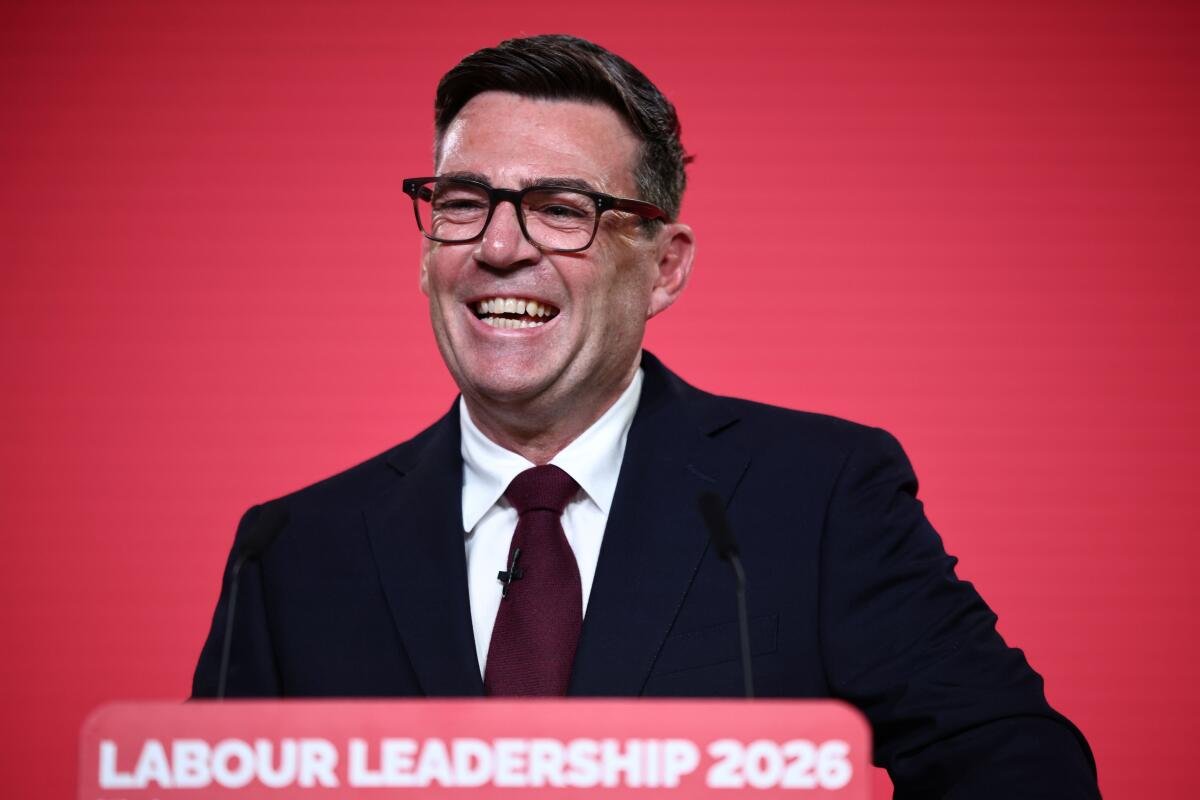
Britain’s new Prime Minister, Andy Burnham, has announced a tax cut on household electricity bills as his first major policy move, promising immediate relief for families grappling with the rising cost of living.
The announcement came ahead of Burnham’s first cabinet meeting on Tuesday, a day after he replaced Keir Starmer as prime minister and reshuffled the government by removing several of his predecessor’s key allies.
Under the measure, the 5 per cent value-added tax (VAT) on domestic electricity bills will be scrapped from October, saving the average household about £45 ($61) annually. The government said the policy will initially be funded by cancelling plans to introduce digital identity cards.
Business Secretary Jonathan Reynolds described the decision as a strong start for the new administration, calling it “a tremendous announcement for the first day of the new cabinet.”

Burnham said the tax cut forms part of a broader effort to ease financial pressure on households while laying the foundation for long-term economic reform.
After formally taking office from King Charles III at Buckingham Palace, Burnham pledged to rebuild Britain’s industrial base, devolve more powers from Westminster, and eliminate rough sleeping.
Standing outside 10 Downing Street, the new prime minister vowed to create “a new political model” and “build a new economy,” arguing that Britain must regain stability after years of political turbulence.
Burnham also held his first telephone conversation with US President Donald Trump, during which both leaders discussed trade, defence cooperation and security in the Strait of Hormuz.
According to Downing Street, Burnham reaffirmed Britain’s commitment to defence and security, while Trump described the discussion as “very good” and said the two leaders would meet soon.
The prime minister also spoke with Ukrainian President Volodymyr Zelensky, assuring him that Britain would continue supporting Ukraine in its war against Russia.
French President Emmanuel Macron congratulated Burnham and called for renewed momentum in UK-European Union relations.bu
Burnham quickly asserted his authority by overhauling the cabinet, dismissing several senior ministers closely associated with Starmer while promoting political allies.
Former Defence Secretary John Healey becomes Chancellor, replacing Rachel Reeves. Ed Miliband takes over as Foreign Secretary, while Angela Rayner returns to government. Wes Streeting has been appointed Defence Secretary, and Shabana Mahmood remains Home Secretary to continue reforms of Britain’s asylum system.
Burnham also announced plans to develop a 10-year strategy aimed at rebuilding Britain’s economy, expanding public housing, strengthening domestic manufacturing through government procurement, and shifting more decision-making powers away from central government.
He reiterated his commitment to ending rough sleeping, an issue he championed during his time as Mayor of Greater Manchester.
Burnham takes office at a difficult time, inheriting sluggish economic growth, high borrowing costs, rising welfare spending, continued pressure from irregular migration, and global uncertainty linked to the US-Iran conflict.
His administration also faces growing political pressure from Nigel Farage’s Reform UK, while opposition parties have questioned his mandate and called for a snap general election.
Despite those challenges, Burnham says his government will focus on delivering economic stability and making essential services more affordable for Britons.




