


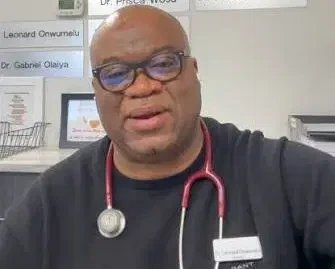
LAGOS, NIGERIA — A Nigerian doctor practising in Canada, Arinze Onwumelu, has expressed concern over the alleged shortage of essential emergency equipment in many Nigerian hospitals.
Onwumelu, popularly known as Dr. Zo, warned that patients suffering from treatable medical emergencies could lose their lives because the necessary tools are unavailable.
The Video
He raised the concern in a video posted on his Instagram account, @official_doctor_zo. He urged Nigerians to demand greater accountability from government authorities over the condition of the country’s healthcare system.

According to him, many government-owned hospitals reportedly lack critical equipment. These include automated external defibrillators, cardiac monitors, and electrocardiogram machines.
The doctor claimed that about 95 per cent of government hospitals do not have access to such equipment.
He questioned how healthcare workers could accurately establish why a patient suddenly collapsed. He also asked how they could determine whether the person was experiencing a potentially reversible abnormal heart rhythm without the appropriate diagnostic tools.
Personal Experience
Onwumelu previously worked in emergency departments in Nigeria before moving to Canada. He recalled his experience at the Federal Medical Centre, Umuahia, and the University of Nigeria Teaching Hospital, UNTH.
He said during his years working there in the late 1990s and early 2000s, he did not see automated defibrillators or cardiac monitors available in the emergency units.
He also recounted the death of a 12-year-old boy at the Federal Medical Centre, Umuahia. He said essential items such as oxygen and a nebuliser were unavailable at the time.
He said the reaction of the boy’s mother remained one of the most painful memories of his medical career.
Call for Accountability
The physician stressed that having functional emergency equipment, trained medical personnel, and prompt intervention could significantly improve survival outcomes in critical cases.
He particularly pointed to defibrillators as vital tools for treating some dangerous heart rhythm abnormalities.
Onwumelu rejected calls for individuals to personally purchase and donate such equipment to public hospitals. He argued that providing adequate healthcare infrastructure is primarily the responsibility of government.
He therefore called on Nigerians to hold elected officials accountable and demand better healthcare services. He insisted that Nigeria has sufficient resources to improve its medical facilities and emergency care system.
What This Means
The doctor’s concerns highlight the challenges facing Nigeria’s healthcare system. Many public hospitals lack basic equipment and supplies.
This puts patients at risk, particularly those requiring emergency care. It also undermines the confidence of healthcare workers.
What Happens Next
The Federal Government has not yet responded to Onwumelu’s claims. However, the issue is likely to generate further debate about healthcare funding and accountability.
For now, the focus is on improving the healthcare system. The coming months will reveal whether the government will take action to address the shortages.




