



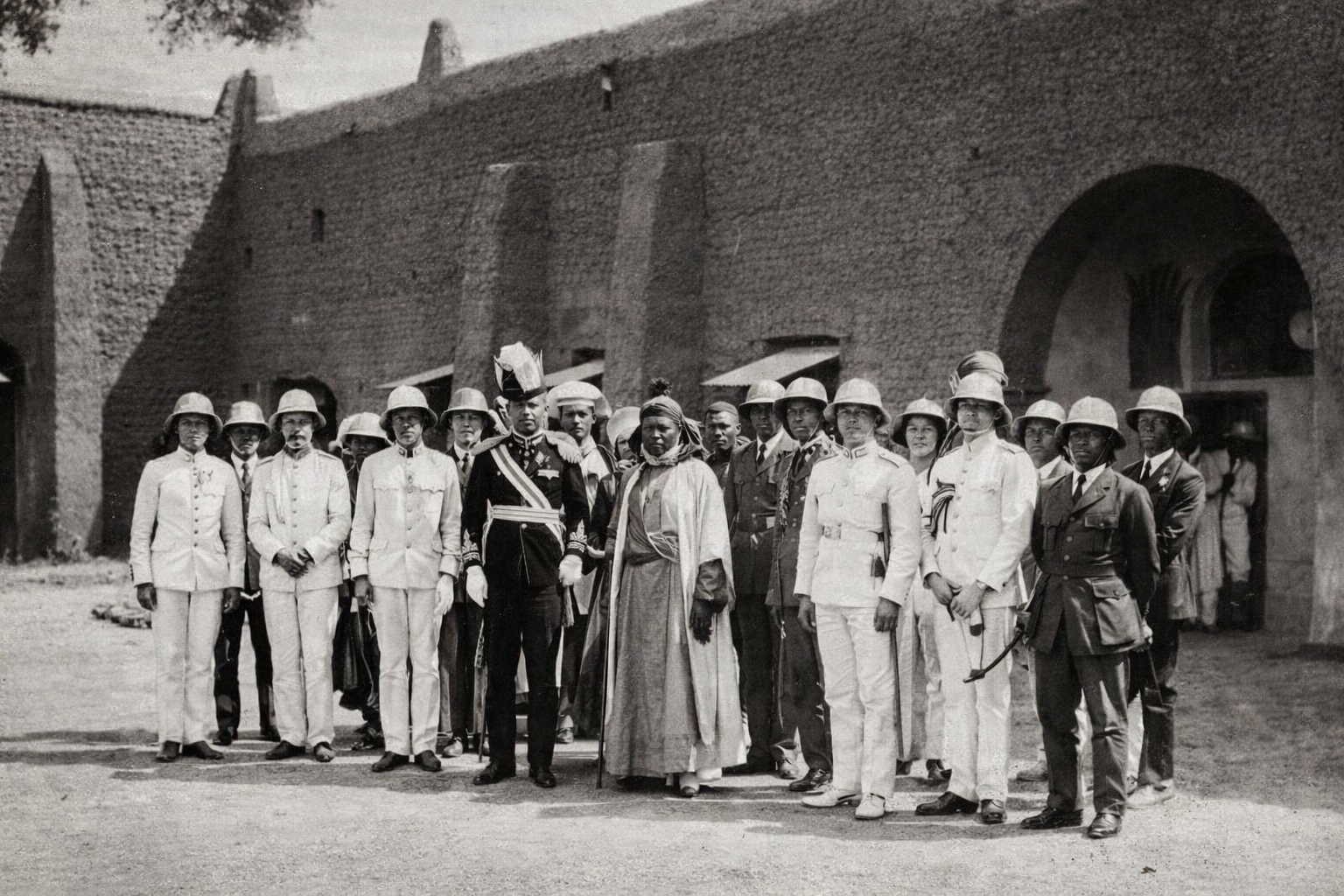
A wave of renewed debate has emerged across Nigeria’s public discourse following circulating claims about the 1914 amalgamation of the Northern and Southern protectorates, with particular focus on the individuals said to have signed the historic agreement and assertions that the union was designed to expire after 100 years. The narrative, which has gained traction in recent conversations, is prompting fresh scrutiny of Nigeria’s colonial history and raising broader questions about national identity, unity, and constitutional evolution.
At the centre of the discussion is the claim that only six Nigerians were signatories to the amalgamation document that formally merged the Northern and Southern protectorates under British colonial rule in 1914. According to the widely shared account, these individuals included prominent traditional and elite figures such as the Sultan of Sokoto, HRH Maiturare Sarkin Mussulumi; Usuman Dan Maje, who later became Emir of Kano; Sir Kitoyi Ajasa, a notable lawyer; the Alaafin of Oyo, HRH Oladugbolu; HRH R. Henshaw, identified as the Obong of Calabar; and Abubakar Shehu of Borno.
The claims further state that these six Nigerians were part of a larger group of 28 signatories, with the remaining 22 being British officials. It is also alleged that the document was signed in Zungeru, located in present-day Niger State, which served as the capital of the British Protectorate of Northern Nigeria between 1902 and 1916. The historical significance of Zungeru as an administrative hub during colonial rule is well established, lending some context to its mention in the narrative.
However, beyond the listing of signatories and location, the claims introduce a more controversial dimension—asserting that the amalgamation agreement contained a clause allowing for a reassessment of the union after 100 years, effectively suggesting that Nigeria’s existence as a unified entity “expired” in 2014. This interpretation has fueled conversations around whether the country should have renegotiated its foundational structure at that point, or whether such a provision ever existed in the first place.

DDM News gathered that historians and constitutional experts have largely questioned the accuracy of these assertions, noting that the 1914 amalgamation was primarily an administrative act carried out by the British colonial government under Governor-General Frederick Lugard. The process was designed to streamline governance, improve economic efficiency, and consolidate British control over the territories, rather than to establish a contractual agreement among equal parties with defined expiration terms.
Scholars argue that while traditional rulers and local elites played roles within the colonial administrative framework, there is limited evidence to support the claim that Nigerian representatives were formal signatories to a binding amalgamation document in the way currently being portrayed. Instead, the amalgamation is widely understood as a unilateral policy decision implemented by the British Crown, with local leaders largely incorporated into the system through indirect rule rather than direct negotiation of constitutional terms.
The assertion that the amalgamation “expired” in 2014 has also been met with skepticism. Legal experts emphasize that Nigeria’s current status as a sovereign nation is not derived from a colonial-era agreement with a fixed duration but from its independence in 1960 and subsequent constitutional developments. Since gaining independence, Nigeria has operated under a series of constitutions shaped by internal political processes, military interventions, and democratic reforms, rather than any pre-existing colonial contract.
Despite these clarifications, the narrative has resonated with segments of the population, particularly in the context of ongoing debates about restructuring, federalism, and national cohesion. For some, the idea of a 100-year review clause serves as a symbolic argument for revisiting the country’s governance framework and addressing long-standing grievances related to resource control, regional autonomy, and political representation.
DDM News understands that the renewed interest in the 1914 amalgamation reflects deeper concerns about Nigeria’s unity and the perceived need for a more inclusive and equitable system of governance. In recent years, calls for restructuring have intensified, with various groups advocating for a reconfiguration of the federation to better reflect the country’s diversity and address systemic challenges.
At the same time, others caution against interpretations of history that may oversimplify complex realities or rely on unverified claims. They argue that while it is important to engage in constructive dialogue about Nigeria’s future, such discussions should be grounded in accurate historical understanding and informed by legal and constitutional frameworks.
The resurfacing of these claims also highlights the enduring impact of colonial history on contemporary political discourse. More than a century after the amalgamation, questions about the nature of Nigeria’s union, the balance of power among its regions, and the path toward sustainable development continue to shape national conversations.
As Nigerians reflect on these issues, the focus increasingly appears to be shifting from the specifics of historical documents to the broader question of how to build a more cohesive and prosperous nation. Whether through constitutional reforms, policy adjustments, or enhanced dialogue among stakeholders, the challenge remains to reconcile diverse perspectives while maintaining national stability.
While the debate over the 1914 amalgamation and its implications is likely to continue, experts agree that any meaningful progress will require a careful balance between historical reflection and forward-looking solutions. In this context, the current discussions—regardless of their origins—serve as a reminder of the importance of understanding the past while actively shaping the future of the nation.

