
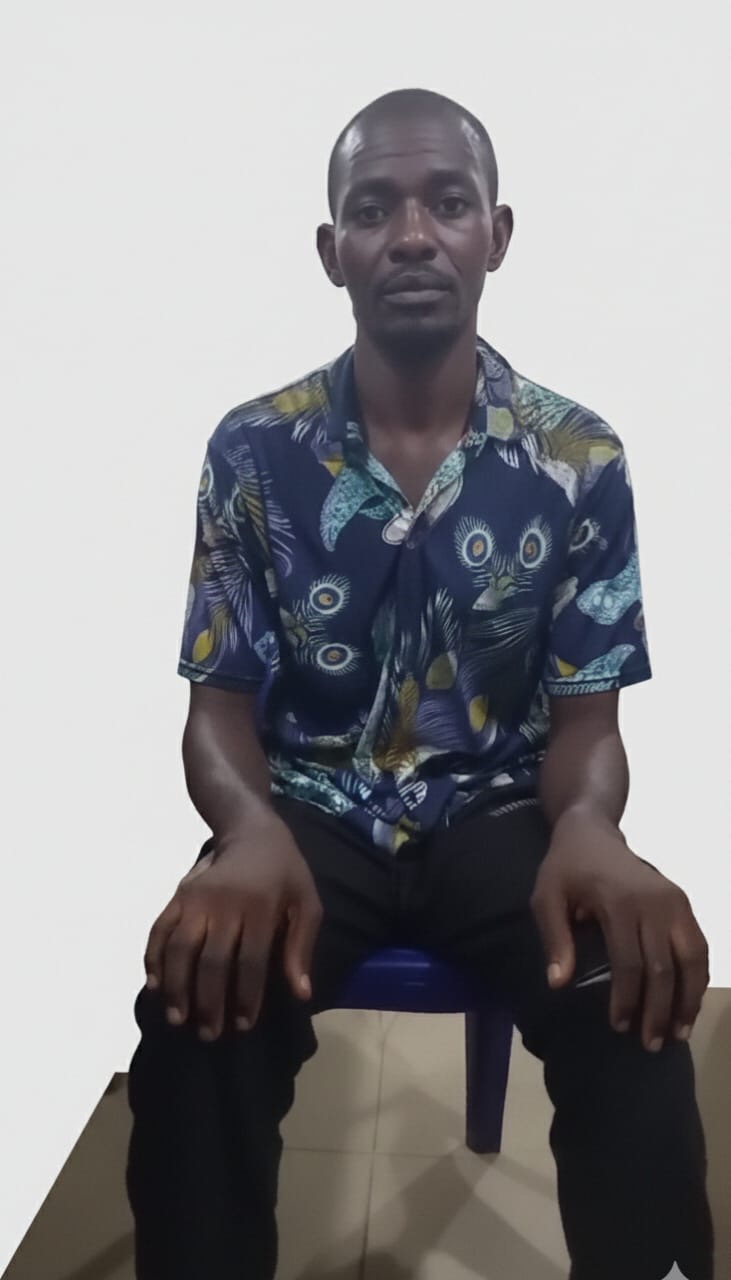
Operatives of Nigeria’s Department of State Services have arrested a high-profile commander of the Islamic State West Africa Province who security sources say played a central role in planning and executing the horrific June 5, 2022 attack on St. Francis Catholic Church in Owo, Ondo State, one of the deadliest terror assaults on a place of worship in recent Nigerian history. The suspect, identified as Sani Yusuf, had remained on the run for nearly four years, moving across states and living under the radar before he was finally tracked down and apprehended in Edo State, bringing renewed hope of justice to families of victims and survivors still grappling with the trauma of that tragic day.
According to multiple security sources who spoke to DDM NEWS, Yusuf was arrested in the Iguosa community along the Powerline axis in Ovia North East Local Government Area of Edo State, where he had quietly settled after fleeing the immediate dragnet that followed the Owo massacre. Intelligence reports indicate that after the attack, Yusuf initially escaped to Kano State, where he stayed briefly before relocating to the relatively quiet community in Edo, believing it would offer him anonymity and protection from security agencies. His ability to evade capture for such a long period had made him one of the most wanted terror suspects in the country, with security operatives intensifying surveillance and intelligence-gathering efforts over the years to locate him.
Security officials disclosed to DDM NEWS that Yusuf is a senior field commander of the Islamic State West Africa Province, a jihadist faction that emerged from internal splits within Boko Haram and has carried out numerous high-profile attacks on military targets, civilians, and religious institutions. Following his arrest, Yusuf reportedly confessed to his involvement in the planning and execution of the Owo church massacre, which occurred on Pentecost Sunday in 2022 and claimed the lives of more than 40 worshippers, while leaving dozens of others injured. The attack sent shockwaves across Nigeria and beyond, triggering nationwide outrage, grief, and renewed calls for decisive action against terror groups operating within the country.
Sources said Yusuf’s confession extended beyond the Owo attack. He allegedly admitted his role in several other violent operations attributed to ISWAP, including the deadly assault on a military checkpoint near Zuma Rock in Suleja in July 2022, during which at least five soldiers were killed. He also reportedly confessed to participating in multiple kidnapping operations in Kaduna State and surrounding areas, attacks that have contributed to the wave of insecurity and fear that has plagued communities in the North-West and North-Central regions of Nigeria in recent years. DDM NEWS gathered that investigators believe Yusuf’s arrest could provide crucial intelligence on ISWAP’s operational networks, recruitment methods, funding channels, and links to other cells across the country.

The arrest of Yusuf makes him the sixth suspect linked to the Owo church massacre to be taken into custody by Nigerian authorities. Five other suspects, identified as Idris Omeiza, Al Qasim Idris, Jamiu Abdulmalik, Abdulhaleem Idris, and Momoh Otuho Abubakar, are already facing prosecution in Abuja on terrorism-related charges. Court proceedings against the five suspects began in August 2025, with families of the victims and human rights advocates closely following the case as a crucial test of Nigeria’s commitment to accountability for mass-casualty terror attacks. The addition of a high-ranking ISWAP commander to the list of suspects is seen by security analysts as a significant breakthrough, potentially strengthening the prosecution’s case and deepening public understanding of how the attack was coordinated.
Security sources further disclosed that Yusuf told investigators he had operated under the command of other senior ISWAP leaders, including Abu Ikirimah, a notorious figure who was arrested by the DSS in 2024. This revelation, according to officials, helps piece together the chain of command behind several coordinated terror operations carried out by ISWAP cells in different parts of the country. DDM NEWS understands that interrogators are now working to corroborate Yusuf’s statements and map out additional suspects who may have provided logistical support, weapons, or safe houses that enabled him to remain hidden for years.
For residents of Owo and families of the victims of the church attack, the arrest has reopened painful memories while also offering a measure of cautious relief. Survivors of the Pentecost Sunday massacre have repeatedly spoken about the lingering trauma of the incident, with many still bearing physical and psychological scars. Community leaders in Ondo State have consistently demanded justice for the victims, arguing that accountability is essential not only for closure but also as a deterrent against future attacks on places of worship. DDM NEWS gathered that local leaders and faith groups in Owo have welcomed the arrest as a step forward, while urging the authorities to ensure a transparent and speedy prosecution process.
The DSS has described Yusuf’s arrest as a major milestone in its ongoing counter-terrorism operations, underscoring what officials called the agency’s persistence in tracking down high-value targets regardless of how long it takes. Security officials told DDM NEWS that the operation leading to Yusuf’s capture was the result of painstaking intelligence work, community-based surveillance, and inter-agency collaboration. They noted that terror suspects often exploit Nigeria’s vast geography and porous internal security structures to blend into civilian populations, making long-term manhunts complex and resource-intensive.
Analysts say the arrest highlights both the progress and the continuing challenges in Nigeria’s fight against jihadist violence. While the capture of a high-profile ISWAP commander sends a strong message to terror networks that there is no safe haven, the fact that Yusuf was able to hide for nearly four years also raises concerns about the depth of sleeper cells and support networks across different states. DDM NEWS understands that security agencies are now intensifying efforts to dismantle such networks, particularly in urban and semi-urban communities where suspects can more easily blend in.
The broader security context remains troubling, with Nigeria still battling multiple insurgent and criminal groups across different regions. ISWAP, in particular, has maintained a strong presence in parts of the North-East while also conducting operations beyond its traditional strongholds, targeting military installations, highways, and vulnerable communities. The Owo church attack, though geographically distant from ISWAP’s main theatre of operations, demonstrated the group’s evolving tactics and reach, raising alarms about the potential for coordinated attacks in southern Nigeria.
As Yusuf is expected to be transferred to Abuja to join the ongoing trial of the other suspects, legal observers say his testimony could prove pivotal in establishing the full scope of the conspiracy behind the Owo massacre and related attacks. Families of victims are hopeful that the trial will bring long-awaited justice and that those responsible for planning and executing the atrocity will face the full weight of the law.