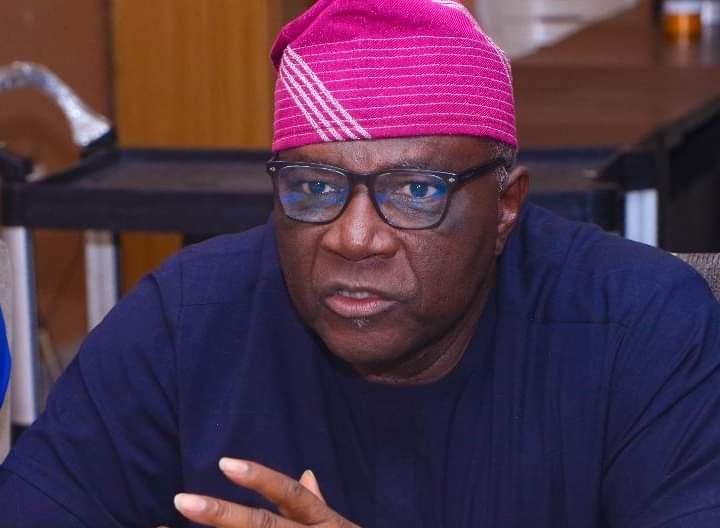
Allegations of corruption, once raised against a public official occupying a sensitive office, demand sober attention and decisive leadership. The recent resurfacing of unresolved allegations of financial impropriety against Mr. Bayo Onanuga—now serving as a presidential spokesman—raises serious questions about propriety, public confidence, and the integrity of government communications.
In May 2019, staff unions at the News Agency of Nigeria (NAN) formally accused Mr. Onanuga, then Managing Director of the agency, of alleged financial misconduct, including irregular handling of internally generated revenue. The unions petitioned anti-corruption agencies, notably the Economic and Financial Crimes Commission (EFCC), to investigate his stewardship. Mr. Onanuga denied the allegations and publicly expressed willingness to face investigation. However, there has been no clear public record of a definitive probe or formal resolution of the matter.
Today, Mr. Onanuga occupies a far more consequential position as a spokesman for President Bola Ahmed Tinubu, a role that requires unimpeachable credibility. Presidential spokesmen are not merely political appointees; they are the public voice of the Presidency, entrusted with shaping national narratives and defending government policy. Any cloud of unresolved allegations, regardless of their origin, undermines the moral authority of that office.
President Tinubu has repeatedly affirmed his administration’s commitment to transparency, accountability, and zero tolerance for corruption. Those principles cannot be selectively applied. They must extend to all who serve at the highest levels of government, especially those who speak on behalf of the President himself.
Suspension is not a declaration of guilt. Rather, it is a prudent administrative measure that allows due process to run its course without prejudice or distraction. Temporarily stepping aside would enable the EFCC to conduct a thorough, independent investigation into the NAN-era allegations, free from perceptions of political shielding or institutional pressure.

Failure to act risks sending the wrong signal to the public: that proximity to power confers immunity from scrutiny. At a time when Nigerians are being asked to make sacrifices in the name of reform and discipline, government must demonstrate that no individual is above accountability.
We therefore urge President Bola Tinubu, in the interest of institutional integrity and public trust, to direct the immediate suspension of Mr. Bayo Onanuga as presidential spokesman pending the conclusion of an EFCC investigation. Such action would reinforce the administration’s anti-corruption stance and reaffirm the principle that public office is a trust, not a shield.
Only through transparency and equal application of the law can confidence in governance be sustained.