



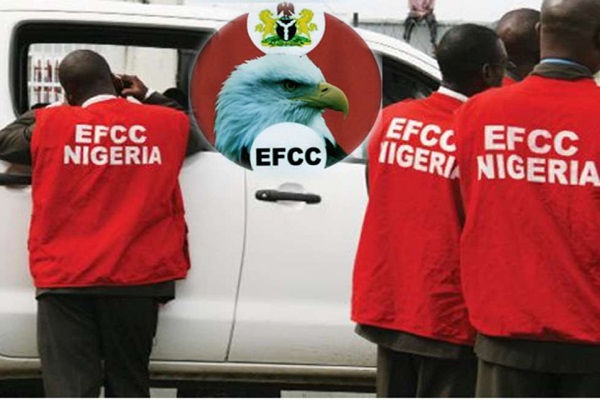
The Economic and Financial Crimes Commission (EFCC) has on Friday firmly rejected claims made by Atiku Abubakar’s spokesperson Paul Ibe.
During a Channels Television appearance, Ibe alleged EFCC chairman Ola Olukoyede held secret meetings before a governor’s defection.
Through its official Twitter account, the commission immediately dismissed these accusations as completely unfounded. The EFCC expressed strong disapproval of Ibe’s suggestion that Olukoyede met with an unnamed governor before joining APC.
Furthermore, the anti-graft agency clarified its chairman maintains strict political neutrality in all operations. “Olukoyede repeatedly emphasizes his apolitical stance,” the commission stated while defending its institutional independence.

Moreover, the EFCC urged Nigerians to ignore what it called imaginary claims without factual basis. The agency reaffirmed its dedication to fighting corruption without political interference or bias.

This controversy emerged amid growing political tensions ahead of 2025 elections. The commission warned against spreading unverified information that could mislead citizens.
Additionally, the EFCC stressed its commitment to maintaining public trust through transparent operations. Its prompt response demonstrated efforts to protect the agency’s credibility.
Meanwhile, neither Ibe nor Atiku Abubakar has reacted to the commission’s denial. Channels Television also remains silent about the controversial broadcast.
The anti-graft body continues facing challenges navigating Nigeria’s politically charged environment. However, it maintains focus on its core mandate against financial crimes.
Ultimately, this incident highlights ongoing tensions between law enforcement and political actors. The EFCC’s firm response aims to prevent erosion of public confidence.
As political activities intensify, institutions face increasing pressure to remain impartial. The commission’s statement serves as both denial and warning against false allegations.
Moving forward, observers will monitor how this dispute develops between both parties. The EFCC appears determined to defend its reputation vigorously.
This situation underscores the delicate balance anti-corruption agencies must maintain. Political neutrality remains crucial for effective law enforcement.
The commission’s swift action reflects lessons from previous political controversies. Protecting institutional integrity requires constant vigilance against misinformation.
Nigerians now await possible responses from the other parties involved. The EFCC has clearly drawn its line against perceived character attacks.
In conclusion, this dispute reveals deeper challenges facing Nigeria’s governance institutions. Maintaining credibility remains an ongoing struggle amid political polarization.

