
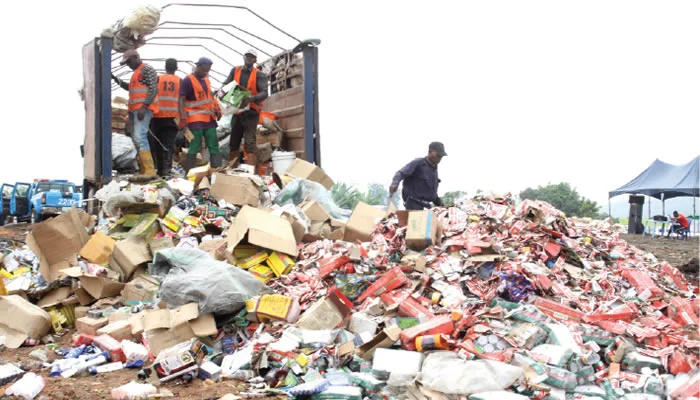
DDM NEWS reports that in a nondescript, half-finished building tucked away in Apapa, Lagos, law enforcement officers recently uncovered a scene that reads like a crime novel but reflects a terrifying public health reality. Cartons of counterfeit medicines were stacked from floor to ceiling, creating narrow aisles of deception where banned anti-malarial tablets, expired antibiotics, falsified painkillers, and unregistered injectable drugs lay waiting to be pushed into communities across Nigeria. The haul, estimated to be worth more than three billion naira, was seized during a coordinated raid by operatives of the National Agency for Food and Drug Administration and Control, a discovery that has once again exposed the depth of Nigeria’s long-running battle against fake and substandard medicines. Yet beyond the dramatic visuals of the raid lies a much darker truth that DDM NEWS has uncovered through investigations and interviews: Nigeria is fighting a silent epidemic in which counterfeit drugs circulate daily, killing quietly, weakening bodies, and undermining public trust in the health system.
Across the country, from sprawling urban centers to remote rural communities, fake medicines have become an everyday hazard, often sold openly in unregulated markets, roadside stalls, and informal drug shops. For millions of Nigerians struggling with poverty and limited access to quality healthcare, cheaper medicines from these informal vendors appear to offer relief. What many do not realize is that these drugs are frequently useless at best and deadly at worst. DDM NEWS gathered that counterfeit medicines in circulation include everything from anti-malarials and antibiotics to blood pressure drugs and injectable treatments, many of which contain no active ingredients, harmful substitutes, or dangerously incorrect dosages. The consequences are devastating, not only for individual patients but for the entire public health system, which must grapple with rising treatment failures, drug resistance, and preventable deaths.
In Ikeja, Lagos, a commercial bus driver identified as Tunde shared his ordeal with DDM NEWS. He recounted how he purchased antibiotics from a local vendor to treat what he thought was a minor infection. Instead of improving, his condition worsened, leaving him weak and feverish for days. When he eventually sought help at a clinic, a nurse examined the packaging and informed him that the drugs were fake. By then, the infection had spread, requiring stronger medication and a longer recovery period. Tunde’s story mirrors countless others across the country, many of which never make headlines because victims often blame their worsening conditions on fate, spiritual causes, or the severity of their illness, unaware that the medicines meant to heal them were the very tools of harm.
Health professionals say the prevalence of fake drugs in Nigeria is not just a law enforcement problem but a systemic crisis rooted in poverty, weak regulation, porous borders, and a thriving informal economy. DDM NEWS learned that counterfeit medicines often enter the country through smuggling routes that cut across land borders and seaports, where corrupt practices and limited inspection capacity allow illegal consignments to slip through. Once inside Nigeria, these drugs are distributed through networks of wholesalers, market traders, and unlicensed vendors who operate with little fear of prosecution. The sheer size of the market, coupled with high demand for affordable medicines, creates fertile ground for criminal syndicates to flourish.

Officials at the National Agency for Food and Drug Administration and Control have repeatedly warned that fake medicines are among the leading contributors to treatment failures and avoidable deaths in Nigeria. According to public health experts who spoke to DDM NEWS, the danger extends beyond individual harm to broader national and global health threats. Substandard antibiotics, for instance, contribute to antimicrobial resistance, a phenomenon in which bacteria evolve to withstand treatment, making common infections harder and more expensive to cure. As resistance spreads, routine medical procedures become riskier, and diseases once considered manageable can become deadly. In this way, the fake drug trade undermines decades of medical progress and places Nigeria at the frontline of a looming global health crisis.
Despite periodic high-profile raids and publicized seizures, the counterfeit drug market remains resilient. DDM NEWS investigations reveal that enforcement actions, while important, often fail to dismantle the deeper networks behind the trade. Criminal groups involved in the production and distribution of fake medicines are highly adaptive, quickly shifting locations, changing packaging designs, and exploiting gaps in enforcement. Some operate small clandestine factories where expired or substandard drugs are repackaged with forged labels to resemble popular brands. Others import finished counterfeit products from abroad, relying on sophisticated printing techniques to deceive even experienced pharmacists and health workers.
In markets such as Idumota in Lagos and Onitsha in Anambra State, open drug trading continues to thrive, despite repeated government promises to sanitize these hubs. Vendors openly display shelves of medicines, many without proper storage conditions, expiration checks, or regulatory approval. DDM NEWS reporters observed that customers, driven by cost considerations, rarely ask for receipts or verify product authenticity, trusting sellers who often present themselves as knowledgeable about medical treatments. This culture of informal medicine sales has become deeply embedded in daily life, making it difficult to uproot without comprehensive reforms that address both supply and demand.
The economic dimension of the fake drug trade cannot be ignored. For many low-income Nigerians, the cost of medicines from licensed pharmacies and hospitals is simply unaffordable. Without functional health insurance systems and with limited public healthcare infrastructure, people turn to cheaper alternatives, even when they suspect the risks. DDM NEWS learned that in some rural communities, the nearest registered pharmacy may be hours away, leaving residents dependent on itinerant drug sellers who arrive with bags of assorted medicines. In such settings, counterfeit drugs fill a void created by systemic failures in healthcare delivery, making enforcement alone an insufficient solution.
Civil society organizations and health advocates argue that combating fake drugs requires a multi-layered approach that combines stronger regulation, public education, improved access to affordable healthcare, and tougher penalties for offenders. DDM NEWS reports that awareness campaigns remain limited in reach, particularly in rural areas where literacy levels and access to reliable information are low. Many Nigerians are unaware of simple methods to verify the authenticity of medicines, such as using product verification codes or purchasing only from registered outlets. Even when awareness exists, the absence of affordable alternatives often forces people to take risks with their health.
The human cost of this crisis is staggering. Families lose loved ones to illnesses that could have been treated effectively with genuine medicines. Mothers watch children deteriorate after taking fake anti-malarials. Patients with chronic conditions such as hypertension or diabetes unknowingly consume substandard drugs that fail to control their symptoms, leading to complications and premature deaths. DDM NEWS gathered testimonies from healthcare workers who described the frustration of treating patients whose conditions worsen because previous medications were ineffective, only to discover that the drugs they had taken were counterfeit.
Beyond the immediate health consequences, the fake drug trade erodes public trust in Nigeria’s healthcare system. When patients experience treatment failure, they may lose faith in doctors, hospitals, and even modern medicine itself, turning instead to unregulated alternatives or spiritual remedies. This erosion of trust further weakens public health efforts, from vaccination campaigns to disease prevention programs. In this way, the counterfeit medicine crisis feeds into a broader cycle of mistrust, vulnerability, and exploitation.
The recent seizure in Apapa, while significant, represents only a fraction of the counterfeit drugs believed to be circulating nationwide. DDM NEWS understands that NAFDAC and other agencies are under-resourced compared to the scale of the problem they face. Inspectors struggle with limited manpower, outdated equipment, and logistical challenges that hamper sustained enforcement. While technology-driven solutions such as drug authentication codes and digital tracking systems offer hope, their effectiveness depends on widespread adoption and public awareness, which remain uneven.
As Nigeria continues to battle insecurity, economic hardship, and strained public services, the fight against fake drugs risks being overshadowed by more visible crises. Yet, as DDM NEWS investigations reveal, counterfeit medicines are among the country’s deadliest threats precisely because they operate in plain sight, masquerading as relief while delivering harm. Every fake tablet sold represents a potential life lost, a family devastated, and a public health system pushed further to the brink. Until Nigeria confronts this crisis with the urgency it demands, the silent killer will continue to move through markets, homes, and hospitals, claiming victims one dose at a time, even as the nation struggles to heal itself.