


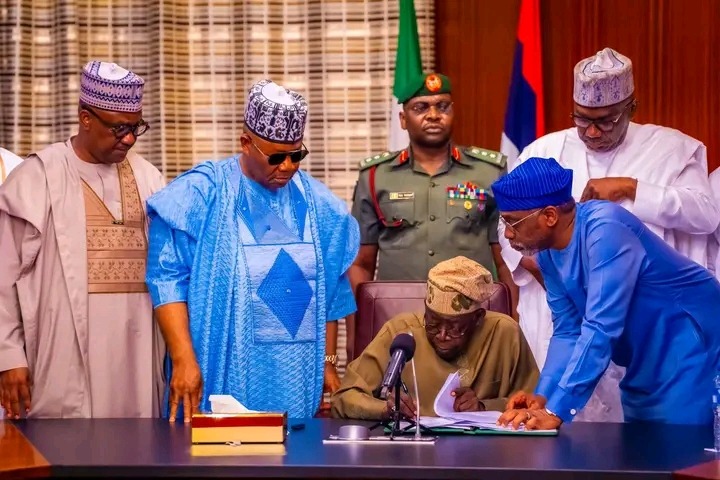
The Federal Government is considering a new legal framework designed to ensure that major economic reforms introduced under President Bola Tinubu remain influential in Nigeria’s economic policymaking, even after a change of government.
The proposal, announced by the Minister of Finance and Coordinating Minister of the Economy, Taiwo Oyedele, seeks to establish lasting principles for economic decisions covering taxation, tariffs, subsidies, investment and industrial development.
Oyedele disclosed the plan on Monday, October 26, during the 32nd Nigerian Economic Summit in Abuja, where he presented the proposed Nigeria Economic Policy Framework for public consultation.

According to the minister, the initiative is intended to address Nigeria’s longstanding problem of policy inconsistency, whereby successive administrations abandon or reverse the economic direction of their predecessors, creating uncertainty for businesses, investors and households.
The government wants the proposed framework to provide a more consistent approach to economic management, regardless of which political administration is in power.
“We now need to lock it in, in institutions, in law, as well as policy framework, so that it can be enduring,” Oyedele said while discussing the proposal at the summit.
The proposed framework would establish principles to guide future economic decisions and discourage governments from abandoning major reforms for short-term political considerations.
One of the most significant issues highlighted by the minister was the removal of petrol subsidies, a major policy change introduced by Tinubu shortly after assuming office in May 2023.
Oyedele maintained that returning to the previous subsidy arrangement would reintroduce economic distortions that the government believes contributed to pressure on public finances.
“Any ideas of returning it, we should forget about it,” he said, emphasising the administration’s position on maintaining the reform.
The proposal, however, extends beyond petrol subsidies. It also seeks to establish a more predictable policy environment for taxation, trade, industrial development and investment, with the aim of helping businesses make long-term decisions without constantly anticipating major changes in government policy.
Under the proposed arrangement, economic principles could also become part of the expectations placed on public officials and political appointees. Oyedele said the framework could be incorporated into screening processes for government appointments, with copies attached to appointment letters to guide officials in their responsibilities.
The government believes such measures could strengthen institutional commitment to agreed economic principles and reduce the likelihood of abrupt policy reversals whenever political leadership changes.
However, the proposal has not yet become law.
Oyedele clarified that the Nigeria Economic Policy Framework remains a consultation draft and has not been approved as official government policy.
Public consultation is scheduled to continue until November 27, 2026, after which the document is expected to proceed to the Federal Executive Council for approval and the National Economic Council for endorsement.
This means the government is still seeking input on the framework, and the proposal’s eventual legal status and precise effect on future administrations remain to be determined.
Beyond policy continuity, the draft framework proposes measures to improve accountability and ensure that major government interventions are supported by evidence.
One key recommendation is the introduction of mandatory Policy Impact Assessments before significant economic measures are implemented. These assessments would require policymakers to explain the problem a proposed intervention is intended to solve, the evidence supporting it, who stands to benefit, who will bear the costs and the conditions under which the policy should end.
The framework also proposes an annual National Economic Scorecard to measure progress using indicators such as real wages, productive employment and poverty levels.
The intention is to assess economic performance not only through headline growth figures but also through changes in the living conditions of Nigerians.
The debate surrounding the proposal comes as the Tinubu administration continues to defend its economic reforms amid concerns about rising living costs and the pressure on household purchasing power.
While the government argues that subsidy removal and changes to the foreign exchange system are necessary to improve economic stability and public finances, the effects of these measures on consumers and businesses remain important considerations in assessing their overall impact.
The proposed framework therefore raises a broader question about how Nigeria can maintain economic policy consistency while preserving the ability of future elected governments to respond to changing economic conditions.
Supporters of long-term policy frameworks argue that predictable rules can improve investor confidence, encourage capital investment and make it easier for businesses to plan for the future.
At the same time, the extent to which economic policies should be legally entrenched, rather than left to the discretion of successive governments, remains a significant issue for public discussion.
The final design of the framework will be important in determining how it balances continuity with democratic accountability and the ability to adjust policies when circumstances change.
For now, the Federal Government’s proposal signals an effort to establish a more durable approach to economic policymaking. Whether that ambition translates into legislation will depend on the outcome of public consultation and the subsequent approval process.
As the consultation period continues, Nigerians, businesses and other stakeholders have an opportunity to contribute to a framework that could shape the country’s economic direction beyond the current administration.




