


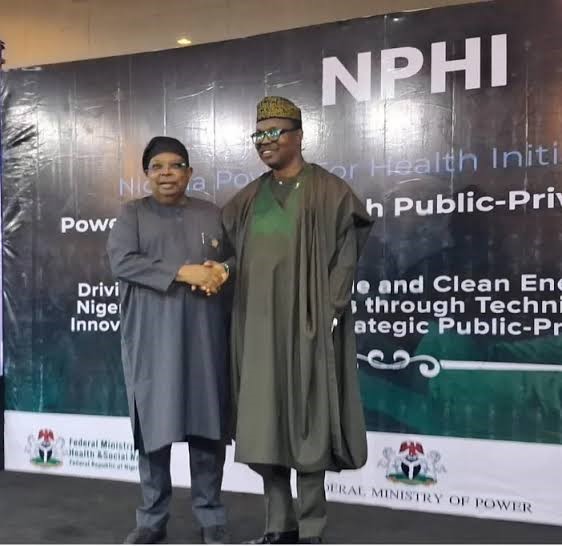
The Federal Government has approved a new financing framework and key policy reforms aimed at improving electricity supply in public health facilities across Nigeria. The initiative seeks to provide reliable 24-hour power to at least 30 percent of the country’s health facilities by the end of 2027.
The decision was reached during the third meeting of the Inter-Ministerial Steering Committee of the Nigeria Power for Health Initiative, a programme jointly led by the Federal Ministry of Health and Social Welfare and the Federal Ministry of Power.
Speaking after the meeting, the Minister of State for Health and Social Welfare, Dr. Iziaq Salako, said the committee also approved new governance structures, an energy management framework for healthcare facilities, and shortlisted eight private-sector proposals for further consideration after reviewing about 70 submissions from investors.
According to Salako, the approvals represent a significant step toward ensuring hospitals across the country have access to reliable electricity through public-private partnerships.

He explained that the newly approved financing framework is designed to attract investment into healthcare electrification, while the energy management plan will help hospitals maintain and operate their power infrastructure efficiently.
The minister revealed that Energy Management Teams have already been established in federal tertiary hospitals, with state governments encouraged to create similar teams in their healthcare facilities.
To strengthen implementation, the government will establish a dedicated Project Coordination Unit and provide specific budgetary support for the initiative.
“Our target is to ensure that at least 30 percent of Nigeria’s health facilities enjoy reliable electricity by the end of 2027 through sustainable public-private partnerships,” Salako said.
He noted that different energy solutions would be adopted depending on each facility’s needs. These include solar mini-grids, gas-powered systems, and other renewable energy technologies.
Salako also highlighted the progress made since the initiative was launched in late 2025, stating that governance structures are now largely in place while electrification projects continue across primary, secondary, and tertiary healthcare facilities.
According to him, the Rural Electrification Agency (REA) has already installed containerised solar power systems in about 100 hospitals nationwide, helping to improve access to reliable electricity in medical centres.
Addressing concerns about persistent power outages in hospitals, Salako said the healthcare electrification programme complements the Federal Government’s broader efforts to reform Nigeria’s electricity sector.
He expressed confidence that the country’s power supply would continue to improve as more energy projects are completed.
Minister of Power Joseph Tegbe described the Nigeria Power for Health Initiative as one of the administration’s major infrastructure programmes. He said the focus would now shift from policy announcements to delivering completed projects that Nigerians can see and benefit from.
Tegbe stressed that dependable electricity would improve patient care, support life-saving medical equipment, and reduce hospitals’ heavy dependence on diesel generators during emergencies.
He added that the government remains committed to providing the resources needed to ensure the programme succeeds while maintaining value for public funds.
Also speaking at the meeting, Permanent Secretary of the Federal Ministry of Power, Mahmuda Mamman, said reliable electricity is essential for operating medical equipment, preserving vaccines, supporting laboratory services, and strengthening emergency healthcare delivery.
For years, poor electricity supply has remained a major challenge for hospitals across Nigeria, forcing many public health facilities to spend large sums on diesel generators to power operating theatres, intensive care units, laboratories, blood banks, oxygen plants, and vaccine storage systems.
The Nigeria Power for Health Initiative, approved in December 2025, aims to tackle these challenges through partnerships with the private sector by deploying renewable and alternative energy solutions. The programme will also create a national database of healthcare electrification projects to improve coordination, reduce duplication, and encourage greater private investment in the health sector.




