


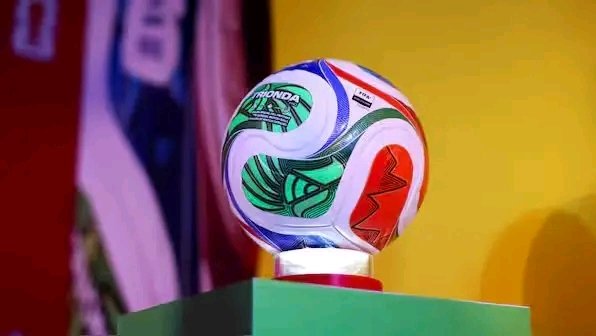
Football is set to enter a new technological era as FIFA and Adidas introduce the official match ball for the 2026 FIFA World Cup, a highly advanced innovation known as Trionda, designed to combine elite performance with real time data tracking capabilities that will assist match officials during games.
The unveiling of the new ball marks one of the most significant technological developments in the history of the World Cup, as the sport continues to integrate artificial intelligence, sensor based tracking systems and instant data transmission into top level competition.
The Trionda ball has been developed by Adidas as part of FIFA’s ongoing efforts to modernise officiating and improve decision making accuracy. The name “Trionda” reflects the identity of the tournament, which will be jointly hosted by the United States, Canada and Mexico, while also symbolising unity and movement through the concept of waves.

Advanced smart technology embedded inside the ball
The Trionda match ball is equipped with an internal sensor system capable of recording and transmitting detailed movement data during live matches. This technology allows the ball to communicate with officiating systems in real time, providing precise information on its position, speed and point of contact.
The sensor operates at an extremely high frequency, capturing hundreds of data points per second, which are then transmitted instantly to the Video Assistant Referee system. This enables officials to review incidents with greater speed and accuracy, particularly in situations involving offside decisions, handball incidents and goal line disputes.
Unlike traditional footballs, Trionda is designed not only for physical performance but also as a data generating device that integrates directly into the digital infrastructure of modern football.
How the real time data system works
The internal sensor within the ball works in combination with stadium based tracking cameras and artificial intelligence software. Every time the ball is touched, kicked or moved, the system records exact coordinates and movement patterns, sending this information to match officials within milliseconds.
When combined with semi automated offside technology, the system creates a detailed digital reconstruction of match events. This allows referees to determine precise moments of ball contact, which is critical in offside rulings and fast paced attacking sequences.
The integration of artificial intelligence ensures that data is processed quickly, reducing delays that have traditionally been associated with Video Assistant Referee reviews. This is expected to improve the flow of matches while maintaining high levels of officiating accuracy.
Design inspired by unity and host nations
Beyond its technological innovation, the Trionda ball also carries symbolic design elements that reflect the identity of the 2026 World Cup.
The tournament will be hosted across three countries, and the ball’s design incorporates visual references to the United States, Canada and Mexico. These include colours and motifs inspired by national symbols such as the star, maple leaf and eagle, blended into a wave inspired pattern that represents unity across the three host nations.
The design also enhances visibility on the pitch, ensuring that players, referees and spectators can clearly track movement during fast paced action.
A major leap in football officiating technology
The introduction of Trionda represents a continuation of FIFA’s push toward technology driven officiating. Over the past decade, football has increasingly adopted systems such as goal line technology and Video Assistant Referee support, but the smart ball represents a deeper level of integration between physical gameplay and digital analysis.
With real time tracking and artificial intelligence support, referees are expected to make faster and more informed decisions. This reduces uncertainty in critical match moments and enhances transparency in officiating processes.
Football governing bodies believe that such innovations will help reduce human error while preserving the integrity of the game.
Impact on players, coaches and match analysis
The introduction of a data transmitting match ball is also expected to influence how teams prepare for and analyze matches. Coaches and analysts may gain access to more detailed insights into ball movement, passing speed and attacking patterns.
This could lead to more advanced tactical planning and performance evaluation, as teams use real time and post match data to refine strategies.
Players may also need to adapt to a more data monitored environment where every touch of the ball contributes to a larger analytical system.
Balancing technology and tradition in football
While many experts have welcomed the innovation, the introduction of AI powered match equipment has also sparked discussion about the balance between technology and tradition in football.
Supporters of the system argue that it improves fairness, reduces controversial decisions and enhances the overall quality of officiating. Critics, however, caution that excessive reliance on technology could disrupt the natural flow and emotional unpredictability that define the sport.
FIFA has maintained that the goal is not to replace human judgment but to support referees with accurate and timely information.
The Trionda ball represents a major milestone in the evolution of football, combining advanced sensor technology, artificial intelligence and symbolic design into a single innovation that will be used on the world’s biggest sporting stage.
As the 2026 FIFA World Cup approaches, the ball is expected to play a central role not only in matches but also in shaping how football is understood, analyzed and officiated in the future.
With its ability to transmit real time data and support refereeing decisions, Trionda stands as a clear indication that the future of football is becoming increasingly connected, intelligent and data driven.




