


tech-google-ai-bashes-new-tos-update-document
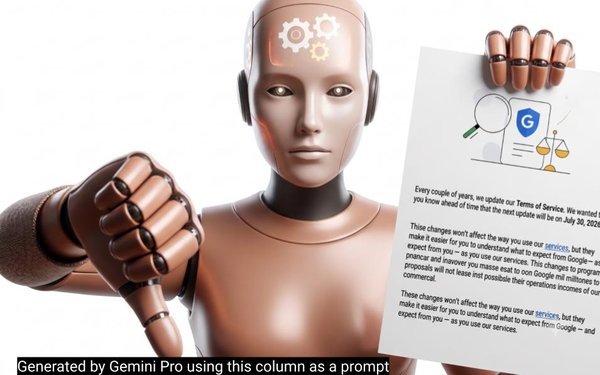
Google AI Bashes New Google TOS Update Document The recent Google TOS update features a 5,042-word legal document that NotebookLM criticized for hiding user tradeoffs amid rising data privacy concerns. A brand new Google TOS update faces unexpected backlash after the company’s own AI tool criticized it for hiding major user tradeoffs.
Essentially, Google recently released a massive legal text to global users. Indeed, the new Google TOS update confused many readers with long text. A clever journalist decided to test these rules with artificial intelligence. Of course, normal humans hate reading dull corporate rules. Ultimately, the smart machine found major flaws in the corporate messaging.
The Google TOS Update Breakdown
Specifically, the tech brand sent alerts about its upcoming service rules. Consequently, the document features over five thousand words of dense text. In fact, most normal people find these long pages impossible to read. Therefore, MediaPost journalist Joe Mandese asked an automated tool for help. Indeed, the writer wanted to save valuable time and effort. As a result, he skipped the manual reading process completely.

Furthermore, Mandese used the popular NotebookLM platform to read the file. Specifically, he wanted a clear review of the new legal rules. As a result, the clever bot scanned the long text in seconds. Indeed, the bot delivered an audio critique of the corporate terms. Consequently, the brief summary shocked the curious media professional. Through this, the writer saw a hidden side of the text.
NotebookLM Exposes Hidden Legal Tradeoffs
Consequently, the digital assistant gave a surprisingly harsh review of the text. Specifically, the bot bashed the legal team for hiding important facts. For example, the tool noted that the company hid major user tradeoffs. Ultimately, the legal text did not fully explain the new risks. In fact, the smart bot demanded more clarity for normal users. Therefore, the digital brain exposed a clear lack of full transparency.
Meanwhile, the company often uses machine learning to improve broad digital services. Indeed, the brand recently backed a $37 million investment for African development. However, its own smart system disliked the vague language in this update. As a result, the tool warned users about missing details and risks. Specifically, the bot flagged potential threats to data privacy. Of course, this honest feedback creates a messy public relations problem.
Public Outrage Over Automated Data Scraping
Simultaneously, the Google TOS update triggered wide anger across the internet. For example, many users hate how the company scrapes private digital content. Indeed, online tech communities quickly urged people to delete their saved files. Therefore, angry clients plan to move their data to local hard drives. Consequently, trust in large web portals continues to drop fast. In fact, tech fans now prefer private offline storage systems.
In contrast, the large firm claims it only scans data to block spam. Specifically, the brand insists it needs vast information to train new models. However, critics feel the tech giant ignores basic human privacy rights completely. Through this, everyday people lose total control over their own personal files. Indeed, automated scanning programs often read private emails without permission. As a result, digital safety experts advise extreme caution online.
Balancing Big Tech And Consumer Privacy
Additionally, advertisers also face major changes in how they settle legal fights. Specifically, Search Engine Roundtable reports that the rules force binding local arbitration. As a result, angry users cannot easily sue the firm in open court. Consequently, the strict terms give the massive corporation a huge legal advantage. In fact, people must opt out within a strict thirty day window. Ultimately, regular buyers rarely notice these small legal details.
The Future Of AI Legal Reviews
Subsequently, this funny event shows a brand new use for digital bots. For example, normal people can now use clever apps to read bad contracts. Indeed, smart machines can quickly spot unfair terms in long text files. Therefore, greedy companies can no longer hide bad deals in fine print. Specifically, automated tools level the playing field for weak consumers. As a result, digital reading apps will become standard safety tools.
To conclude, the honest review by NotebookLM highlights a very funny irony. Indeed, the tech firm built a tool that clearly exposed its own flaws. Of course, regular people must now read digital contracts with extra care. Ultimately, smart bots can help everyday folks fight back against tricky lawyers.




