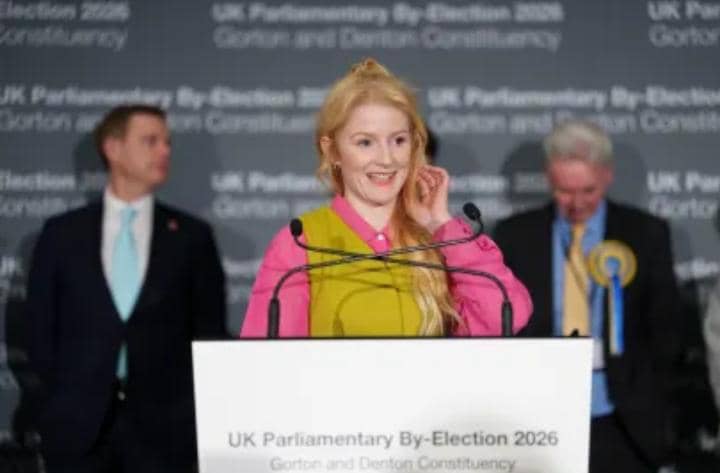
London (DDM) — British Prime Minister Keir Starmer’s Labour Party suffered a humiliating defeat on Friday as the Green Party captured a parliamentary seat in Greater Manchester that Labour had held for nearly 100 years.
The left-wing Green Party candidate, Hannah Spencer, secured the vacant Gorton and Denton seat, signaling a dramatic shift in voter sentiment and exposing cracks in Britain’s traditional two-party system.
Nigel Farage’s anti-immigration Reform UK party finished in second place, while Labour was pushed into a distant third, marking one of the party’s most humiliating electoral performances in decades.
Labour Party Chair Anna Turley described the outcome as “clearly disappointing,” acknowledging that the defeat will intensify scrutiny of Starmer’s leadership amid ongoing political turbulence.
Political analysts note that the loss highlights growing voter frustration with mainstream parties and a surge of support for smaller, issue-driven movements, including environmental and anti-establishment groups.
Spencer’s campaign focused heavily on climate policy, social justice, and local infrastructure improvements, messaging that appears to have resonated with traditionally Labour voters in the constituency.
The defeat represents the first time the Greens have unseated Labour in the region, raising questions about the party’s ability to retain its historic strongholds.
For Starmer, the loss adds pressure to justify his leadership at a time when the Labour Party faces internal dissent and calls for accountability over recent policy setbacks.
Observers point out that Reform UK’s second-place finish also underscores the fragmentation of Britain’s right-wing vote, suggesting that Labour’s traditional dominance is increasingly contested on multiple fronts.
The by-election result comes amid rising concerns about voter volatility, disillusionment with established parties, and the appeal of single-issue or outsider candidates who promise change from Westminster politics.

Starmer is expected to respond to the outcome with an internal review, signaling possible strategic adjustments ahead of the next general election.
The Greens’ victory in Gorton and Denton could inspire similar campaigns nationwide, demonstrating that even historically secure seats are vulnerable to well-organized, high-profile challengers.
This unprecedented upset marks a turning point in UK politics, highlighting how environmental and anti-establishment parties are reshaping the electoral landscape in unexpected ways.