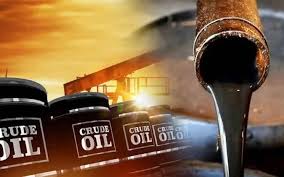
The question cuts to the heart of Nigeria’s most consequential paradox: a nation abundantly endowed with crude oil yet persistently constrained by the very resource that should have guaranteed prosperity.
What follows is a sharpened, more strategic framing of those concerns, along with clear, evidence-based solutions that reflect how a serious energy economist or petroleum policy adviser would approach Nigeria’s situation.
Nigeria’s crude oil wealth has often behaved less like a blessing and more like a structural distortion of the economy.
The real issue is not the oil itself, but the governance architecture around it.
This is the classic “resource curse” phenomenon, where countries rich in natural resources underperform due to rent-seeking, weak institutions, corruption, and policy inconsistency.

Oil revenues replaced productivity, discouraged diversification, and created a consumption-driven rather than production-driven economy.
The solution is not to abandon oil, but to govern it differently: enforce transparency in revenue management, adopt strict fiscal rules tied to sovereign wealth accumulation, and ring-fence oil income for infrastructure, education, and industrial development.
The persistent inability of Nigeria to refine its crude oil domestically is not due to technical incapacity but systemic failure.
For decades, state-owned refineries have been plagued by poor maintenance culture, opaque contracting, political interference, and outright mismanagement.
Turnaround maintenance became a conduit for rent extraction rather than operational efficiency.
The practical solution is twofold: full deregulation of the downstream sector and complete exit of government from refinery ownership.
Refining is a commercial activity, not a sovereign function. Privatization or concessioning of existing refineries under strict performance benchmarks is essential.
Nigeria exporting crude and importing refined products at higher cost is economically irrational but politically convenient for entrenched interests.
This arbitrage has historically enriched a network of importers, traders, and bureaucratic actors.
The country loses value at both ends, exporting raw material cheaply and importing finished products expensively.
The solution lies in enforcing domestic crude supply obligations for local refineries, denominating transactions in naira where feasible, and building a competitive refining ecosystem that eliminates import dependency.
The discovery of oil in 1956 did not automatically translate into national prosperity because institutions did not evolve alongside resource wealth.
Oil revenue became centralized, weakening federalism and reducing incentives for regional productivity.
Instead of serving as a catalyst for industrialization, oil became a substitute for it.
The corrective path requires fiscal federalism reforms, where subnational entities have stronger incentives to generate and manage their own resources while contributing to national growth.
Nigeria’s neglect of gas is one of the costliest strategic errors in its energy history.
The country holds one of the largest proven gas reserves globally yet continues to flare significant volumes.
Gas could power industries, reduce electricity deficits, fuel transportation through compressed natural gas (CNG), and drive petrochemical industries.
The way forward is aggressive gas commercialization: enforce zero gas flaring policies, expand CNG infrastructure nationwide, incentivize gas-to-power projects, and create pricing frameworks that make gas investment commercially attractive.
The abandonment of agriculture after the oil boom is a textbook case of policy shortsightedness.
Before oil, agriculture sustained the economy, generated exports, and provided employment.
Oil wealth led to rural neglect, urban migration, and food import dependency. Reversing this requires deliberate policy: mechanized farming, agro-processing zones, access to credit for farmers, and integration of agriculture into export strategy.
Oil revenues should have financed agricultural modernization; that opportunity must now be reclaimed.
Nigeria’s four government-owned refineries symbolize decades of wasted investment.
Billions of dollars have been spent with negligible output because accountability was absent.
These assets should either be privatized transparently or scrapped and replaced with modular refineries driven by private capital.
Continuing to fund non-performing state refineries is fiscally irresponsible.
The Dangote Refinery represents a transformative private-sector intervention, but its initial operational constraints reflect broader structural issues.
Refinery ramp-up is a complex, phased process requiring stable crude supply, logistics optimization, and market alignment.
The more critical issue is crude availability. Despite being a major producer, Nigeria struggles with theft, pipeline vandalism, underinvestment in upstream production, and opaque allocation systems.
Crude that should feed domestic refineries is often diverted through opaque channels.
The solution is strict enforcement of domestic crude allocation policies, digital tracking of production and lifting, and security reforms in oil-producing regions.
Aliko Dangote’s assertion that exporting crude exports jobs is economically accurate.
Value addition is where employment and industrial growth occur.
Nigeria must shift from a raw-export model to a value-chain model. This requires aligning policy with industrialization goals: incentivize refining, petrochemicals, fertilizers, and manufacturing linked to hydrocarbons.
The surge in petroleum prices is a direct consequence of subsidy removal, exchange rate realities, and market deregulation.
For years, Nigerians paid artificially low prices, with government absorbing the difference.
Once subsidies were removed, prices adjusted to market levels. The deeper issue is that the economy was not prepared for subsidy removal.
There were no sufficient buffers such as efficient public transport, targeted welfare systems, or stable wages.
The solution is not to reinstate subsidies but to implement targeted social protection: transport subsidies for the vulnerable, direct cash transfers, and investment in mass transit systems.
Fuel subsidy, while politically popular, was economically destructive.
It drained public finances, encouraged smuggling to neighboring countries, distorted market signals, and disproportionately benefited the wealthy.
However, its abrupt removal without adequate mitigation measures created economic shock.
The right approach is a phased, transparent subsidy reform combined with visible reinvestment of savings into infrastructure and social programs to rebuild public trust.
When President Bola Ahmed Tinubu declared that “fuel subsidy is gone,” the intention was to end a fiscally unsustainable regime.
In practice, however, elements of quasi-subsidy may still exist through foreign exchange interventions, price stabilization efforts, or implicit support mechanisms.
True subsidy removal requires a fully deregulated market where prices reflect supply and demand without hidden interventions.
Ultimately, crude oil is neither a curse nor a blessing; it is a tool.
In the hands of weak institutions, it becomes a curse.
Under disciplined governance, it becomes a catalyst for transformation.
Nigeria’s path forward is clear: institutional reform, market discipline, economic diversification, and strategic investment in value addition.
If these are pursued with consistency and political will, oil can still become the foundation of Nigeria’s long-delayed prosperity rather than the symbol of its missed opportunities.