


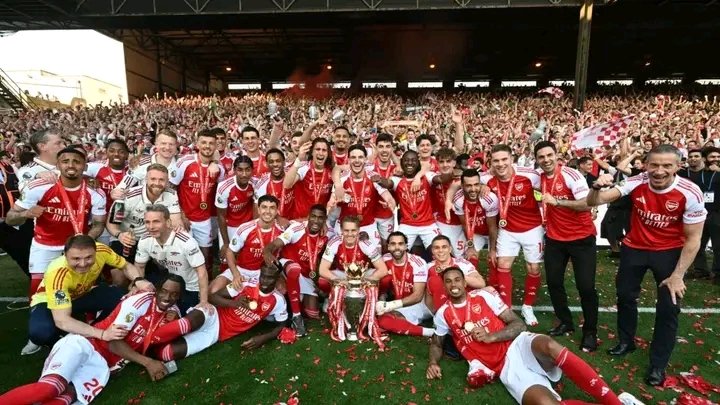
After more than two decades of heartbreak, near misses and rebuilding, Arsenal are Premier League champions once again. The Gunners’ long awaited triumph marks the end of a 22 year wait for England’s biggest domestic prize and crowns one of the most remarkable managerial transformations in modern football under Mikel Arteta.
When Arteta accepted the Arsenal job in December 2019, the North London club was far removed from its glory days under Arsène Wenger. Arsenal had lost their identity, struggled for consistency and had fallen behind rivals such as Manchester City and Liverpool in the race for major honours.
Few expected the former Arsenal captain to oversee one of the most successful rebuilding projects in Premier League history. However, through patience, discipline and a clear football philosophy, Arteta gradually transformed the club from perennial challengers into champions.

The rebuilding process was far from straightforward. Arteta made several difficult decisions early in his tenure, including allowing experienced but influential players to leave as he sought to reshape the dressing room culture. The Spaniard insisted that commitment, professionalism and accountability would become the foundation of the new Arsenal.
His vision was backed by the club’s hierarchy, who invested heavily in younger players capable of developing together over several seasons. Instead of pursuing short term success, Arsenal focused on building a sustainable squad with the potential to compete for years.
Key arrivals such as Declan Rice, Martin Ødegaard, Kai Havertz, Jurrien Timber and David Raya strengthened an already talented core featuring Bukayo Saka, Gabriel Martinelli, William Saliba and Gabriel Magalhães. Together, they formed one of the strongest squads in English football.
One of Arteta’s greatest achievements was restoring belief throughout the club. Training standards improved significantly, while tactical preparation became one of Arsenal’s biggest strengths. Every player understood their role, and the squad developed a mentality capable of competing against the very best teams in Europe.
Tactically, Arsenal evolved into one of the Premier League’s most complete sides. Their structured pressing, intelligent positional play and ability to dominate possession allowed them to control matches against both elite opponents and lower ranked teams.
Defensively, the Gunners became exceptionally difficult to break down. Saliba and Gabriel established one of the league’s most reliable central defensive partnerships, while goalkeeper David Raya provided composure and confidence from the back. Arsenal consistently ranked among the Premier League’s strongest defensive teams throughout their title winning campaign.
At the opposite end of the pitch, Arteta built an attack capable of scoring through multiple avenues rather than relying on a single superstar. Captain Martin Ødegaard dictated play from midfield, Bukayo Saka continued his rise as one of Europe’s elite wingers, while Declan Rice offered leadership, defensive solidity and crucial goals in important fixtures.
The manager also demonstrated remarkable tactical flexibility. Arsenal could dominate possession against defensive opponents while remaining equally dangerous on the counterattack against stronger attacking sides. Their improved effectiveness from set pieces also became a decisive weapon throughout the campaign.
Perhaps the defining feature of Arsenal’s championship season was their resilience. In previous years, the Gunners often faltered during crucial stages of the title race. This time, however, they maintained consistency under pressure and responded positively to setbacks, displaying the mentality of true champions.
Arteta’s leadership extended beyond tactics. He successfully rebuilt the emotional connection between the players and supporters. Emirates Stadium once again became one of the Premier League’s most intimidating venues, with fans fully embracing the team’s identity and ambition.
The title triumph also represents personal redemption for Arteta. Having endured criticism during Arsenal’s rebuilding years and consecutive runner up finishes, the Spaniard remained committed to his long term vision. His patience was ultimately rewarded as Arsenal lifted their first Premier League trophy since the famous Invincibles of 2004.
Football analysts have praised Arteta’s ability to modernize Arsenal without abandoning the club’s traditional commitment to attractive attacking football. His influence extends beyond results, with many believing he has established a culture capable of sustaining success both domestically and in European competitions.
Although winning the league represents a historic achievement, Arteta has already made it clear that Arsenal’s ambitions stretch even further. The club is determined to compete consistently for Premier League titles while also challenging for UEFA Champions League glory in the coming seasons.
For Arsenal supporters who endured years of disappointment, this championship is more than just another trophy. It symbolizes the successful completion of a carefully planned rebuilding project that restored one of English football’s biggest clubs to the summit of the domestic game.
With a young squad, world class manager and strong leadership structure in place, Arsenal now enter a new era where remaining among Europe’s elite is no longer an aspiration but an expectation.




