


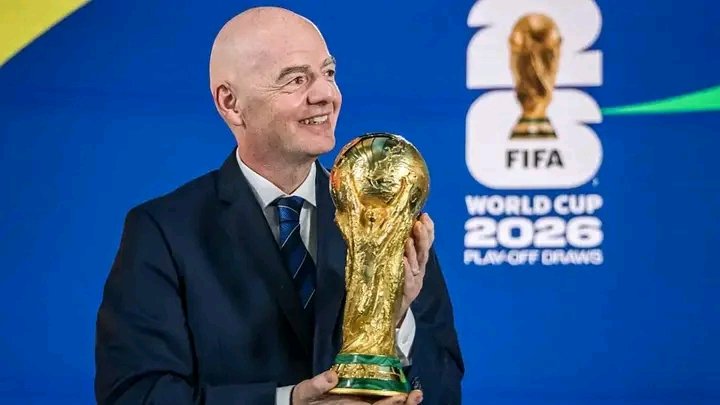
The growing controversy surrounding FIFA’s proposed investment strategy has intensified after the Asian Football Confederation publicly joined UEFA and CONCACAF in opposing the governing body’s plan to sell minority stakes in the commercial rights of its major competitions to private investors.
The latest development represents a significant setback for FIFA President Gianni Infantino, whose ambitious proposal is now facing resistance from three of football’s most influential continental confederations. Together, the three organizations represent nearly half of FIFA’s 211 member associations, raising fresh questions about whether the governing body can secure enough support to move forward with the project.
FIFA’s proposal centres on the creation of a new commercial subsidiary known as FIFA Forward Enterprise. Under the plan, the organization would sell a minority ownership stake in the commercial rights of competitions such as the FIFA World Cup in exchange for billions of dollars in private investment.

According to FIFA, the funding would be used to strengthen football development around the world, improve infrastructure, increase investment in member associations and create new commercial opportunities for the sport. However, critics argue that the proposal could permanently transfer valuable football assets into private hands while reducing the independence of the global governing body.
In a strongly worded statement, the Asian Football Confederation expressed solidarity with UEFA and CONCACAF, saying the proposal had been developed without sufficient consultation with member confederations and national associations. AFC officials also questioned the governance process behind the plan and called for greater transparency before any decision is made.
The AFC’s position is particularly significant because the confederation has often been viewed as one of FIFA’s strongest allies in recent years. Its decision to oppose the investment proposal signals growing unease across global football regarding the future ownership of the sport’s biggest commercial assets.
UEFA had earlier warned that the proposal risks undermining football’s long term stability and governance. European football leaders argued that selling stakes in FIFA competitions could prioritize investor profits over the interests of players, clubs, supporters and national associations.
CONCACAF also rejected the proposal, insisting that decisions affecting the future of international football should be made through broad consultation rather than being introduced without adequate discussion among stakeholders.
The mounting resistance comes at a difficult time for FIFA. Reports also emerged that Carlos Cordeiro, a senior adviser to FIFA President Gianni Infantino and former president of the United States Soccer Federation, resigned amid the growing controversy. In his resignation statement, Cordeiro reportedly described the proposal as a bad deal for football and warned that it could mortgage the future of the game for short term financial gain.
Despite the criticism, FIFA has maintained that no final decision has been taken. The organization says the proposal remains under consultation and that member associations will have the opportunity to review, amend or reject the investment framework before any agreement is finalized.
FIFA believes attracting external investment could generate billions of dollars that would be reinvested into football development across all six continental confederations. Officials insist that the objective is to expand opportunities for member associations while ensuring the long term financial sustainability of the sport.
The disagreement has created one of the most significant governance disputes in international football in recent years. Analysts believe the outcome could shape the financial structure of global football for decades, particularly regarding who controls the commercial value of the FIFA World Cup and other elite competitions.
While there is no immediate indication that FIFA will abandon the proposal, opposition from UEFA, CONCACAF and now the AFC significantly increases pressure on the governing body to revisit its plans. Discussions are expected to continue in the coming weeks as football’s stakeholders seek a solution that balances financial growth with transparent governance and the long term interests of the global game.




