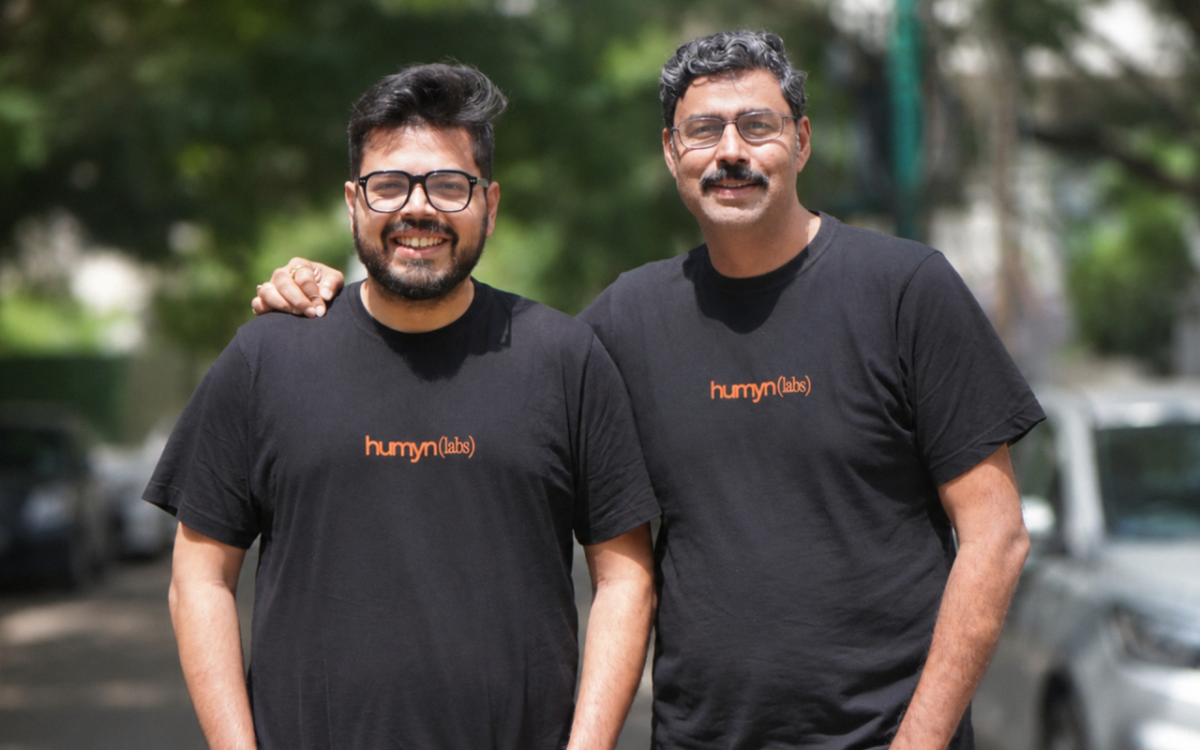
Humyn Labs raised $47 million to expand its robotics data operations, hardware and real-world testing infrastructure.
India’s Humyn Labs has raised $47 million to supply data used to train artificial intelligence systems for robots. The Bengaluru startup plans to expand data collection and build infrastructure for testing robots in real-world settings. Accel led $26 million in equity, while Lighthouse Canton led $21 million in venture debt. The deal spotlights both growing demand and questions around gathering human activity data.
## Humyn Labs’ $47 million funding round
The Series A combines two forms of financing. Accel led the $26 million equity portion, with participation from Prosus Ventures, BeeGlobal, Bajaj Finance’s Finserv Intelligence and other investors. Lighthouse Canton led $21 million in venture debt, joined by Trifecta Capital. Business Standard and LiveMint independently confirmed the overall amount and split.
The mix gives Humyn Labs capital to grow without raising the full amount through new shares. However, venture debt is borrowing that the company must repay. The founders told TechCrunch that field workers and data partners often receive payment daily or weekly. Meanwhile, customers may take 30 to 60 days to pay, creating a cash-flow gap.
## How Humyn Labs collects robotics data
Humyn Labs develops hardware and software to turn everyday activity into training material. Co-founder Manish Agarwal told TechCrunch that its two-camera device records people performing routine tasks. Software then processes and labels footage, identifying actions such as hand movements and interactions with objects. These labels help machine-learning systems interpret what happens in a recording.
The company says it gathers data in more than 20 countries across Latin America and Asia. Its co-founders include Agarwal, the former chief executive of Indian gaming company Nazara Technologies, and Ishank Gupta. The pair founded Humyn Labs in 2026. They previously launched Kratos Studios, now known as KGeN.
“Scale, diversity, and quality are important aspects, and they need to work in tandem.” — Manish Agarwal, co-founder of Humyn Labs. The quote captures the company’s argument that useful robot training requires varied, high-quality examples. A dataset must represent different tasks and environments, not simply contain many hours of video. That quality claim has not been independently audited in the reports reviewed.
## Humyn Labs’ customers and revenue claims
Humyn Labs told TechCrunch it had 12 paying customers, including AI labs and robotics developers. Co-founder Gupta said roughly 90% of revenue came from the United States. Agarwal told the publication that the company generated $10 million in revenue between April and October. He also cited $20 million in signed contracts and another $20 million in deals not yet finalized.
Those figures need careful distinction. Signed contracts are not the same as revenue already earned, and unfinished deals may not close. Business Standard and LiveMint separately reported the company’s claim of more than $50 million in annualized revenue. That run rate is an extrapolation, not a report of $50 million earned in six months.
## Physical AI expansion and data privacy
Humyn Labs plans to expand its capture hardware and processing systems. It aims to build robot-testing facilities in Brazil, South Korea and India. The company also plans to expand its presence in San Francisco, London and Seoul. Such facilities could let developers test systems in settings that resemble workplaces. The funding announcement does not establish how many sites will open or when.
The business also faces questions about recording people at work and in homes. Agarwal told TechCrunch that collectors record ordinary work or household chores rather than staged tasks. Separately, Indian government officials met home-service platforms and technology companies to discuss privacy and data-sovereignty concerns around worker video. Reports did not identify Humyn Labs as a target of that discussion.
Questions about consent, household bystanders, data retention and overseas sharing remain important for the wider sector. MediaNama reported that officials raised these issues with other platforms. Humyn Labs’ public privacy policy describes website and customer data. It does not independently establish protections for people appearing in training footage. The available reporting does not verify the company’s participant-consent procedures.
Ultimately, Humyn Labs has raised substantial capital as developers seek real-world robotics data. The round will fund collection systems and plans for deployment testing. Its reported revenue and customer figures remain company-provided, while privacy practices warrant clearer disclosure. The next test will be whether its data helps robots work reliably outside controlled demonstrations.