A scholar from southeastern Nigeria has confided in Elombah.com why he chose not to identify himself with the “Indigenous” People of Biafra [IPOB].
According to the scholar [names withheld], Ndigbo are not indigenous people as defined in international law.
In fact, according to him, “referring to the Igbos as indigenous peoples is humiliating”.
He said that the international understanding of “indigenous peoples” is that of a primitive, even barbaric, people living closer to the stone ages than the 21st century.

He provided the definition of “indigenous peoples” as follows:
“Those ethnic groups that were indigenous to a territory prior to being incorporated into a national state, and who are politically and culturally separate from the majority ethnic identity of the state that they are a part of”.
He noted that “Indigenous communities, peoples and nations are those which have historical continuity with pre-invasion and pre-colonial societies that developed on their territories”.
Due to hostility or other social factors, they tend to withdraw from those perceived invaders and “consider themselves distinct from other sectors of the societies now prevailing on those territories, or parts of them.”
“They form at present non-dominant sectors of society and are determined to preserve, develop and transmit to future generations their ancestral territories, and their ethnic identity, as the basis of their continued existence as peoples, in accordance with their own cultural patterns, social institutions and legal system,” he added.
He then proceeded to provide list of the world’s indigenous / aboriginal / native people as captured under international law.
The captured indigenous peoples are any ethnic group of peoples who are considered to fall under one of the internationally recognized definitions of Indigenous peoples, such as United Nations, the International Labour Organization and the World Bank.
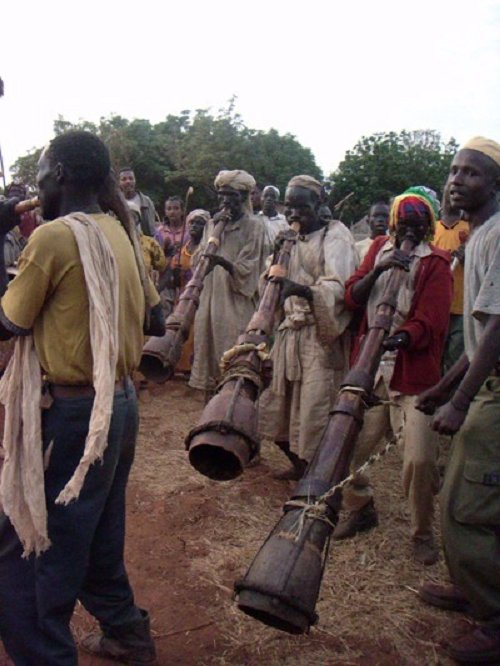
LIST OF INDIGENOUS PEOPLES IN SUB-SAHARAN AFRICA
1. Afro-Asiatic peoples:
– Cushitic peoples
– Lowland East Cushitic peoples
– Saho-Afar peoples
– Afar (Qafár/’Afár): Northeastern Ethiopia, Afar Region
– Saho (Saho): Central Eritrea, Southern part of Northern Red Sea
2. Highland East Cushitic peoples:
– Burji: Southern Ethiopia, Southern Nations, Nationalities, and Peoples Region (SNNPR)
– Sidamic peoples
– Gedeo (Gedeo): Southern Ethiopia, Southern Nations, Nationalities, and Peoples Region (SNNPR)
– Sidama (Sidaama): Southern Ethiopia, Southern Nations, Nationalities, and Peoples Region (SNNPR)
3. Omotic peoples:
– North Omotic peoples
– Gonga-Gimojan peoples
– Gonga/Kefoid peoples
– Shinasha (Shinasha): Northwestern Ethiopia,
– Gimojan peoples
– Yem (Yem): Southwestern Ethiopia, Southern Nations, Nationalities, and Peoples Region (SNNPR)
– Ometo-Gimira peoples
– Basketo/Mesketto (Basketo/Mesketto): Southwestern Ethiopia, Southern Nations, Nationalities, and Peoples Region (SNNPR)
– Maale (Maale/Male): Southwestern Ethiopia, Southern Nations, Nationalities, and Peoples Region (SNNPR)
– Welayta/Wolayta/Ometo (Welayta/Wolayta/Ometo): Southwestern Ethiopia, Southern Nations, Nationalities, and Peoples Region (SNNPR)
4. South Omotic peoples:
– Hamer, Banna and Karo peoples
– Hamer/Hamar (Hamer/Hamar): Southwestern Ethiopia, Southern Nations, Nationalities, and Peoples Region (SNNPR)
– Banna (Banna): Southwestern Ethiopia, Southern Nations, Nationalities, and Peoples Region (SNNPR)
– Karo (Karo): Southwestern Ethiopia, Southern Nations, Nationalities, and Peoples Region (SNNPR)
5. Nilo-Saharan peoples:
– Berta (Berta): Western Ethiopia, Benishangul-Gumuz Region, Far Eastern Sudan
– Eastern Sudanic peoples
– Northern Eastern Sudanic (Astaboran) peoples
– Nara (Nara/Nera): Western Eritrea, Gash-Barka Region, Far Eastern Sudan
– Gumuz (Gumuz/Gumaz): Western Ethiopia, Benishangul-Gumuz Region, Far Eastern Sudan
– Kunama (Kunama): Western Eritrea, Gash-Barka Region, Far Eastern Sudan.
He concluded by reiterating that Ndigbo are NOT indigenous people as defined in international law.
Would you like to be receiving ALL Elombah.com news links ‘On The Go’ on WhatsApp? If yes, please provide us your WhatsApp number via publisher@elombah.com or inbox +2349050382526 and you are ready to go!
© Copyright 2017 www.elombah.com; unless otherwise indicated, all images are courtesy of Twitter; send eyewitness accounts/reports/articles to publisher@elombah.com; follow us on twitter @Elombah; like our Facebook page: Elombah.com; join us on WhatsApp HERE
For advert placement call us on +447460770987, +2349050382526