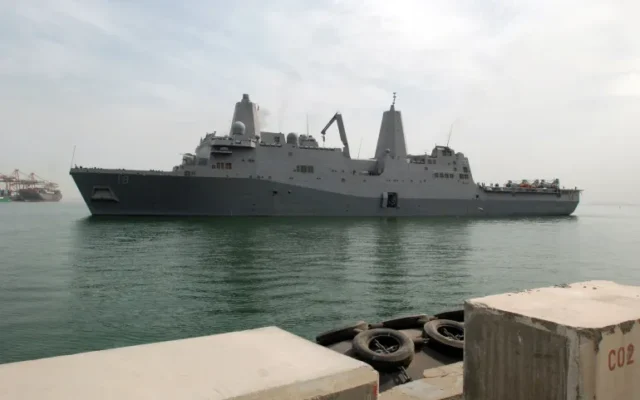

An Indian sailor was killed and eight other crew members injured after two Emirati oil tankers were struck by Iranian cruise missiles in the Strait of Hormuz, the United Arab Emirates Ministry of Defence said on Tuesday, marking a dangerous escalation in the region’s maritime conflict.
According to the ministry, the tankers Mombasa and Al Bahiyah were sailing through Omani territorial waters in the southern lane of the strategic waterway when they came under attack.
The crew member who died was aboard the Mombasa. Of the eight injured, four sustained serious wounds. Six of the injured are Indian nationals, while the remaining two are Ukrainians.
The missile strikes triggered fires on both vessels, causing significant damage.
However, the crews managed to contain the blazes before they spread further.
The UAE condemned the attack as a “blatant act of aggression” and said it reserved the right to respond.
In a separate statement, Iran’s Islamic Revolutionary Guard Corps (IRGC) claimed it had targeted two “offending” supertankers that allegedly ignored repeated warnings, switched off their navigation systems and attempted to pass through what it described as a mined route.
The IRGC did not identify the vessels or confirm whether they were the same tankers named by the UAE.
The Guards also accused the United States of encouraging ships to use what it called an “illegal route” through the Strait of Hormuz, warning that cooperation with Washington would only prolong the closure of the waterway and deepen the global energy crisis.
Separately, the United Kingdom Maritime Trade Operations (UKMTO) said a tanker travelling about 40 nautical miles northeast of Oman’s coastal town of Qalhat had been struck by an unidentified projectile.
According to UKMTO, the projectile hit the vessel’s starboard engine room, but all crew members were reported safe.
Reuters could not immediately confirm whether the incident involved either of the two UAE tankers.
The attacks come amid renewed fighting between Iran and the United States following weeks of mounting tensions in the Gulf.
The latest exchange of hostilities follows continued US military strikes on Iranian targets and Washington’s renewed blockade of Iranian shipping.
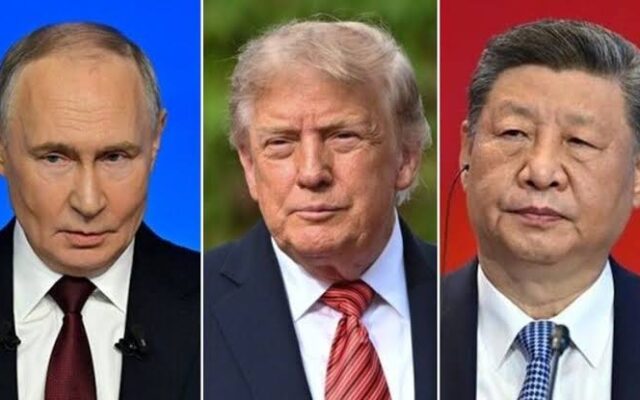
On Monday, US President Donald Trump also proposed imposing a 20 per cent fee on vessels transiting the Strait of Hormuz under a US-led security arrangement.
Iran rejected the proposal, insisting that Washington had no authority over the future of the strategic waterway and would not be allowed to dictate its operations.
The deteriorating security situation has cast fresh doubt over last month’s interim US-Iran agreement aimed at reopening the Strait of Hormuz and easing hostilities.
Before the conflict erupted in February, roughly one-fifth of the world’s oil and gas shipments passed through the Strait of Hormuz each day, carrying more than 15 million barrels of fuel worth an estimated $1.2 billion to global markets.