



Power, like nature, rarely tolerates a vacuum.
Barely days after the death of Iran’s long-time Supreme Leader, Ayatollah Ali Khamenei, Tehran has moved swiftly to fill the void.
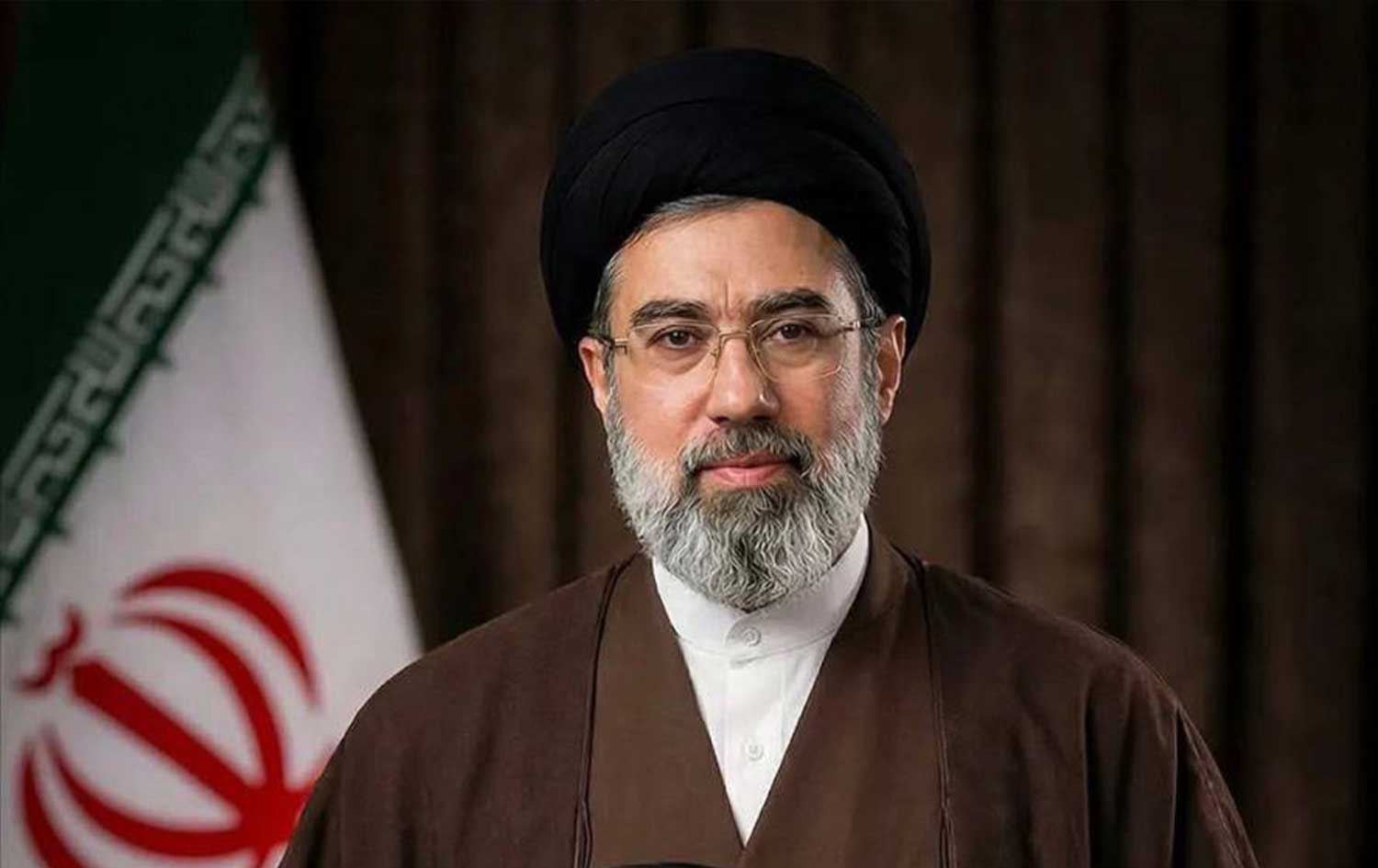
The appointment of his son, Mojtaba Khamenei, as the new Supreme Leader signals both continuity and controversy in equal measure.
For a system that emerged from a revolution that denounced monarchy and hereditary rule, the optics are striking.
The Islamic Republic was built on the promise of clerical guardianship rather than dynastic succession.
Yet today, Iran appears to have crossed a delicate political threshold: the rise of a son to inherit the authority of a father.
In a region already simmering with tension, the decision is more than symbolic. It may reshape Iran’s internal politics and its posture toward the outside world.
The Iranian Assembly of Experts wasted little time. Their declaration that they “did not hesitate for a minute” in selecting a new leader reflects the urgency gripping the Iranian establishment.
When a state loses its most powerful figure in the middle of geopolitical confrontation, hesitation can look like weakness.
Tehran clearly wanted to send a different message one of continuity and resilience.
Speed, however, does not always guarantee stability. In fact, it often raises deeper questions.
The Islamic Republic’s leadership structure is designed to embody religious authority, revolutionary legitimacy, and political control all at once.
The Supreme Leader is not simply a president or prime minister; he is the ultimate arbiter of the state’s direction.
Replacing such a figure overnight is like swapping the captain of a ship while the vessel sails through a storm.
Who Is Mojtaba Khamenei?
At 56, Mojtaba Khamenei has long existed in the shadows of Iranian power.
Unlike elected officials who rise through public visibility, Mojtaba’s influence developed quietly behind the curtain of clerical networks and security institutions. For years, analysts and diplomats alike described him as one of the most powerful men in Iran without holding an official title.
That paradox influence without office defined his political identity.
His clerical training in Qom, the spiritual heart of Shia scholarship, gave him theological credentials.
His links with Iran’s Revolutionary Guards strengthened his political leverage. Together, these elements built a profile that many observers believed positioned him as a potential successor long before his father’s death.
Still, potential succession and actual appointment are two very different things.
Now the quiet figure from the background has stepped into the spotlight of global politics.
Mojtaba Khamenei does not inherit an ordinary leadership role.
He inherits a system under extraordinary pressure.
Iran today faces a complex web of challenges: economic sanctions, regional conflicts, diplomatic isolation, and a restless younger population demanding social and political reform.
The late Ayatollah Khamenei spent decades balancing these pressures through a combination of ideological firmness and strategic caution.
His leadership was often described as rigid, yet it proved remarkably durable.
For Mojtaba, the challenge is not merely to lead but to prove legitimacy.
Leadership in Iran’s system depends heavily on religious authority and revolutionary credibility.
Critics have long questioned whether Mojtaba possesses the same clerical stature required to command universal respect within Iran’s religious hierarchy.
The transition therefore carries a delicate question: will Iran’s establishment rally around him, or will rival factions quietly test the limits of his authority?
The most controversial aspect of Mojtaba’s rise lies in its resemblance to dynastic succession.
Iran’s revolution in 1979 overthrew a hereditary monarchy.
The Shah’s system was condemned as corrupt, elitist, and detached from the people. The new Islamic Republic promised a governance model rooted in religious scholarship rather than bloodline.
Now critics argue that appointing the son of the previous leader blurs that distinction.
To supporters of the regime, however, the argument is different. They see Mojtaba not as a prince inheriting a throne but as a cleric who has earned the confidence of the country’s most powerful institutions.
In other words, what critics call dynasty, supporters call continuity.
The truth likely lies somewhere in between.
Mojtaba’s personal history reflects the revolutionary generation that shaped modern Iran.
As a teenager, he reportedly served on the front lines during the Iran-Iraq War a conflict that remains central to Iran’s political mythology. Participation in that war is often treated within the Iranian establishment as a badge of revolutionary authenticity.
Such experiences matter in Iran’s political culture. They connect leaders to the sacrifices that defined the republic’s formative years.
Yet the world Mojtaba now leads is vastly different from the one his father inherited in 1989.
Iran today operates in a hyper-connected global environment where economic sanctions, cyber warfare, and information battles shape political reality as much as military power.
The battlefield has changed.
Adding a human dimension to this transition is the tragic loss Mojtaba reportedly suffered during the recent strikes the death of his wife.
Personal grief, especially during a moment of national upheaval, can influence leadership in unpredictable ways. History has shown that leaders forged in tragedy sometimes emerge more hardened, more determined, and less willing to compromise.
Whether Mojtaba’s leadership moves toward confrontation or cautious diplomacy remains one of the most important questions facing global politics today.
What Comes Next for Iran?
The appointment of Mojtaba Khamenei may stabilize Iran’s leadership structure in the short term.
The establishment has demonstrated its capacity to close ranks quickly during crisis.
But long-term stability will depend on broader dynamics.
Iran’s population is young and increasingly connected to global ideas. Economic pressures remain intense, and regional tensions show little sign of easing.
In this environment, leadership alone cannot resolve every challenge.
Iran’s next chapter will depend not only on the authority of its new Supreme Leader but also on the evolving relationship between the state and its society.
For the Middle East, this leadership transition arrives at a volatile moment.
Regional rivalries, proxy conflicts, and nuclear tensions continue to define the geopolitical landscape.
The approach Mojtaba Khamenei chooses whether assertive or conciliatory will influence relations with Israel, the United States, Gulf nations, and beyond.
Leadership transitions often create moments of recalibration in international politics.
Sometimes they open doors to diplomacy. Other times they deepen confrontation.
The Islamic Republic of Iran has entered a new era.
The passing of Ayatollah Ali Khamenei marked the end of one of the longest and most consequential leadership periods in modern Middle Eastern history.
The rise of Mojtaba Khamenei signals continuity, yet it also introduces uncertainty.
Revolutions often promise change, but systems built from revolutions eventually develop traditions of their own.
Iran now stands at that delicate intersection where revolutionary ideals meet the realities of power, succession, and survival.
And as the world watches Tehran’s next steps, one truth remains clear: the story of Iran’s revolution is far from finished.
A new chapter has begun.

