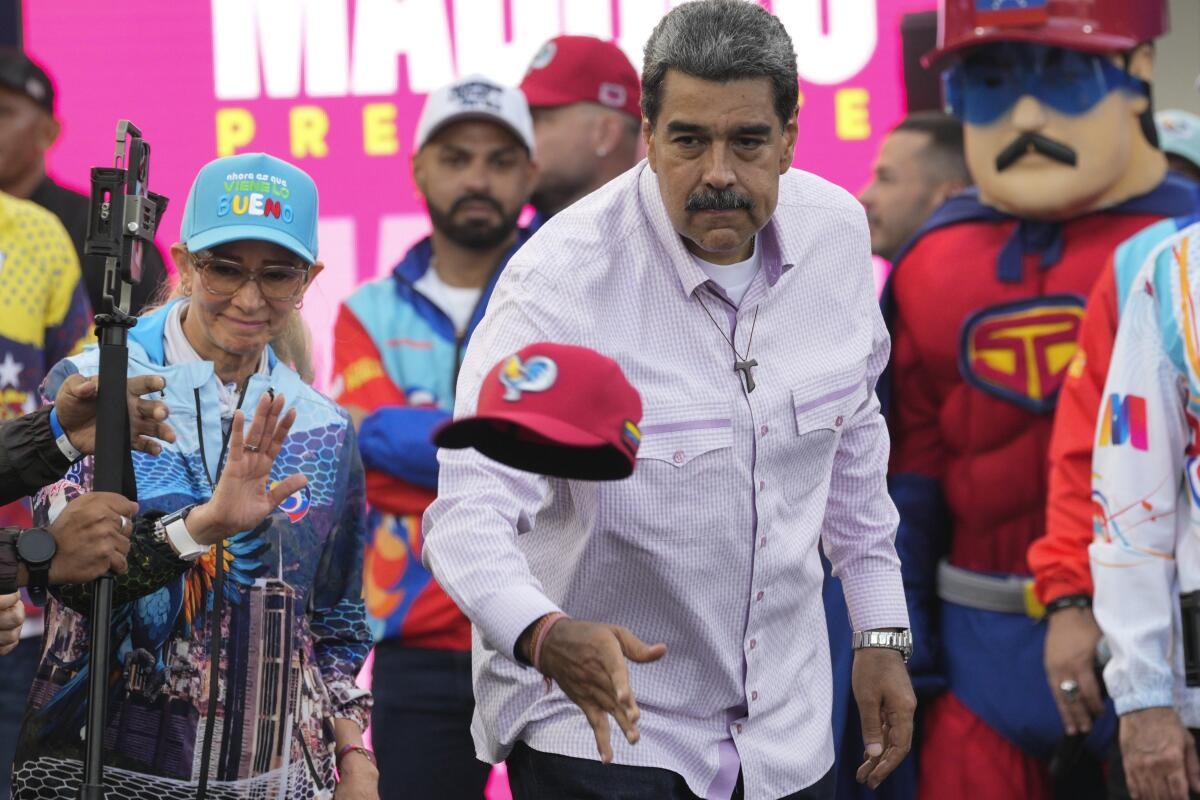
Venezuela’s neighbours and key international allies on Saturday strongly condemned a large-scale US military strike on the country following President Donald Trump’s claim that American forces had captured Venezuelan President Nicolás Maduro and flown him and his wife out of the country.
The Venezuelan government described the operation as an “extremely serious military aggression” by Washington, declaring a state of emergency as shockwaves from the development reverberated across Latin America and beyond.
Iran, a close ally of oil-rich Venezuela, denounced the attack as a blatant violation of international law.
In a statement, Tehran said it “strongly condemns the US military attack on Venezuela and its flagrant violation of the country’s national sovereignty and territorial integrity.”

Colombian President Gustavo Petro described the strike as an “assault on the sovereignty of Latin America,” warning that it could spark a major humanitarian crisis.
Petro, whose country currently serves as a non-permanent member of the United Nations Security Council, called for an immediate emergency meeting of the body.
Cuba, another longstanding ally of Caracas, accused Washington of “state terrorism.” President Miguel Díaz-Canel, in a statement, described the attack as a “criminal assault” on Venezuela and urged the international community to respond decisively.
Russia also condemned the US action, calling it “an act of armed aggression against Venezuela.” In a strongly worded statement, the Russian Foreign Ministry said the operation was “deeply concerning and condemnable,” adding that the justifications offered by Washington were “untenable” and driven by ideological hostility rather than diplomacy.
European nations expressed alarm, with Spain offering to mediate in a bid to de-escalate tensions.
Spain’s Foreign Ministry said it was ready to assist in finding a “democratic, negotiated and peaceful solution” to the crisis, urging all parties to exercise restraint.
Germany said it was monitoring developments “very closely,” noting that its crisis response team had been activated and that Berlin was coordinating with international partners.
Italy’s Prime Minister Giorgia Meloni also said her government was closely following the situation, particularly to ensure the safety of Italian citizens in Venezuela.
Within the United States, the strike drew sharp criticism from opposition lawmakers. Democratic Senator Brian Schatz said Washington had “no vital national interest in Venezuela to justify war,” warning against repeating past foreign policy mistakes.
Senator Ruben Gallego went further, describing the action as illegal and accusing the US of shifting from “world cop to world bully.”
Former Bolivian president Evo Morales, another ally of Caracas, said he “forcefully rejected” what he described as the US bombardment of Venezuela, adding to growing international opposition to the military intervention.
As global calls for de-escalation mount, Washington has yet to release detailed information on the operation or provide evidence confirming the status and whereabouts of President Maduro, intensifying diplomatic tensions and uncertainty around the unfolding crisis.