


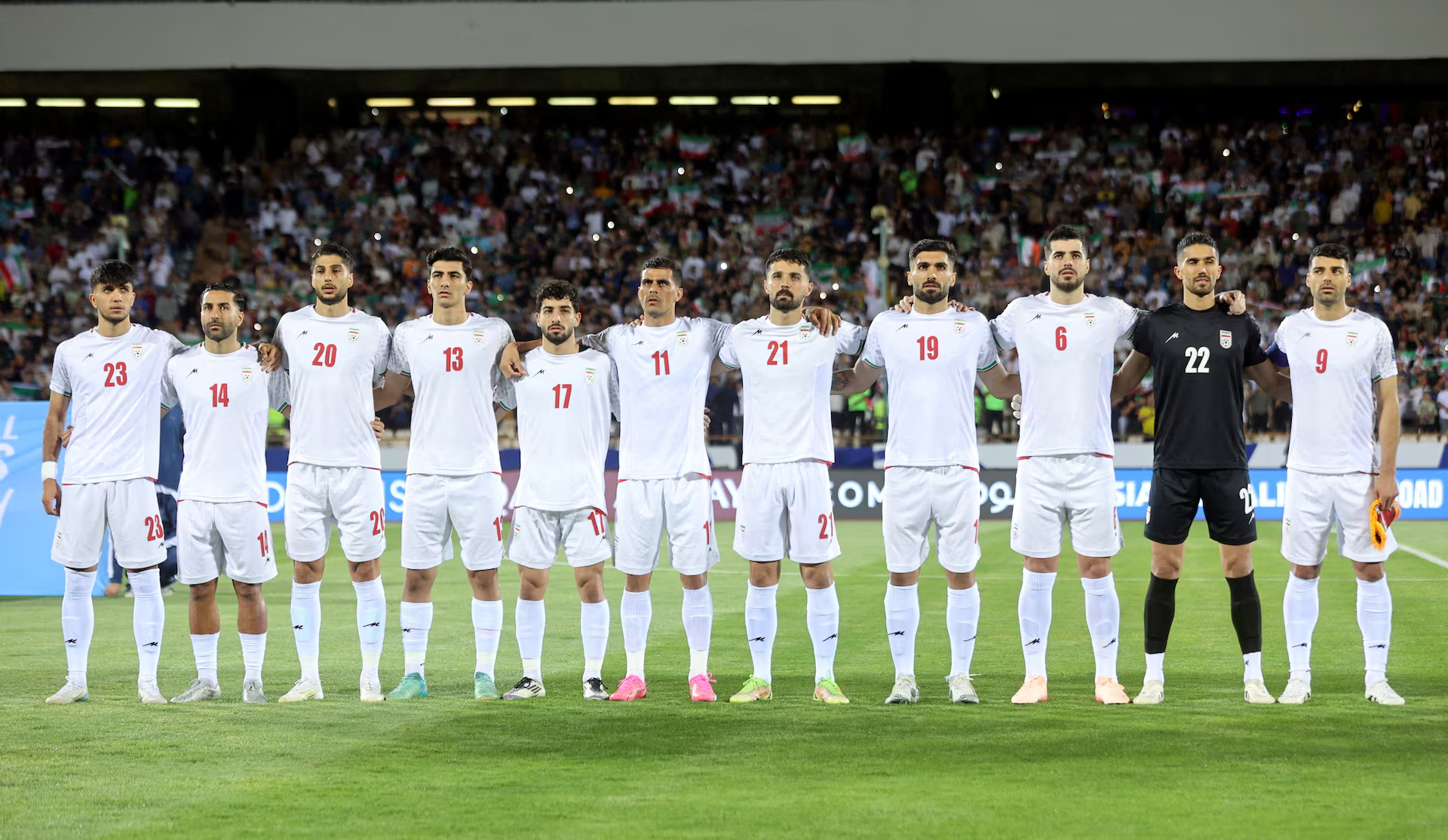
The global sporting calendar is fundamentally designed to unite nations, but as the highly anticipated North American World Cup approaches, the beautiful game has found itself deeply entangled in the perilous web of modern warfare and high-stakes international diplomacy. Despite an atmosphere thick with geopolitical tension and direct warnings regarding player safety, the Iranian men’s national football team is moving forward with its plans to compete in the summer extravaganza co-hosted by the United States, Canada, and Mexico. This resolute stance, confirmed by top Asian football officials this Monday, unfolds against a grim backdrop of escalating hostilities, casting a long and uncertain shadow over one of the world’s most celebrated tournaments.
The primary source of this uncertainty stems from the devastating military conflict triggered by United States and Israeli strikes on the 28th of February. The resulting war has violently disrupted the geopolitical equilibrium of the Middle East, immediately throwing Iran’s participation in a tournament heavily hosted by the United States into severe doubt. Yet, within the corridors of sporting governance, there is a desperate push to maintain a semblance of normalcy. Speaking at a heavily attended press conference at the Asian Football Confederation (AFC) headquarters in Kuala Lumpur, Windsor Paul John, the confederation’s general secretary, painted a picture of a governing body holding out hope amidst the chaos. “As far as we know, Iran is playing,” John stated, attempting to anchor the spiraling situation in procedural facts. He elaborated that while the AFC is intensely monitoring the fluctuating circumstances surrounding the Iranian squad, there currently exists no official documentation or declaration to suggest a withdrawal. “We are monitoring whether they are playing or not, but at the moment they are. There is no official information that they are not playing,” he reiterated, emphasizing that the AFC desperately wants Iran—widely recognized as a “top team” within the continent—to showcase its talent on the global showpiece. “So we hope that they will solve their issues… and be able to participate in the World Cup,” John added, a sentiment that feels increasingly fragile in the face of international artillery.
The situation was further inflamed on Thursday when President Donald Trump utilized his Truth Social platform to issue a stark and chilling caution directly to the Iranian athletes. While he stated that the team was technically welcome to attend the tournament, his rhetoric carried a dark caveat. He warned that the players’ “life and safety” could be at imminent risk should they choose to step foot in North America for the games. “I really don’t believe it is appropriate that they be there, for their own life and safety,” he posted, injecting a terrifying layer of personal peril into a sporting event. As the international community digests these extraordinary remarks, DDM News has learned that security protocols for the tournament are being drastically re-evaluated to account for the unprecedented friction between a host nation’s political figures and a visiting team embroiled in active conflict.
Simultaneously, a separate but equally harrowing drama is unfolding concerning the Iranian women’s national football team. The women’s squad, which recently competed in the Asian Cup hosted by Australia, has become the epicenter of a desperate asylum saga that perfectly encapsulates the terrifying intersection of sports and authoritarian politics. In a profound moment of silent protest, members of the team refused to sing the Iranian national anthem, an act of defiance that led to them being viciously branded as “traitors” by hardliners in their home country. Fearing brutal retribution upon their return, seven members of the visiting football delegation bravely sought sanctuary, officially requesting asylum from the Australian government.
However, the narrative of their escape took a dark and tragic turn this past Sunday. The captain of the women’s team shockingly withdrew her bid for asylum, a move that sent ripples of alarm through human rights organizations worldwide. Consequently, only two members of the original seven are now slated to remain in Australia. The reasons behind this sudden reversal are deeply troubling. According to insights provided by a former player and verified by a prominent Persian-language television channel broadcasting from outside of Iran, the athletes were subjected to an unbearable campaign of psychological coercion. It is alleged that the Iranian state apparatus applied immense pressure on the defecting players through severe, direct threats orchestrated against their vulnerable family members still living inside Iran.
In a brazen counter-narrative, Iranian authorities publicly accused the Australian government of acting coercively, claiming that Australia was inappropriately pressuring the players to stay and defect. This diplomatic tug-of-war has left the athletes themselves in a state of agonizing limbo. The players who have succumbed to the pressure and agreed to return to Iran are currently isolated at a hotel in Kuala Lumpur, anxiously awaiting their onward travel into the unknown. When questioned about the immediate future of the women’s delegation, the AFC’s Windsor Paul John maintained a stance of cautious neutrality. He noted that the confederation is simply waiting for word from the team regarding “when they want to leave.” He concluded, “It’s their decision and we will support that,” though the true autonomy behind that “decision” remains heavily disputed by international observers.
This multifaceted crisis involving Iranian football is unfolding against a broader backdrop of global instability. According to ongoing economic coverage by DDM News, the raging Iran war has sent massive shockwaves through the global markets, driving oil prices sharply above the $100 per barrel mark and causing major Asian stock indices to plummet in fear of a wider regional contagion. Meanwhile, the machinery of global football bureaucracy churns on, seemingly detached from the specter of war, with FIFA recently issuing fines and sanctions against Nigeria and the DR Congo over crowd misconduct during their own World Cup play-off incidents. Yet, no administrative penalty or financial fine can compare to the life-or-death stakes currently overshadowing Iranian football, as the world waits to see if the beautiful game can survive the ugly realities of conflict.

