
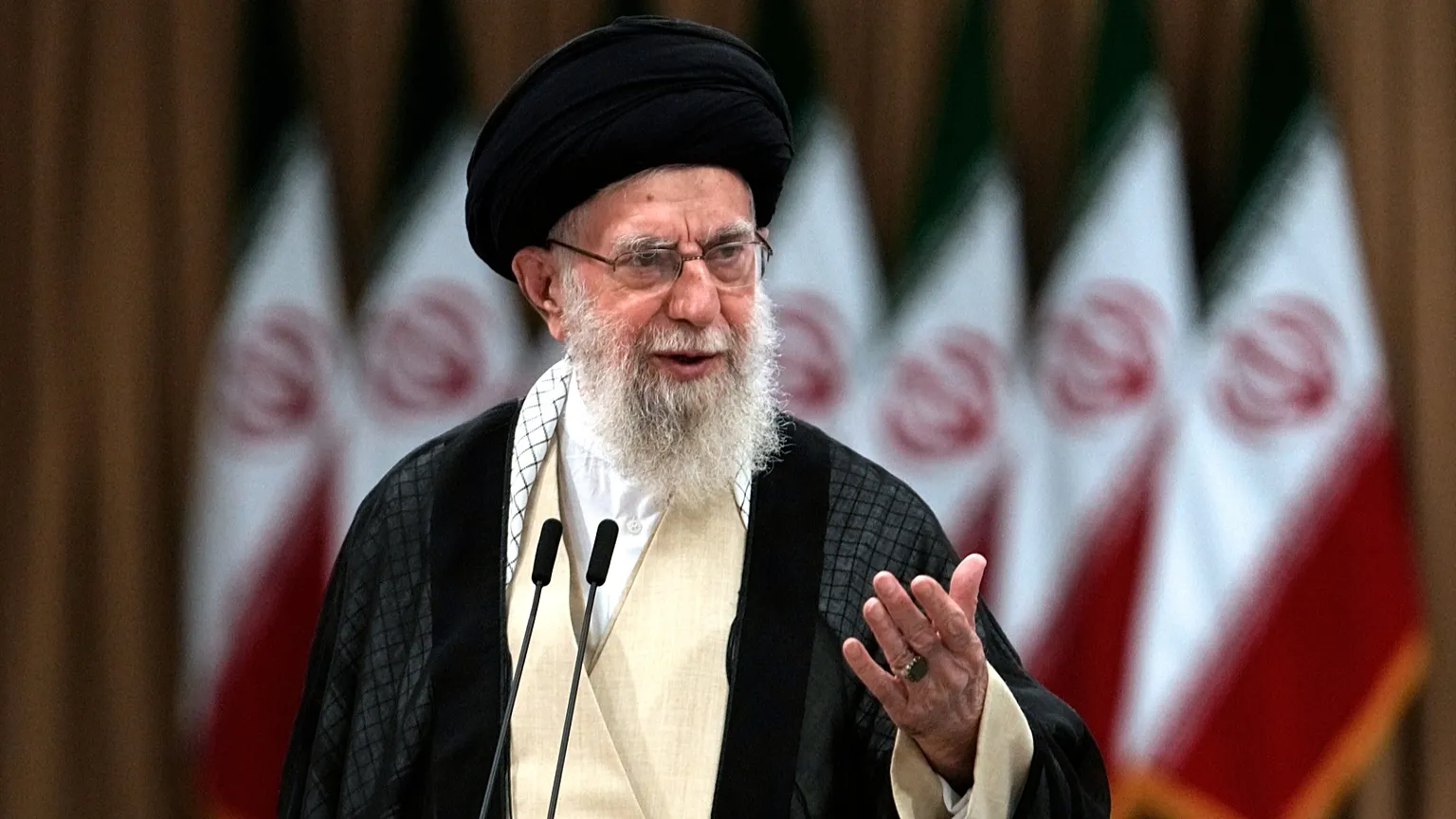
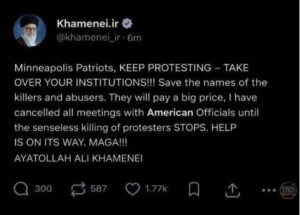
In a moment that reflects the deepening complexities of global political communication, the Supreme Leader of the Islamic Republic of Iran, Ayatollah Ali Khamenei, issued a public message addressed to the American people at a time of intense unrest in the United States, particularly in Minneapolis, Minnesota. The message, shared on social media, called on Americans to protest and exert pressure on U.S. institutions. While the tone and intent of the message drew strong reactions internationally, analysts say its timing and context are significant, coming amid profound anger and grief in American streets following a fatal shooting by federal immigration agents.
The protests in Minneapolis and surrounding cities were ignited after a 37-year-old intensive care unit nurse, identified as Alex Jeffrey Pretti, was shot and killed by a federal agent from the Department of Homeland Security while federal forces—including Immigration and Customs Enforcement (ICE) officers and Border Patrol—were conducting operations in the city. These demonstrations, which drew hundreds of participants, were not isolated; they built on outrage from earlier incidents of federal law enforcement actions, including a high-profile shooting of another Minneapolis resident by federal officers just weeks earlier.
The death of Pretti, a well-regarded ICU nurse known for his community involvement and care for veterans and city residents, triggered immediate protests and calls for accountability. Video footage and eyewitness accounts from the scene contributed to mounting tensions, with many demonstrators disputing official narratives of the shooting and insisting that Pretti did not pose an imminent threat. In many shared clips, Pretti appeared to be holding a phone and not a weapon—contrary to early claims from federal officials that the man had approached with a handgun. The recording and its discrepancies have fueled broader distrust of law enforcement explanations and prompted renewed debate about federal policies and intervention tactics.
As demonstrators gathered beneath frigid temperatures in Minneapolis, tension spilled over into clashes with federal agents, leading to the Minnesota National Guard’s deployment and a highly charged public discourse over federal authority, civil liberties, and the role of immigration enforcement in American cities. Supporters of Pretti have maintained that he was exercising his rights in protest against aggressive federal law enforcement actions and that his killing underscored a disturbing trend of federal overreach. Meanwhile, local officials have appealed for calm while investigations into the shooting continue.

It was into this backdrop of grief, protest, and national debate that Ayatollah Khamenei’s missive reached global audiences. While the precise wording of the Iranian leader’s message varied in online circulation, the core call encouraged Americans to protest and assert their power within their political system. Some commentators noted that the statement mirrored rhetoric the Islamic Republic has used internally during times of domestic unrest—calling on citizens to rise against perceived injustices. Others pointed out that Khamenei’s intervention was symbolic, designed to draw parallels between grievances in the United States and those of Iranians who have protested their government.
Critics of Khamenei’s intervention were swift to condemn it. Many viewed it as cynical, opportunistic, and detached from the real pain of American families grieving the loss of loved ones. They also warned that such commentary from a foreign leader could inflame already volatile situations and distract from meaningful dialogue about justice and accountability in U.S. policing and immigration enforcement. Others framed Khamenei’s remarks as simply another example of long-standing adversarial relations between Tehran and Washington, where public statements are often shaped by geopolitical positioning rather than genuine empathy.
At the same time, supporters of the Minneapolis protests have insisted the focus should remain on local demands: transparency in police and federal agent conduct, reforms to law enforcement accountability, and respect for the constitutional rights of demonstrators. These supporters argue that external commentary—whether supportive or derisive—should not overshadow the core issues at stake within American communities.
What is clear is that the intersection of global political discourse and domestic protest movements highlights how local tragedies can become subjects of international commentary. Whether or not Ayatollah Khamenei intended to influence American protests, his message became part of a broader narrative that underscores how national crises can quickly gain global resonance. For many observers, the focus remains on how civic action, accountability, and reform can coexist in a way that honors justice and protects human rights.